Show summary Hide summary
- From side hustle to profit engine: the rise of Walmart Connect
- How the OpenAI partnership could shift where shoppers buy
- Why Amazon chose a different path and what that signals
- Conversion and experience hurdles for AI-based checkout
- Implications for advertisers and retail media
- Short-term unknowns and what to watch next
- Industry headlines and recent developments
- Recent reporting and research worth noting
Walmart built a quietly powerful advertising business that transformed its online operations into a major profit center. Now, a recent deal with OpenAI that lets shoppers buy from Walmart through ChatGPT could redraw where customers land — and where ad dollars flow.
From side hustle to profit engine: the rise of Walmart Connect
Walmart’s retail ad arm has moved fast. Once a small experiment, it now sells search and display placements across Walmart.com and its app. That has helped e-commerce move closer to profitability.
United Polaris Studio suites: tickets now on sale for April inaugural flights
Auston Matthews-Radko Gudas controversy: Pierre LeBrun predicts fallout
- Walmart Connect posted multibillion-dollar revenue last year, growing strongly year over year.
- Retail media now contributes a significant share of the company’s operating income.
- Sponsored search remains a primary ad format, driven by shoppers who start their product journeys on Walmart’s site.
The core value of that business is user traffic and search activity on Walmart-owned pages. Lose the visits, and the inventory that sells for high margins becomes harder to monetize.
How the OpenAI partnership could shift where shoppers buy
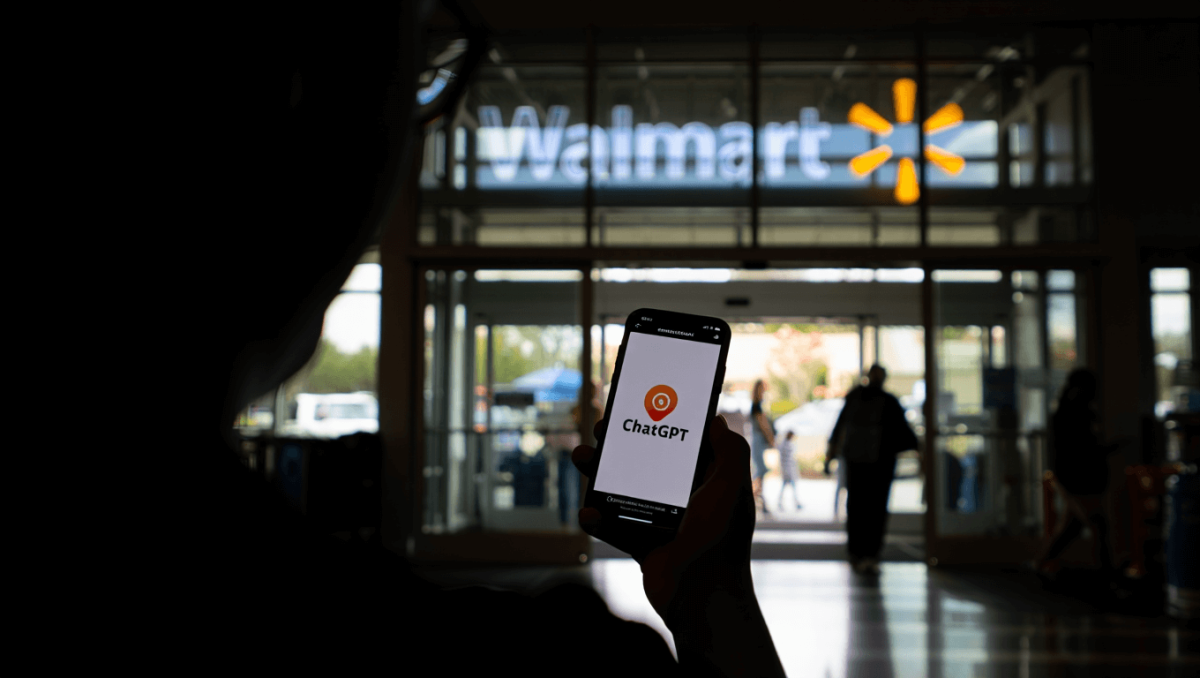
Walmart’s new integration with ChatGPT allows purchases inside an AI chat interface. That arrangement aims to meet customers where they already ask questions.
Early data show ChatGPT can send sizable referral traffic to Walmart. Yet those clicks are a small slice of overall site visits. Still, if AI begins to handle more shopping end-to-end, retailers risk losing on-site searches — the very moments advertisers buy.
- OpenAI researchers estimate millions of daily shopping-related prompts.
- Integrating checkout into ChatGPT positions Walmart to capture sales off-site.
- But capturing transactions inside ChatGPT could divert ad impressions away from Walmart.com.
If transactions migrate to chat interfaces, the financial logic behind retail media could change. Less on-site traffic means fewer sponsored-search opportunities to sell.
Why Amazon chose a different path and what that signals
Amazon has largely blocked external AI agents from scraping its storefront. That keeps product links and real-time listings inside Amazon’s control.
The company is instead investing in its own AI experiences and features that keep customers on Amazon. With a vast share of U.S. e-commerce, Amazon can protect its ad ecosystem more easily than most rivals.
In short, Amazon’s strategy prioritizes retaining discovery and checkout on its own properties. Other retailers face a tougher trade-off between partnering with platform players and defending their traffic.
Conversion and experience hurdles for AI-based checkout
Turning ChatGPT into a reliable commerce channel is not automatic. Studies show that AI referrals currently convert at lower rates than conventional channels.
Design limitations
- Initial ChatGPT checkout supports single-item purchases only.
- Multi-item carts and bundled shopping are not yet available.
- Loyalty programs, coupons, and retailer-specific promos may not function inside the chat interface.
Trust and behavior
- Shoppers need confidence that payment, returns and receipts work as expected.
- Many purchases still require comparison, reviews and browsing multiple items.
- For quick, low-consideration buys, consumers often find the retailer app simplest.
Those limits mean AI checkout may suit some purchases but struggle with typical grocery or household baskets. Until multi-item flows and loyalty features exist, many shoppers may prefer the retailer’s native experience.
Implications for advertisers and retail media
Retail media pricing depends on measurable traffic and search intent. If AI intermediaries siphon demand, the inventory advertisers buy could lose value.
- Advertisers may see lower impressions and fewer search-triggered ad placements.
- Retailers face a choice: join external platforms or concentrate on owning the customer journey.
- Some retailers might build or tighten walls to protect inventory and data.
Industry analysts warn that a shift in consumer behavior could reduce the attractiveness of sponsored search, which still captures a large share of retail ad budgets. For retailers with thin retail-media revenue relative to total e-commerce sales, the stakes are material.
Short-term unknowns and what to watch next
Many variables will determine whether chat-based commerce becomes a major channel.
- How well ChatGPT converts browsing into purchases over time.
- Whether multi-item carts, loyalty integration and coupons arrive on the platform.
- How advertisers react if on-site queries decline.
OpenAI and partners must demonstrate that buying via chat is secure, convenient and offers familiar benefits. Without that, AI-driven shopping may remain a discovery tool more than a reliable checkout route.
Industry headlines and recent developments
- Some delivery contractors are stepping back from Amazon’s delivery program as costs rise.
- Amazon plans fee increases for multiple fulfillment services starting in 2026.
- TikTok Shop is urging merchants to use an ad tool that links only to in-app stores, sparking seller pushback.
Recent reporting and research worth noting
- Academic research finds ChatGPT referrals convert worse than classic channels like search and email.
- Retailers are modifying return policies to offset tariff and cost pressures.
- Tariff-driven price pressure is prompting furniture brands to increase U.S. manufacturing.