Show summary Hide summary
- Why the feud escalated into accusations of harassment
- Deposition scheduling turned contentious
- What both sides are claiming in filings
- Background: the trademark application and legal history
- Public and legal reactions
- What the scheduling fight reveals about discovery in celebrity cases
- Possible next steps in the trademark fight
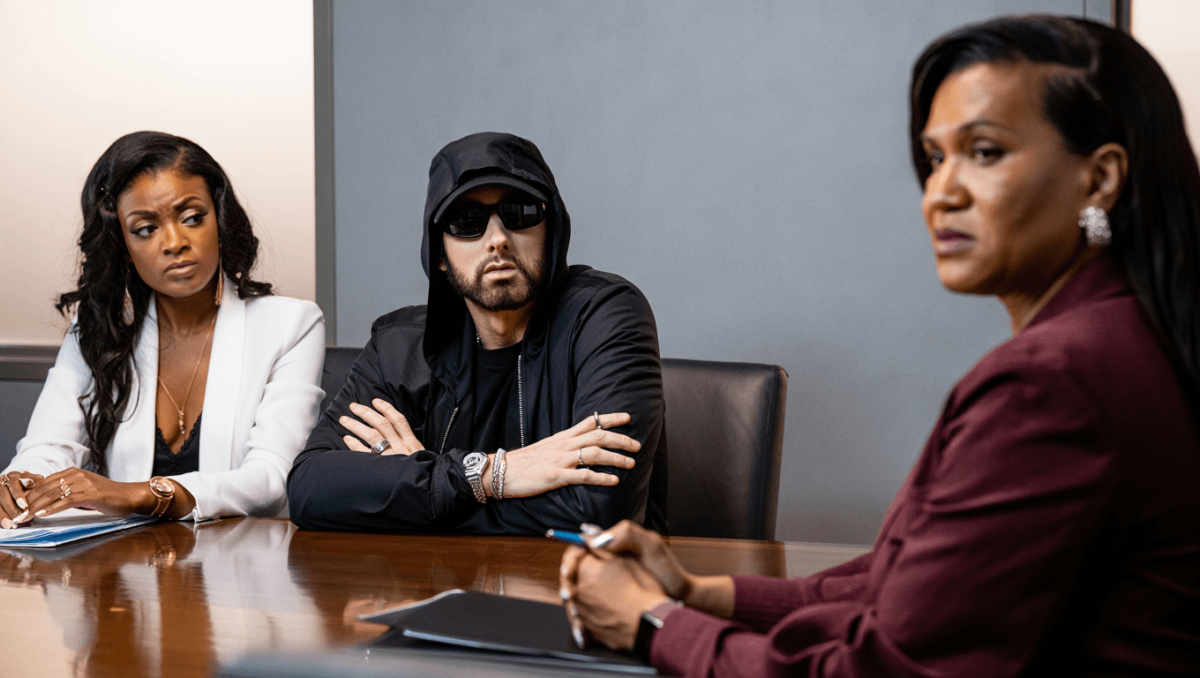
Eminem has accused Real Housewives of Potomac personalities Gizelle Bryant and Robyn Dixon of mounting a campaign of harassment as the three spar over a trademark the reality stars want to register. The dispute has turned procedural and personal, centering on a disputed deposition schedule and competing claims before the U.S. Patent and Trademark Office.
Why the feud escalated into accusations of harassment
The clash stems from Bryant and Dixon’s bid to trademark their podcast name, “Reasonably Shady,” after launching the show in May 2021. Eminem, legally Marshall Bruce Mathers III, opposed the application, saying consumers could confuse the mark with his long-established “Slim Shady” and “Shady” brands.
Euphoria season 3: Sydney Sweeney left off set as feud with Zendaya intensifies
Serena Williams GLP-1 ad sparks backlash: weight-loss commercial called irresponsible and dystopian
What started as a standard trademark opposition has become a public quarrel over discovery. The USPTO ordered a deposition of Mathers, and scheduling that interview exposed deep friction between the parties.
Deposition scheduling turned contentious
According to court filings obtained by Page Six, Bryant and Dixon say setting a date for Eminem’s deposition was a struggle. The women say Mathers’ team was “very difficult” when negotiating available times.
Dates, times and a short window
- Both sides ultimately agreed to hold the deposition on Oct. 29.
- Bryant and Dixon proposed an 11 a.m. ET start.
- Mathers’ team countered that he was only free at 2 p.m. ET.
- Mathers’ attorney warned that more than two hours would be excessive.
Bryant and Dixon objected, arguing that a 2 p.m. start would be “unreasonable” because it compresses the deposition into one workday and collides with regular vendor and counsel hours. They also say the singer’s approach implied the women should be grateful for his availability.
What both sides are claiming in filings
Legal papers show a standard tug-of-war over logistics has become an attack on motive. Eminem’s lawyers argue the women are being obstinate and that their refusal to accept a later start time amounts to harassment. They told Bryant and Dixon’s counsel that securing Mathers for a deposition is difficult, advising the plaintiffs to take the slot when they can.
On the other side, Bryant and Dixon contend the scheduling posture amounts to bad faith. They say the singer’s “take-it-or-leave-it” stance and the insistence on a strict two-hour cap suggest he is not cooperating in discovery.
Key assertions from each camp
- Eminem’s position: The women’s claims over a three-hour start-time difference are frivolous and show their pursuit is designed to harass.
- Bryant and Dixon’s position: The proposed timing and limitations reveal a lack of good faith and unfair pressure on counsel and vendors.
Background: the trademark application and legal history
Bryant and Dixon filed for the Reasonably Shady trademark in February following the podcast’s launch. The application covered typical podcast-related services and merchandising, from apparel to home goods.
Mathers opposed the filing in February 2023. He told the USPTO the mark risks consumer confusion because his career-long use of “Slim Shady” and “Shady” already identifies his brand.
Legal milestones so far
- May 2021: Bryant and Dixon launch the Reasonably Shady podcast.
- February 2023: The duo applies to register the Reasonably Shady mark.
- February 2023: Eminem files an opposition with the USPTO.
- October 2025: USPTO orders Mathers’ deposition; parties dispute timing.
Public and legal reactions
The dispute has attracted attention from entertainment outlets and social media. Us Weekly first reported on the filings, and Page Six later published documentation showing the exchanges about scheduling and the lawyers’ tone.
In public statements, the women’s attorney denied any likelihood of confusion between their mark and Mathers’ trademarks and said they are ready to defend their intellectual property rights. Mathers, meanwhile, has framed the deposition fight as evidence that the plaintiffs’ strategy is aimed at harassment rather than at legitimate trademark protection.
What the scheduling fight reveals about discovery in celebrity cases
Large-profile disputes often hinge on logistics. Celebrities juggle tight schedules, and opposing counsel may interpret accommodation requests as gamesmanship. The result is a procedural skirmish that can overshadow substantive trademark questions.
- High-profile deponents often have limited availability.
- Opposing teams push for windows that suit vendors and counsel.
- Small scheduling differences can escalate into broader accusations.
Possible next steps in the trademark fight
With the USPTO supervising the opposition proceeding, the parties may return to the examiner for further rulings on discovery disputes. If the timing disagreement remains unresolved, motions to compel or for protective orders could follow.
Both sides have signaled they will press their positions: Bryant and Dixon to defend their trademark application, and Mathers to protect his long-standing brand identity.