Show summary Hide summary
- Dench’s remarks on Weinstein: forgiveness and personal judgment
- Staying in touch with Kevin Spacey: what Dench says
- How Dench has navigated accusations in the past
- Weinstein’s legal journey: convictions, appeals and new rulings
- Industry reactions and the larger debate over art and accountability
- What Dench’s comments mean for public conversation
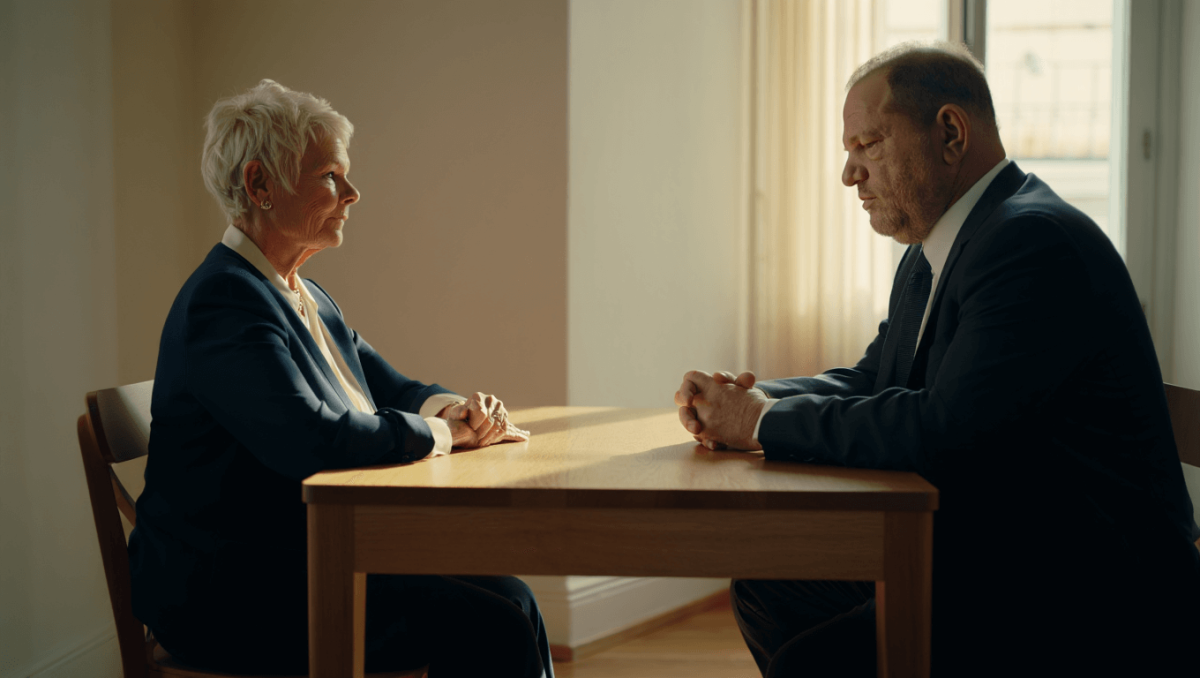
Judi Dench has reignited debate about accountability and forgiveness after telling a British magazine she believes Harvey Weinstein has “done his time.” Her remarks, and a confirmation that she still communicates with Kevin Spacey, have renewed public interest in how the film community responds to high-profile sex-crime convictions.
Dench’s remarks on Weinstein: forgiveness and personal judgment
In a recent interview with the Radio Times, the 90-year-old actress described seeing footage of Weinstein moving with walking sticks. She suggested that, for her, the question of what to do next is a personal one. Dench framed her view as a matter of forgiveness, saying she imagines he has served his sentence.
United Polaris Studio suites: tickets now on sale for April inaugural flights
Auston Matthews-Radko Gudas controversy: Pierre LeBrun predicts fallout
Her comments do not deny the seriousness of the allegations. Instead, they place emphasis on individual conscience when deciding how to respond to public figures who have been convicted.
Staying in touch with Kevin Spacey: what Dench says
Dench also confirmed ongoing contact with Kevin Spacey. She said they exchange messages and pointed out that Spacey was acquitted of criminal charges in the U.K. and was not found liable in a civil suit in New York.
Spacey currently faces additional civil claims in London, with three more cases slated to move forward next year. Dench’s remarks underline the tension many in the arts feel between personal relationships and public controversy.
How Dench has navigated accusations in the past
The actor has previously addressed misconduct allegations involving people she has worked with. In 2017, when accusations against Weinstein first became public, Dench said she was shocked and offered sympathy to those who came forward.
She has repeatedly argued for distinguishing professional achievements from personal behavior. In earlier comments, Dench asked whether a body of creative work should be erased because of the creator’s conduct.
Notable projects and professional ties
- Shakespeare in Love — Dench worked on this film produced during Weinstein’s rise.
- Philomena — another collaboration in which Dench had a starring role.
Despite her professional history with Weinstein, Dench has said she was not aware of his alleged actions. She has also publicly supported victims who reported abuse.
Weinstein’s legal journey: convictions, appeals and new rulings
Harvey Weinstein’s criminal and civil cases have followed a complex, multi-jurisdictional path. Below is a concise timeline of major milestones.
- 2017: Multiple women went public with allegations of sexual harassment, assault, and rape against Weinstein, triggering widespread coverage.
- 2020: Weinstein was sentenced in New York to 23 years after convictions on rape and criminal sexual act charges.
- 2023: A California jury handed down a separate 16-year sentence for forcible rape and related counts. Weinstein appealed that sentence.
- Four years after the 2020 New York ruling, the New York Court of Appeals overturned the earlier conviction.
- In March (recent retrial), Weinstein was found guilty again in a Manhattan criminal retrial on sexual assault charges.
The case has involved reversals, additional convictions and pending appeals, reflecting the legal complexity of prosecuting historical sex crimes across different states and courts.
Industry reactions and the larger debate over art and accountability
Dench’s stance highlights a wider cultural argument: should an artist’s body of work be judged separately from their private conduct? She has used historical and artistic comparisons to make the case that contributions to culture may remain valuable despite the creator’s failings.
Others in the industry and survivors’ advocates argue for zero tolerance and for changing how power is checked within entertainment. The conversation stretches beyond these two figures and touches on institutional reform, victim support, and how audiences choose what to watch.
What Dench’s comments mean for public conversation
When prominent performers weigh in, their words influence public debate. Dench’s blend of sympathy for victims, insistence she was unaware of abuse, and belief in personal forgiveness adds nuance to a polarized topic.
Her remarks also remind audiences that celebrity relationships are complicated. Statements about accountability, punishment and compassion often overlap when long careers, close friendships and evolving legal outcomes collide.