Show summary Hide summary
- How one passerby turned into a viral symbol
- Why the outfit mattered to onlookers and online audiences
- Memes, admiration, and the rise of a nickname
- Voices praising the crowd and the role of women
- Calls to protect privacy and avoid doxxing
- What this moment says about protest culture and fashion
- How social media shaped the story
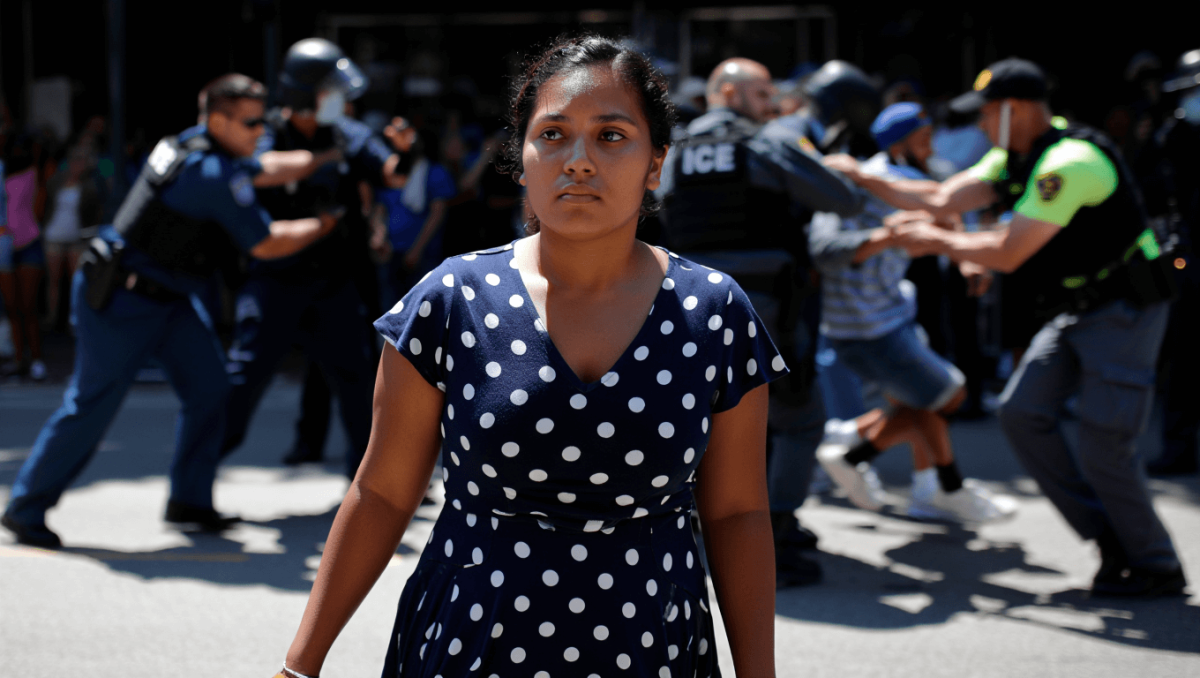
A single image from a chaotic Canal Street scene has become a quiet emblem of neighborhood resistance. Amid shoving and shouted orders during a recent ICE operation in New York, one woman’s calm, patterned outfit captured attention and sparked a wave of online admiration.
How one passerby turned into a viral symbol
Video clips and photos from the Canal Street incident circulated rapidly. Viewers kept pausing on the same figure: a woman in a polka print dress, a tailored blazer, and sensible shoes. The contrast between the bustle and her composed posture made her stand out.
Metallica’s James Hetfield stuns with jaw-dropping proposal to Adriana Gillett
Christina Haack stuns in cream crochet bikini: responds to fourth engagement rumors
- Location: Canal Street, Manhattan.
- Event: Immigration enforcement action by ICE.
- Attire that drew notice: polka dot dress, businesslike blazer, practical footwear.
Why the outfit mattered to onlookers and online audiences
The attention wasn’t just about aesthetics. Social media users read meaning into the look. The mix of everyday office wear and determined presence suggested defiance in an ordinary package.
- People praised the juxtaposition of professional clothes with protest energy.
- Others celebrated the idea of ordinary New Yorkers stepping in during a tense enforcement action.
- Many tagged the moment as an example of fashion as a form of civic expression.
Memes, admiration, and the rise of a nickname
Within hours, thumbnails of the woman were captioned, remixed, and joked about. A simple nickname emerged online, and users began sharing costume ideas and playful captions inspired by the scene.
- Costume suggestions circulated for parties and Halloween.
- Lighthearted quips compared the outfit to “business casual” battle gear.
- Fans turned the image into posts celebrating everyday bravery.
Voices praising the crowd and the role of women
Commenters noticed who stepped forward during the clash. Many highlighted that women featured prominently in the footage, framing the moment as part of a longer pattern of civic engagement.
Observers celebrated New York women for confronting a powerful agency in the street. That recognition quickly became part of the viral conversation.
Calls to protect privacy and avoid doxxing
Not all attention was welcome. As the clip spread, some online users urged restraint. They asked fellow users not to hunt down or identify the woman without consent.
- Privacy advocates urged caution before sharing personal details.
- Many commenters demanded protection for bystanders who act spontaneously.
- Others argued the moment should remain anonymous to keep focus on the issue, not the individual.
What this moment says about protest culture and fashion
The Canal Street snapshot fits into a wider pattern where clothing becomes shorthand for a political stance. From music-led marches to creative local actions, style often amplifies message and memory.
Key takeaways about symbolic dressing
- Clothes can humanize protests and make scenes relatable.
- Viral moments often center on contrasts: ordinary dress versus extraordinary circumstances.
- Such imagery helps narratives spread quickly across platforms.
How social media shaped the story
Platforms accelerated the image’s reach. Reposts, reaction threads, and humor all contributed to a chorus that turned one passerby into a viral figure.
- Short clips emphasized the atmosphere and participants.
- Users created hashtags and shared parody posts to keep attention on the moment.
- Public response blended solidarity, entertainment, and concern for safety.