Show summary Hide summary
Who would have thought that Hollywood’s most tantalizing secret would be swept up—and swept out—by a cleaning lady? Fasten your seatbelts: with “She Saw It Coming: Hollywood’s Biggest Secret Exposed by a Cleaning Lady,” the cinematic establishment is forced to face a reality they had virtually expelled from the studios. What happened? Let’s dust off the facts.
A Bet Nobody Expected to Clean Up
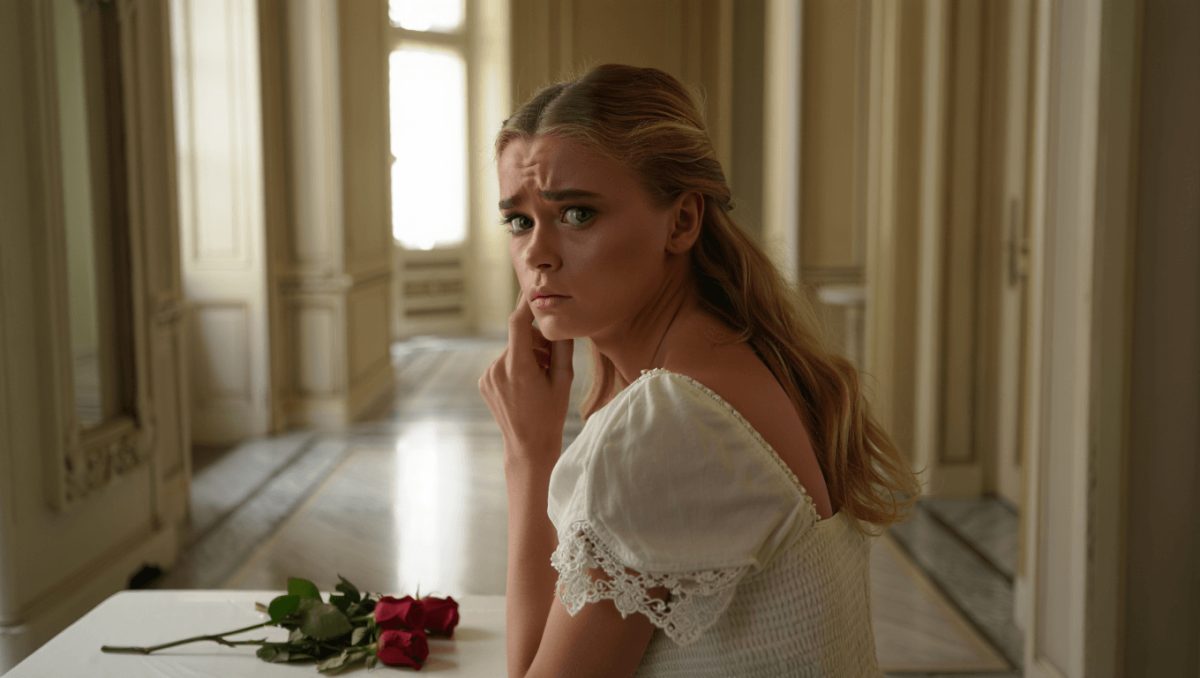
On paper, “The Cleaning Lady” (La femme de ménage) had promise, but not the make-up of a blockbuster-in-waiting. Sure, it wasn’t conjured out of thin air; it was adapted from a beloved, best-selling novel with an already devoted readership—a steady foundation that’s become rare in an era when Hollywood struggles to cook up new tales. Still, despite this solid source material, bringing it to the big screen was a gamble. For a studio exec, it must have felt like betting on a horse that everyone admires but nobody thinks will win the race.
Picture this: an unabashed erotic thriller, fronted by a working-class heroine, without a pre-existing movie franchise, sans superheroes, and entirely devoid of a shared cinematic universe. No cape, no planets at risk. Only Sydney Sweeney—a star still building her box office credentials—facing a film industry besotted with global franchises and blockbuster budgets ticking upward by the hundred million. Strong project? Absolutely. Guaranteed triumph? Hollywood politely chuckled, “Let’s see.”
United Polaris Studio suites: tickets now on sale for April inaugural flights
Auston Matthews-Radko Gudas controversy: Pierre LeBrun predicts fallout
The Numbers Take Everyone by Surprise
And yet—brace yourself—the film trounced all expectations. Directed by Paul Feig, “The Cleaning Lady” swept past $137 million in global box office, on just a $35 million budget. That kind of return isn’t just unusual in today’s Hollywood ecosystem—it’s downright miraculous. The buzz was so undeniable that a sequel was greenlit less than three weeks after release—practically light speed by recent studio standards.
But let’s not give all credit to the fan-favorite novel. This was also a dramatic comeback for a genre Hollywood had left for dead: the erotic thriller. Back in the swaggering ‘80s and ‘90s, these films were box office events—cultural moments propelled by hits like “Fatal Attraction” and peaking with “Basic Instinct.” Over time, though, the genre collapsed under its own weight, battered by too much supply, the rise of the Internet, and a rattled cultural climate wary of its staple elements: femme fatales, explicit sexuality, and moral ambiguity.
For more than two decades, Hollywood let the erotic thriller quietly wither. “The Cleaning Lady” didn’t try to rehabilitate or deconstruct—the film simply owned it. No lessons, no ideology, no filter. Just a story of desire, money, and power. An audience hungry for just that, responded in droves.
The Sydney Sweeney Effect
It’s tough not to see this box office sensation as a personal victory for Sydney Sweeney. In the past three years, she has lined up budget-conscious, high-potential projects, while many of her peers took bets on riskier blockbusters. After the hit “Anyone But You” racked up $220 million, she looked to have secured a spot as one of the industry’s most reliable faces. But “Madame Web,” “Eden,” and “Christy” quickly brought her back to earth.
In “The Cleaning Lady,” the most revealing figure isn’t revenue, but audience makeup: over 55% of viewers were women. This reality shatters a long-held studio myth that women had abandoned theaters for these sorts of stories. The audience had always been there—Hollywood just stopped inviting them.
Breaking the Hollywood Mold
“The Cleaning Lady” fits a large, emerging trend. Recent megahits like “Avatar 3,” “Zootopia 2,” and “Lilo & Stitch” have gone for safe, family-friendly territory—smooth, uncontroversial, algorithm-friendly. Paul Feig’s film, by contrast, took a deserted lane: mid-budget, grown-up cinema designed for movie theaters, not streaming formulas.
- No direct competition
- Backed by a voracious book audience
- Reminded the industry that audiences crave shocks and discomfort, not just spectacle
It prompts a collective industry memory-jog: audiences don’t just want dazzling displays, but something that makes them squirm, question, and wonder.
Will this revival last, or is it only a fleeting cycle? Hollywood is always driven by trends. Like westerns that thunder back onto screens every few decades, genres fade, then return fresh to new generations unburdened by past overexposure. If “The Cleaning Lady” can confirm its bold start, it may not just be a surprise hit but the first tremor of a seismic industry shift.
In short, sometimes all it takes is a $35 million gamble and a fearless cleaning lady to remind Hollywood of what they’ve lost—and what audiences truly crave. Don’t be surprised if the dust never quite settles again.