Show summary Hide summary
What happens when Hollywood dares to race alongside the fastest machines on earth, in the intensity of real Grand Prix weekends? Joseph Kosinski and his team did precisely this, pulling off a logistical and technical feat so bold, it blurred the line between cinema and reality, and redefined how young fans experience Formula 1.
Lights, Camera, Action… At Speed!
Formula 1 may once have been considered an exclusive playground for die-hard petrolheads, but that’s changing faster than a pit stop. At the heart of this new wave is an extraordinary film project helmed by director Joseph Kosinski, whose ambition was as sharp as his taste for adrenaline: to shoot a Hollywood blockbuster directly within actual Grand Prix events. Not beside them. Not after hours. Right in the tempest of race weekends themselves.
Just consider the logistical magic conjured to make this possible. The production slipped into the ultra-tight calendar of F1, filming at Budapest, Spa-Francorchamps, Zandvoort, Monza, Las Vegas, Mexico, and Abu Dhabi. Scenes were captured between free practice runs and qualifying sessions, sometimes as hundreds of thousands of real-life spectators looked on in amazed confusion. Transforming Formula 1 circuits into colossal movie sets, Kosinski and co. made the impossible look easy—or at least thrillingly dramatic.
United Polaris Studio suites: tickets now on sale for April inaugural flights
Auston Matthews-Radko Gudas controversy: Pierre LeBrun predicts fallout
Blurring the Lines: When Fiction Overtakes Reality
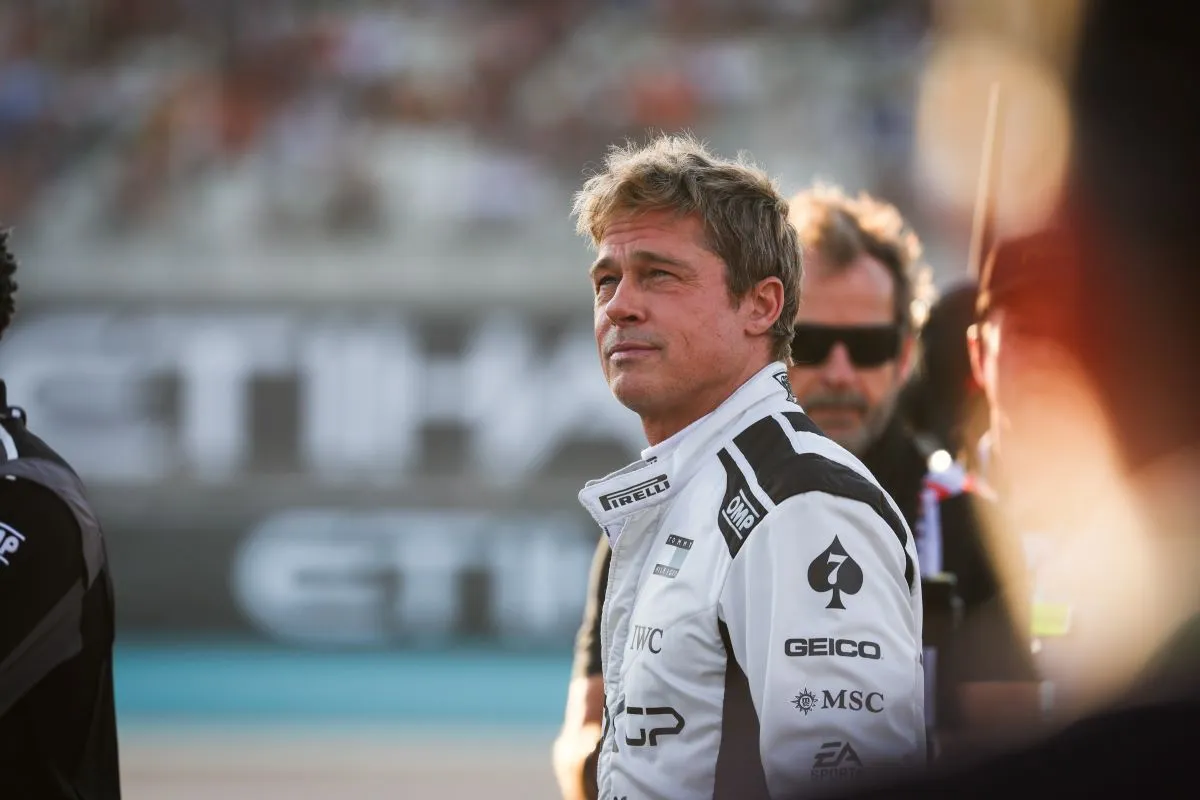
This boldness wasn’t limited to clever scheduling. The filmmakers created a fictional team, APXGP, complete with its own garage, single-seaters, and dedicated crew. Their set-up nestled among the real F1 teams in the paddock. Imagine Brad Pitt, sharing the asphalt (and maybe a nod of acknowledgment) with Lewis Hamilton, Max Verstappen, and Charles Leclerc. Suddenly, the boundary between fiction and reality was thinner than a Pirelli slick after fifty laps.
Even official drivers appeared as themselves, intensifying the delightful confusion for fans both in the stands and on the couch. One scene that sparked especially strong reactions—pro and con—was a podium moment at the Abu Dhabi Grand Prix, with Brad Pitt alongside Charles Leclerc. Was it real? Was it cinema? The answer: both, and neither, all at once.
The Art of Authenticity: Real Cars, Real Speed, Real Stakes
Kosinski didn’t settle for special effects. Following the philosophy he championed in “Top Gun: Maverick,” he focused on shooting in real-world conditions. But how do you put actors inside a Formula 1 fantasy without risking a multi-million dollar pileup?
Here, the expertise of Lewis Hamilton and Toto Wolff came into play. Their advice led to the construction of unique single-seaters, using modified Formula 2 chassis so they would resemble true F1 cars. These hybrid machines weren’t just eye candy: fitted with fifteen custom camera mounts, they could actually race at high speeds under real track conditions. Sony stepped in to design miniature, tailor-made cameras, opening up previously unimaginable immersive shots.
To ensure every sequence pulsed with authenticity, Brad Pitt and Damson Idris underwent intensive training before sliding behind the wheel themselves, becoming not just actors but part-time racing drivers. The production’s obsession with detail sought total immersion, aiming to “put the audience inside one of these incredible machines,” as Kosinski put it.
- Custom-built single-seaters based on F2 chassis
- Fifteen custom camera mounts per car
- Actors in the driving seat after dedicated training
- Official F1 drivers and teams integrated into the shoot
High Drama, Tight Spaces, Maximum Discretion
But nothing about Formula 1 is simple—especially not filming during a live event. The production juggled minuscule shooting windows, tight security, and a need for utter discretion. The last thing anyone wanted was for the spectacle of sport to be overshadowed by a Hollywood circus act. Yet, thanks to extraordinary planning and the vigilant eye of Hamilton as co-producer, every detail was scrutinized for credibility, aiming to enthrall both newcomers and hardcore F1 purists.
Through these unprecedented efforts, Kosinski’s team has revolutionized the way Formula 1 can be shared. Not as a distant spectacle, but as a full-blooded, all-senses experience, with each lap ringing with the authenticity of real motorsport and the emotion of great cinema.
Conclusion: Will This Change F1’s Future?
What does this all add up to? Formula 1 is no longer just a niche sporting event—it’s a stage for cinematic innovation, daring to draw in a youthful audience hungry for both excitement and genuine emotion. If you ever doubted a film could make you feel the rush of an F1 lap, brace yourself: the next wave of fans is already revving its engines.