Show summary Hide summary
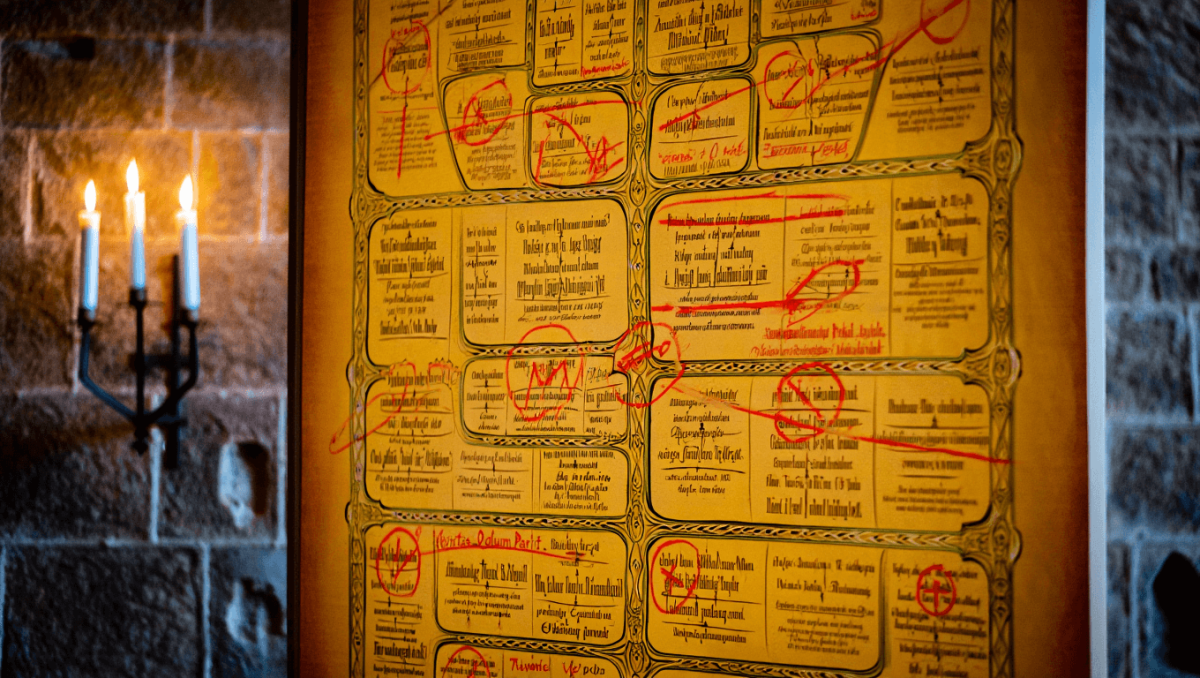
The family-tree illustration hanging in The Traitors’ castle has ignited intense chatter online. Viewers and contestants alike have been poring over the ornate chart, trying to tease out any secret message. Much of the debate centers on Latin phrases woven into the picture and whether those lines point to hidden kinship or a warning about trust and betrayal.
What the Latin on the family tree actually reads
Two distinct inscriptions
United Polaris Studio suites: tickets now on sale for April inaugural flights
Auston Matthews-Radko Gudas controversy: Pierre LeBrun predicts fallout
The image includes Latin script above and below the portraits. The upper phrase translates as a stark warning about misplaced trust.
Upper line: Beware those you treat as family; even the sharpest knives are often handed across the table by familiar hands.
The lower inscription delivers a similar sentiment in clearer terms.
Lower line: Among close friends hide the most concealed enemies. Do not let your trust become the cause of your ruin or elimination.
Breaking down the translation and its tone
- The language is intentionally cautionary. It evokes betrayal from within a circle.
- Words like “trust,” “blood,” and “hidden enemies” carry heavy emotional weight.
- The phrasing suggests a moral: proximity can mask peril.
The Latin in the artwork isn’t written in perfect classical form. Still, the message remains direct and ominous. It reads as a deliberate nudge to players and viewers.
Why fans think this points to secret family ties
Some viewers interpret the phrase about “your own blood” as more than rhetoric. They see it as a hint that contestants may share familial links.
- Confirmed connection: Judy and Roxy are now known to be mother and daughter.
- On-screen relationships: Ross and Ellie are publicly dating.
- Speculation: Fans suspect possible links between Jessie and Jack.
Despite these revelations and rumors, the family-tree layout doesn’t obviously place known relatives next to one another. That gap fuels alternate readings of the Latin.
How the inscription could shape the game and viewer theories
Producers often use set design to prime players and audiences. A foreboding Latin maxim can do several things.
- It heightens paranoia and mistrust within the group.
- It gives viewers a puzzle to decode and debate.
- It may mislead as much as it informs, adding layers to strategy.
Contestants who notice the lines might alter alliances or second-guess close companions. Viewers who read that same warning tend to scan for buried family connections and secret loyalties.
Possible interpretations vs. coincidence
There are a few ways to read the Latin and the layout together.
- The inscriptions could be literal hints about kinship.
- They could be symbolic, emphasizing the show’s core theme: trust vs. betrayal.
- They may be a red herring, designed to steer discussion off other clues.
At present, the inscriptions add atmosphere and intrigue. But they do not prove any hidden genealogies by themselves.
Lines fans are watching closely
Several phrases have become focal points in social media debates. Key excerpts are already quoted widely.
- “Beware those you trust like your own blood” is read as a direct admonition.
- “The sharpest daggers are handed over at the table by trusted hands” fuels fears of intimate betrayal.
- “Your trust must not be the cause of your downfall” reads like a rule for survival.
These lines combine to create a chilling motif that mirrors the show’s atmosphere.
What to watch for next
Fans will be tracking editing choices, placement of cast members in future scenes, and any reveal that connects players behind the scenes. Every nod, look, or shot of the family tree will be examined for hidden meaning.
Image credit: BBC