Show summary Hide summary
- How Best Buy is leaning into AI products to fuel growth
- AI eyewear arrives on store floors and grabs headlines
- AI-first PCs and Copilot+ models shaping the computing aisle
- New partnerships: OpenAI, Google and an AI checkout tie-in
- Consumer response: curiosity collides with skepticism
- Why retailers and brands are amplifying AI messaging
Best Buy is redefining its floor plan and product mix to become the destination for AI-enhanced consumer tech, even as overall sales remain largely unchanged. The retailer is pushing a string of new categories and partnerships to capture attention — from AI glasses on store shelves to integrations with ChatGPT — while navigating mixed consumer feelings about generative AI.
How Best Buy is leaning into AI products to fuel growth
Best Buy closed its fiscal year with roughly flat revenue near $42 billion. Leadership says market share held steady, though demand for some traditional categories softened. Rather than retreat, the company is focusing on emerging items that highlight artificial intelligence.
- New growth areas: AI glasses, 3D printers, collectibles, health rings, toys, and PC gaming handhelds.
- Retail play: Broadened assortments and dedicated in-store experiences to showcase AI features.
Euphoria season 3: Sydney Sweeney left off set as feud with Zendaya intensifies
Serena Williams GLP-1 ad sparks backlash: weight-loss commercial called irresponsible and dystopian
CEO Corie Barry frames AI as a long-term opportunity to refresh consumer interest. The company expects computing to accelerate as devices adopt AI-driven innovations.
AI eyewear arrives on store floors and grabs headlines
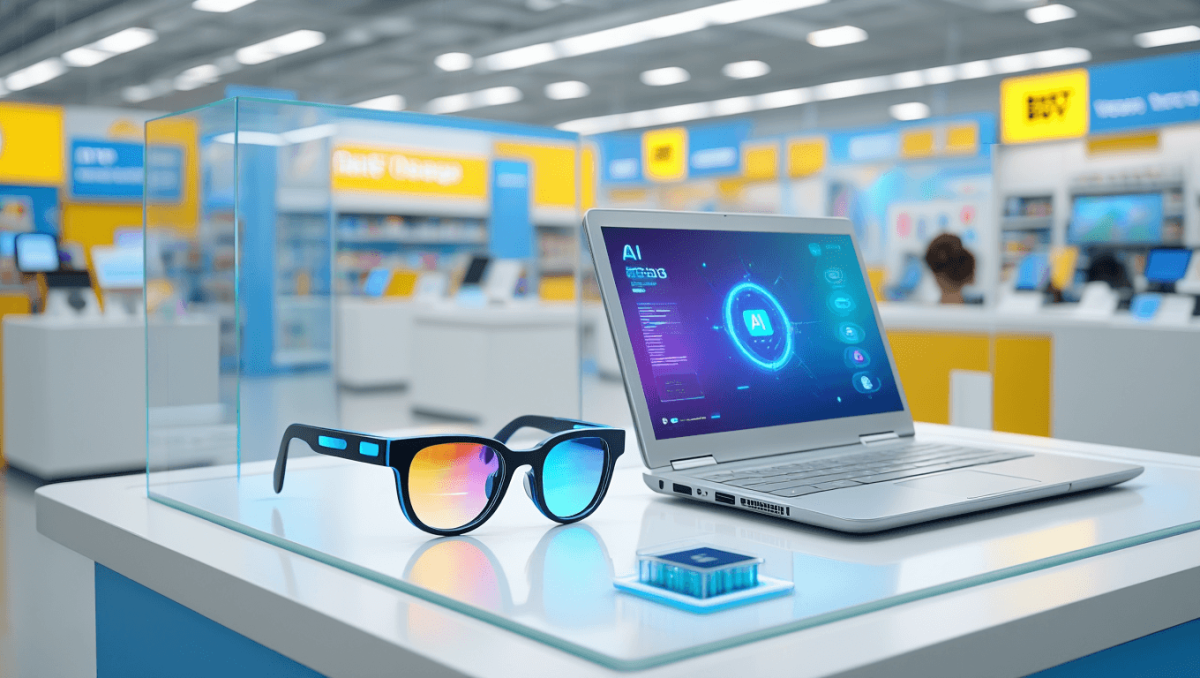
Best Buy is spotlighting AI glasses as a top consumer trend. The retailer credits a strong partnership with Meta for bringing early models to shoppers. Executives say customer curiosity sparked at tech shows like CES is turning into inventory and demo space in stores.
What these AI glasses can do
- Identify landmarks and provide contextual information.
- Translate signs and text in real time.
- Capture hands-free photos and record audio for calls.
- Offer voice control and on-lens displays for information.
Best Buy plans to expand dedicated areas for Meta products in dozens of locations. To create room, the retailer is moving some computing displays to central parts of stores. Other shop trials include outlet sections and Yardbird outdoor furniture displays.
AI-first PCs and Copilot+ models shaping the computing aisle
Microsoft’s Copilot+ devices are among the PC category bets Best Buy highlights. These machines include specialized chips that accelerate on-device AI tasks.
- AI features: automatic framing of video calls and smarter document editing.
- Retail strategy: dozens of laptop and desktop models listed with enhanced AI capabilities.
- Exclusives: Best Buy has carried many models available only through its stores.
Executives emphasize that smarter PCs are a gateway for consumers to experience tangible AI benefits.
New partnerships: OpenAI, Google and an AI checkout tie-in
Best Buy is expanding beyond hardware to integrate with major AI platforms. Recent deals aim to put the retailer’s catalog inside the interfaces consumers already use.
- OpenAI: product listings appearing in ChatGPT results.
- Google: participation in the Universal Commerce Protocol for Google Search’s AI mode and the Gemini app.
- Wizard: the first retail partner to enable native checkout with this AI commerce platform.
These moves are designed to shorten the path from discovery to purchase when consumers interact with AI assistants.
Consumer response: curiosity collides with skepticism
Research shows interest in AI does not always translate to usage. A Gartner survey finds notable skepticism among shoppers.
- 54% of consumers feel AI is overhyped by media coverage.
- 72% report encountering generative AI in apps or online without asking for it.
- Only 13% say they actively use AI tools today.
Gartner notes active users skew toward certain groups: younger adults, men, urban residents, and those in higher-income roles such as knowledge work or management.
Why retailers and brands are amplifying AI messaging
Analysts say the consumer electronics market needs fresh stories to spark upgrades. With smartphone sales cooling, AI provides a new narrative to entice buyers.
- Hardware makers add AI features to differentiate products.
- Retailers like Best Buy create hands-on spaces so shoppers can test new experiences.
- Cross-platform integrations help products surface inside AI assistants, increasing visibility.
Industry observers argue that fear of missing out is driving both companies and customers to embrace AI, even while adoption remains limited. The dynamic is reshaping store layouts, marketing plans, and product road maps across the electronics sector.