Show summary Hide summary
- Why Fifth Avenue still matters for global retail
- Who keeps the avenue running: the role of the local BID
- New leases, acquisitions and billion-dollar investments
- Current and upcoming store projects to watch
- Foot traffic, events and year-round programming
- Visitor patterns and challenges for recovery
- The $402 million pedestrian-first redesign and what it means
- How businesses are adapting their on-street strategies
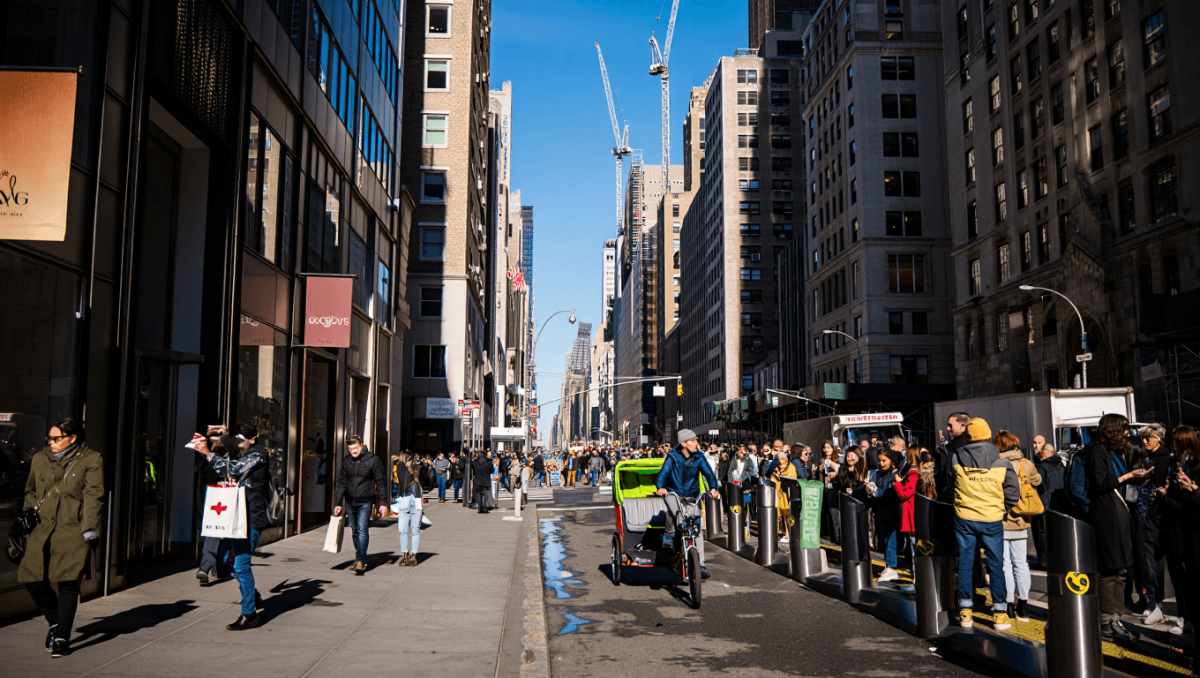
A crisp winter sun lights up Midtown as shoppers, office workers and tourists crowd Fifth Avenue. Bags from flagship stores swing past lunch lines and neon pedicabs, while construction cranes punctuate the skyline. The avenue feels both familiar and in motion — a high-stakes retail stage where history, foot traffic and fresh investment intersect.
Why Fifth Avenue still matters for global retail
Fifth Avenue is more than a shopping street. It is a global showcase for brands that want visibility, prestige and constant foot traffic. The corridor between 49th and 60th Streets remains one of the priciest retail strips in the world.
TSA shutdown: expect 3-hour security lines and airport closures
AI success for brands and retailers: why deliberate moves trump speed
- High rents: Leasing prices have been reported at roughly $2,000 per square foot annually.
- International draw: A large share of visitors are global tourists, bolstering luxury demand.
- Iconic flagships: Major labels use the avenue as a central stage for brand storytelling.
Industry leaders say the avenue is always on the radar for aspirational brands. For retailers with global ambitions, a Fifth Avenue storefront can be a strategic statement as much as a point of sale.
Who keeps the avenue running: the role of the local BID
The Fifth Avenue Business Improvement District (BID) stewards the corridor and acts as a daily point of contact for tenants and visitors. The BID’s reach covers the stretch from 46th to 61st Street on Fifth Avenue, plus a slice of 57th Street.
Services the BID provides
- Visitor assistance and wayfinding.
- Street maintenance, trash removal and snow clearing.
- Permitting support and liaison work with city agencies.
- Marketing and curated experiences to boost off-peak activity.
The organization employs several dozen staff who walk the blocks, coordinate with property owners and advocate for improvements. Their work ranges from ordinary maintenance to shaping big capital projects.
New leases, acquisitions and billion-dollar investments
After a pandemic dip, the avenue has seen a fresh wave of commitments from retailers and investors. Activity accelerated over the past two years, driven by many high-profile moves.
- Flagship openings and relocations: Retailers have upgraded or expanded their presence with larger stores.
- Property acquisitions: Some brands are buying the buildings they occupy to secure long-term control.
- Private investment: Industry estimates point to roughly $4 billion injected into the corridor since 2022.
Examples of recent activity include international brands taking prime addresses and new entrants preparing multi-level spaces. At the same time, larger projects such as a planned IKEA store and new luxury flagships signal that investment is not just short-term.
Current and upcoming store projects to watch
- Nike’s large experiential store, a long-standing Fifth Avenue presence, remains a major draw.
- High-end watch and jewelry brands are launching refreshed U.S. flagships.
- International fashion houses and lifestyle retailers continue to expand or purchase their Fifth Avenue locations.
- Major openings slated over the next few years include big-format destination stores and new luxury outposts.
Construction noise is now part of the avenue’s soundtrack. Retailers and developers are planning for long-term visibility rather than short campaigns.
Foot traffic, events and year-round programming
Street-level activity drives the avenue’s energy. The district is building on holiday crowds with programming aimed at extending visits into slower months.
How the avenue encourages visits
- Seasonal activations and branded installations attract social media attention.
- Temporary car-free days create pedestrian-focused moments during the winter season.
- Curated guides and promotions spotlight dining, bars and cultural offerings as alternatives to pure shopping.
Holiday season peaks are remarkable: on busy weekends a single block can see tens of thousands of pedestrians per hour. The BID also leverages major events in the city to funnel visitors to the avenue.
Influencer partnerships and store-hosted experiences help the district highlight non-retail attractions. Retailers stage talks, podcast recordings and celebrity appearances to keep footfall high and the narrative fresh.
Visitor patterns and challenges for recovery
Fifth Avenue’s recovery has not mirrored every other Manhattan shopping strip. The corridor relies heavily on international tourists, which made its reopening dependent on travel rebounds.
- Tourism fell sharply during the pandemic, slowing retail momentum.
- As visitor counts return toward pre-pandemic levels, leasing interest has picked up.
- The current market challenge is limited inventory; available space is shrinking.
Experts note that competition for the best storefronts remains intense. Brands often plan with a long horizon, so decisions hinge on a mixture of branding and long-term real estate strategy.
The $402 million pedestrian-first redesign and what it means
City plans call for a major renovation to rework Fifth Avenue into a more pedestrian-friendly boulevard. The proposal covers Fifth from Bryant Park to Central Park and aims to launch in the coming years.
- Budget: Approximately $402 million.
- Key elements: Wider sidewalks, added trees and upgraded stormwater systems.
- Traffic changes: Fewer car lanes, but bus access will remain.
Retailers have largely welcomed the concept, even as planners acknowledge temporary disruption during construction. The long-term goal is to turn high pedestrian volumes into a safer, more enjoyable experience for shoppers and residents alike.
Proponents point to both cultural precedent and global examples where cities reimagined their prime commercial streets to boost footfall and quality of life. For brands that invest in Fifth Avenue, the redesign could increase the street’s appeal for decades.
How businesses are adapting their on-street strategies
Retailers on Fifth Avenue are blending physical retail with events and experiences. The mix includes restaurant tie-ins, themed tours and collaborations with hospitality venues nearby.
- Stores host talks, book signings and podcast recordings to attract repeat visits.
- Retailers and hotels cross-promote cocktails, dining and seasonal menus.
- Curated itineraries encourage visitors to explore cafes, bars and cultural stops.
These efforts aim to broaden the avenue’s draw beyond peak holiday shopping, making it a destination for leisure, dining and entertainment year-round.