Show summary Hide summary
- Why ICE became a target at an Olympic event
- 19 standout signs that fused wit and protest
- How the visuals amplified the message
- Public reaction and press coverage
- Voices from the protest
- Why this kind of protest matters online
- Questions the demonstration raised for event planners
- Ways the movement spread beyond the stadium
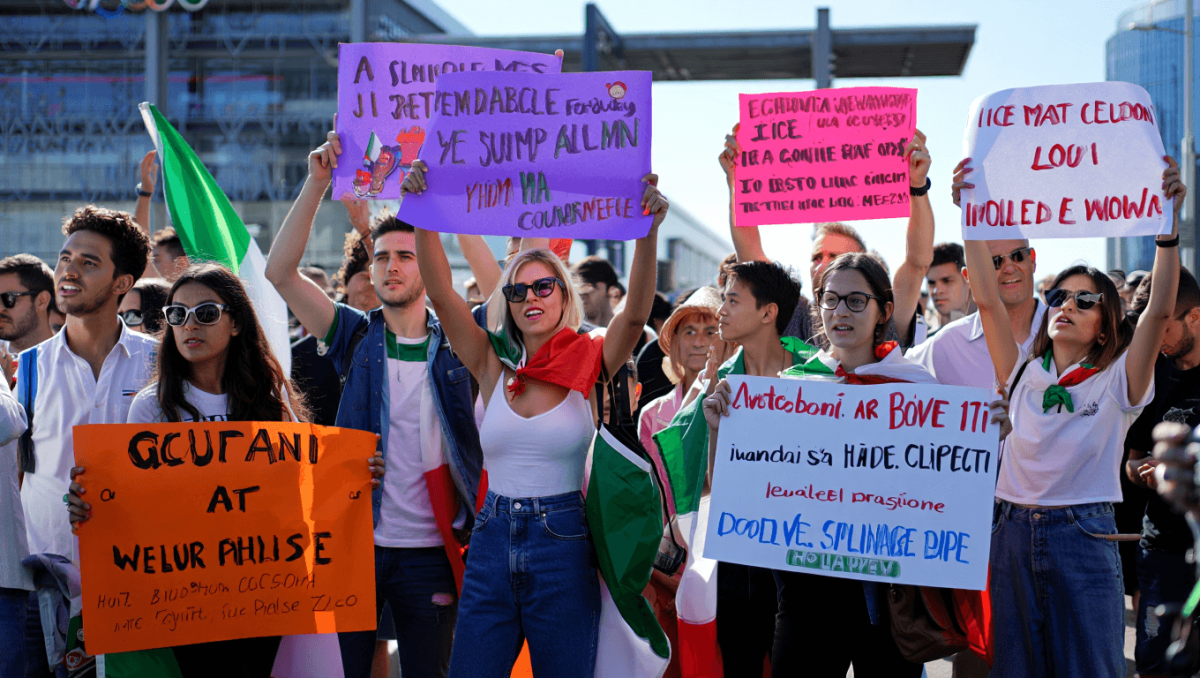
A crowd in Italy turned a sporting spectacle into a stage for protest, unfurling a parade of clever, cutting and culturally aware signs aimed at ICE during Olympic events. The colors, wordplay and sharp calls for justice made the demonstration impossible to ignore. Photo clips and short videos spread fast online, convincing many that the messaging matched the moment.
Why ICE became a target at an Olympic event
Organizers and activists said the timing was deliberate. The Olympics draw global attention, and protesters used that spotlight to focus on U.S. immigration enforcement. They framed the issue as a human-rights story with broad appeal.
Dolly Parton: the surprising true story behind I will always love you
Miley Cyrus gushes over godmother Dolly Parton: the most loved person on the planet
- Many signs linked the Olympic theme to immigration policy.
- Protesters wanted international media to see the connection.
- They aimed to push public debate beyond borders.
19 standout signs that fused wit and protest
Below are the most talked-about placards. Each one combined a visual joke, a pointed political message, or a poignant reminder of lives affected by border enforcement.
- “Medals Don’t Hide Migrant Pain” — A bold banner ask: who counts the hidden costs of national pride?
- “No Podiums for Deportations” — Simple, chant-ready and visually stark.
- “Fair Play, Not Forced Sends” — A play on sportsmanship to critique forced removals.
- “Refugees Welcome, ICE Unwelcome” — A direct call that juxtaposed hospitality and enforcement.
- “Borders Aren’t Lines on a Map” — An artistic sign with a broken map motif.
- “Games for All, Not Gates” — A slogan that asked for inclusivity over exclusion.
- “Hold Trophies, Not Tears” — Emotional and image-driven, made for camera shots.
- “Human Rights > Hardlines” — Minimalist, with a high visual contrast.
- “We Came for Sport, Not Surveillance” — A critique of policing at international events.
- “No Fan Zone for Deportation Plans” — Clever rhyme to stick in viewers’ minds.
- “Olympic Spirit, Not Immigration Fear” — Evoked the games’ ideals against harsh policies.
- “Let Families Stay, Let Athletes Play” — A compassionate plea connecting family unity to sport.
- “Victory Isn’t Deporting the Vulnerable” — Moral framing that questioned who wins.
- “From Refugee Boats to Podium Hopes” — A sign tracing the arc of aspiration.
- “Stop Detentions, Start Dialogues” — A call for policy debate over enforcement alone.
- “Justice is an Equalizer” — Framed like a rallying cry with bold lettering.
- “Athletes Run, Families Flee” — A stark contrast meant to unsettle comfortable viewers.
- “Protect People, Not PR” — Accused authorities of image management over care.
- “Solidarity Is Global” — A final sign that broadened the protest’s reach.
How the visuals amplified the message
Protest art was essential. Typography, color choices and props turned each slogan into a shareable moment. Photographers favored signs with sharp contrasts and short phrases.
- Bold typefaces made messages legible at a distance.
- National symbols were repurposed to challenge policies.
- Hand-drawn imagery gave many signs extra emotional weight.
Public reaction and press coverage
Videos clipped to social platforms racked up views quickly. Journalists noted the contrast between the celebratory atmosphere and the urgent, dissenting messages.
- Social posts used hashtags linking migration and the Olympics.
- Some commentators praised the creativity and timing.
- Others debated whether sports events should host political displays.
Voices from the protest
Organizers described a mix of students, local activists and international visitors. They emphasized nonviolence and targeted message delivery. Legal observers were on hand to document police interactions.
What participants wanted
- Greater transparency about detention policies.
- Dialogues with officials and Olympic organizers.
- Public attention on family separations and refugee rights.
Why this kind of protest matters online
Visual protests translate well to mobile feeds. Short, provocative signs are ideal for rapid sharing. Journalists and influencers amplify those images, which can shape narratives far beyond the event site.
- Memorable slogans boost discoverability in searches.
- Social proof from shares raises editorial interest.
- High-contrast visuals perform well in Google News thumbnails.
Questions the demonstration raised for event planners
Organizers face a challenge: how to protect the celebratory aura while respecting free expression. The protests forced a review of security, press access, and community engagement policies.
- How to balance safety and open discourse at major events.
- Whether host cities should create designated free-speech zones.
- How to ensure affected communities can speak without being sidelined.
Ways the movement spread beyond the stadium
Activists used coordinated timing, social media strategy and local alliances to maximize reach. The result was a conversation that moved from live streams into editorial pages and search feeds.
- Short videos tailored for discovery platforms.
- Infographics that summarized demands.
- Local coalitions pushing for policy meetings with officials.