Show summary Hide summary
- How the airline’s economy bunks are set up and used
- Where and when you can buy a bunk — pricing and booking details
- Safety rules, regulations, and operational limits
- Traveler response: praise, concerns, and social media buzz
- How this fits into broader airline trends
- Practical tips for passengers considering a bunk
- What to expect next from Air New Zealand and competitors
Air New Zealand is now offering a novel sleep option for economy travelers: bunk-style berths sold by the hour. The airline has begun marketing these compact sleeping spaces as a paid add-on, with the advertised rate coming in at $125 per hour, promising an alternative to cramped seats on longer trips.
How the airline’s economy bunks are set up and used
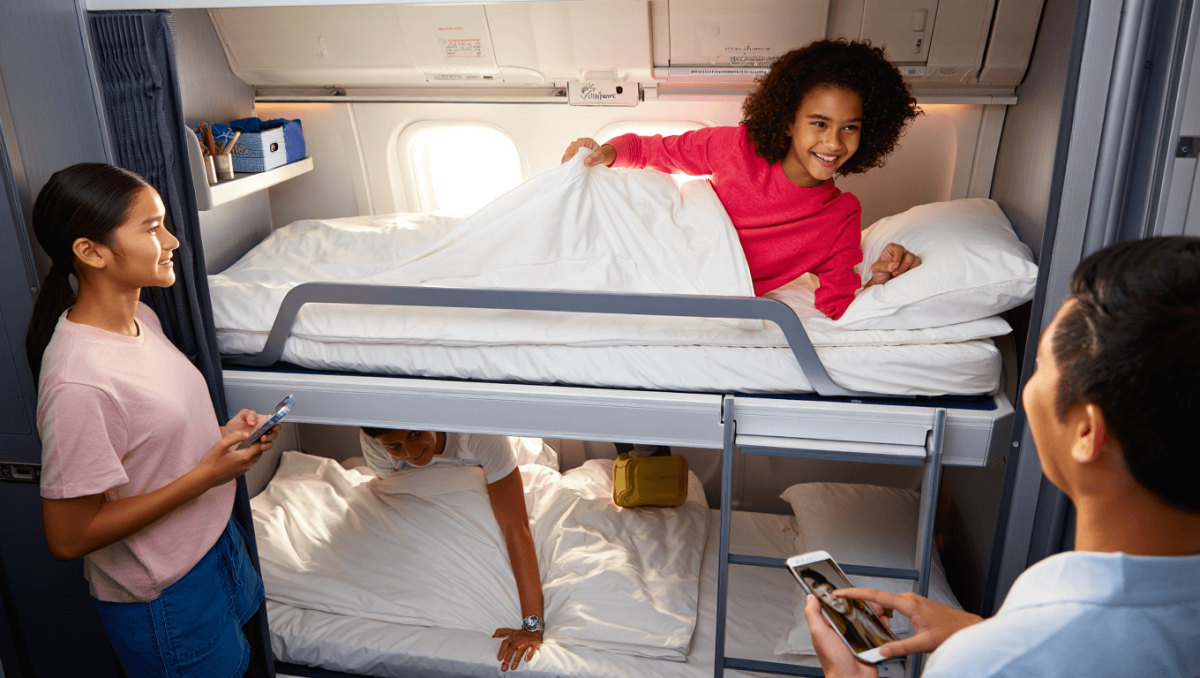
The bunk configuration converts rows of standard economy seats into a stacked sleeping area. Passengers can lie flat across modified seating platforms that fit within the cabin’s existing footprint. The design aims to create a private, horizontal space without altering the aircraft’s basic layout.
Sophia Laforteza of Katseye announces hiatus: comes months after Manon Bannerman’s exit
Delta to return to Tokyo Narita hub in 2027: 7-year comeback
- Platforms fold out from seat backs and tray areas.
- Netting or light partitions provide some separation from neighbors.
- Each bunk comes with a mattress pad, blanket, and pillow.
- Crew members assist with setup and stowage before landing.
Where and when you can buy a bunk — pricing and booking details
These bunks are available on a limited number of flights and cabins. Bookings are handled as an add-on during ticket purchase or via the airline’s app. Fare pages list the option and hourly rate, which the carrier promotes as flexible for short naps or longer rest periods.
- Price: advertised at $125 per hour.
- Availability: limited to select routes and aircraft types.
- Booking: sold during reservation or as an upgrade before departure.
- Payment: charged to the passenger’s card at time of booking or check-in.
Safety rules, regulations, and operational limits
Sleep products in the main cabin must meet strict safety standards. Bunk use depends on turbulence forecasts and crew discretion. The airline requires passengers to follow all instructions and may prohibit bunk use during takeoff, landing, or rough air.
Key safety considerations
- Bunks are secured to the aircraft and checked during maintenance.
- Passengers must fasten restraints while lying down, when required.
- Use can be suspended for safety or operational reasons.
Traveler response: praise, concerns, and social media buzz
The rollout has generated lively discussion online. Some travelers welcome a chance to rest more comfortably without upgrading to premium cabins. Others question the fairness of charging extra for basic rest and raise privacy and comfort concerns.
- Supporters point to improved sleep and lower cost than business class.
- Critics highlight potential crowding and limited availability.
- Accessibility advocates ask how the product serves passengers with reduced mobility.
How this fits into broader airline trends
Airlines are experimenting with pay-for-use cabin features to boost ancillary revenue. From extra-legroom seats to sleep pods in lounges, carriers test new ways to monetize comfort. This bunk option follows that pattern, offering a premium-style rest in economy space.
Practical tips for passengers considering a bunk
- Check availability before booking your flight.
- Compare total cost against upgrading to premium economy.
- Pack earplugs and an eye mask for better rest.
- Confirm carry-on rules, as storage may be limited near bunks.
- Be prepared to vacate the bunk if safety or operations require it.
What to expect next from Air New Zealand and competitors
If passenger uptake is strong, airlines may expand the offering or refine the product. Competitors could introduce rival concepts, or regulators may issue more detailed guidance on in-flight sleep products. For now, the $125-per-hour bunk is a notable experiment in making sleep purchasable in economy.