Show summary Hide summary
- Delta’s Austin strategy: strengthening a growing focus city
- What the new Bay Area service means for travelers
- Competitive landscape: how carriers are responding
- Austin’s aviation growth: demand and capacity trends
- Local and industry reactions
- Operational considerations for the route
- What this says about Delta’s West Coast ambitions
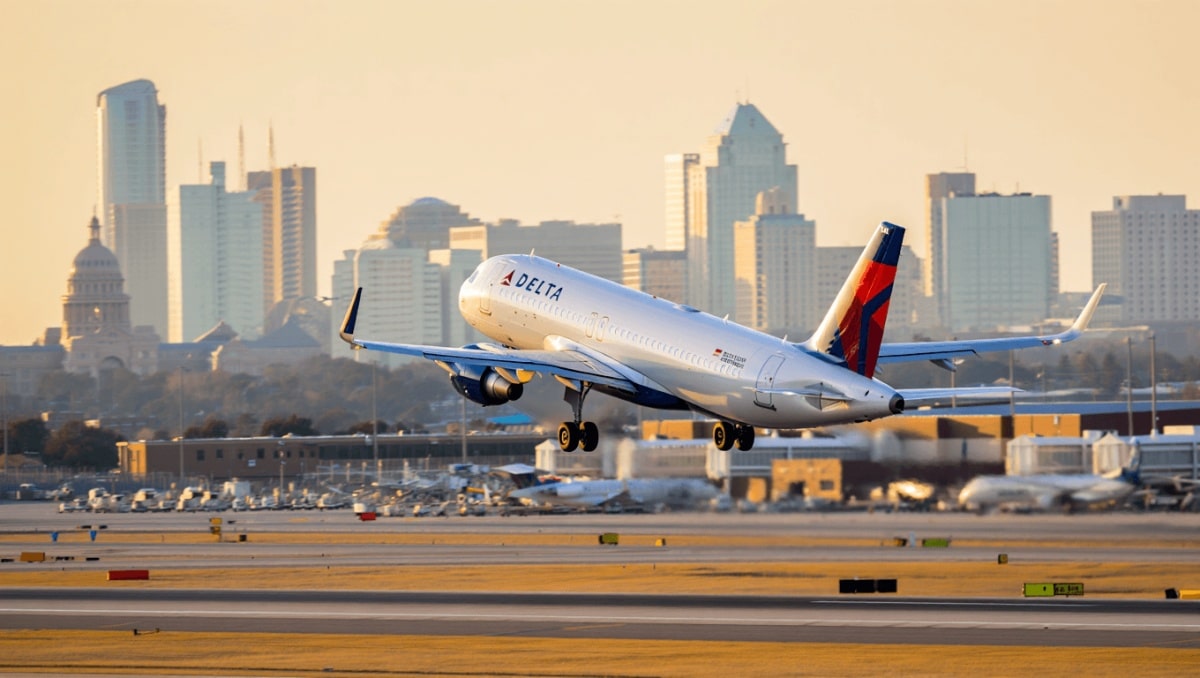
Delta Air Lines is widening its footprint in Texas by adding a fresh Bay Area connection out of Austin. The move strengthens Austin’s role in Delta’s network and gives travelers more options to reach Northern California. Industry watchers see this as another signal that Austin remains a strategic focus city for the carrier.
Delta’s Austin strategy: strengthening a growing focus city
Delta has steadily increased service at Austin, treating the airport as a key regional hub. The new Bay Area route builds on that momentum. By adding another link to Northern California, Delta aims to capture business and leisure travel demand between the two tech-heavy regions.
- Network depth: Expanding routes helps Delta offer more connections through Austin.
- Market positioning: The airline can better compete with carriers already active on Bay Area routes.
- Passenger appeal: More choices often translate into better schedules and fare options.
Dolly Parton: the surprising true story behind I will always love you
Miley Cyrus gushes over godmother Dolly Parton: the most loved person on the planet
What the new Bay Area service means for travelers
The additional route increases direct options for passengers flying between Austin and the Bay Area. Travelers may find more convenient departure times and a wider array of fare classes. Business travelers benefit from flexible scheduling. Leisure flyers gain better weekend and holiday options.
Key traveler benefits
- More nonstops reduce travel time and eliminate connections.
- Enhanced schedule variety for morning and evening travel windows.
- Improved connections for passengers connecting onward through Delta’s network.
Competitive landscape: how carriers are responding
Airlines closely monitor each other on high-traffic corridors. Adding a Bay Area route from Austin will prompt responses from legacy carriers and low-cost rivals. Competition typically shows up in schedule adjustments, promotional fares, and route frequency.
- Legacy carriers may increase seat capacity or tweak timetables.
- Low-cost airlines might counter with promotional pricing to defend market share.
- Regional airlines could add feed services to capture connecting passengers.
Austin’s aviation growth: demand and capacity trends
Austin has experienced steady passenger growth for years. Corporate expansion, a tech-heavy economy, and tourism fuel nonstop demand to major West Coast markets. Airlines respond by deploying larger aircraft or launching new routes.
Factors driving route expansion
- Business ties between Austin and Silicon Valley
- Leisure travel flows to California beaches and attractions
- Seasonal demand peaks that support added capacity
Local and industry reactions
Airport officials typically welcome new service as a sign of economic vitality. Local businesses often view expanded air links as a boost to commerce. Aviation analysts watch capacity trends and fare dynamics to gauge long-term viability.
- Airports gain more connectivity and potential revenue.
- Employers benefit from easier travel for meetings and hiring.
- Analysts evaluate yield and load factor to predict sustainability.
Operational considerations for the route
Launching a new service requires aligning crews, aircraft, and airport slots. Airlines also assess seasonal demand and adjust frequencies as needed. Effective marketing helps drive awareness for new nonstop options.
What to watch in the coming months
- Load factors on the new flights
- Any schedule or frequency changes
- Promotional fares and loyalty program incentives
What this says about Delta’s West Coast ambitions
Expanding Austin–Bay Area service underscores Delta’s intent to strengthen West Coast links. The airline appears focused on creating robust flows between tech centers. This aligns with broader network goals to provide seamless connectivity across key U.S. markets.
Strategic takeaways
- Focus city growth: Building density at Austin supports wider network flexibility.
- Route diversification: Multiple Bay Area gateways reduce reliance on a single airport.
- Customer choice: More nonstop routes increase traveler convenience and options.