Show summary Hide summary
- How the rookie frames his playing identity
- What scouts noticed before the draft
- Comparisons: why Randle and Green came up
- How he might fit with the Nets’ roster
- What coaches and teammates have said so far
- Development timeline and expectations
- Numbers and background that matter to scouts
- Early flashpoints to watch this preseason
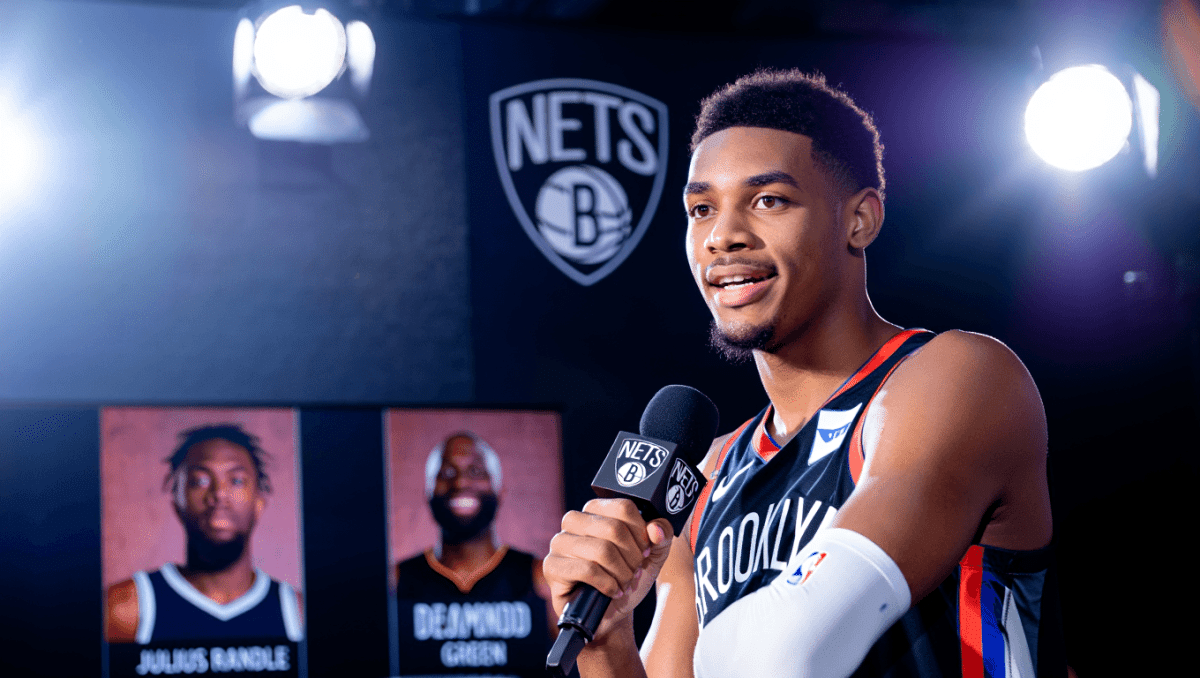
The Brooklyn Nets’ new first-round selection stepped to the microphone this week and offered a rare window into how he sees his own game. He drew parallels not to one, but two established NBA forwards — citing their blend of brute scoring and disruptive defense as a model for his future role in Brooklyn.
How the rookie frames his playing identity
In his first media availability as a Net, the 19-year-old described a dual approach. Offensively, he praised a physical, inside-out scoring style. Defensively, he emphasized communication and chaos creation.
Accor’s MGallery lands US flagship in popular NYC hotel
Sharon Stone lashes out at Sliver movie days after Billy Baldwin’s scathing attack
He said he studies players who can both score in the post and make teammates better. That combination is what led him to mention Julius Randle for his scoring instincts and Draymond Green for his defensive leadership.
What scouts noticed before the draft
- Scoring versatility: Able to finish through contact and knock down mid-range shots.
- Playmaking for a forward: Shows passing instincts in pick-and-roll and closeouts.
- Defensive IQ: Reads passing lanes and rotates aggressively.
- Motor and toughness: Relentless on the boards and in chase-downs.
- Areas to polish: 3-point consistency and frame strength at the NBA level.
Comparisons: why Randle and Green came up
The comparison to Julius Randle highlights a forward who can post up, attack mismatches, and score efficiently from multiple spots. The nod to Draymond Green points to a player who values defensive communication and can act as a secondary playmaker.
Both comparisons are about roles, not replicas. He stressed he wants to adapt the best parts of those games to Brooklyn’s system.
How he might fit with the Nets’ roster
Brooklyn has been searching for two-way players who can defend and create offense without the ball. This rookie projects as someone who can:
- Provide interior scoring on early offense.
- Switch on defense and guard multiple positions.
- Serve as a secondary ball-handler in closeouts and short possessions.
Coaches will likely emphasize spacing and perimeter shooting to maximize his impact. If his 3-point shot improves, he could stretch opposing defenses more effectively.
What coaches and teammates have said so far
Team staff praised his work ethic and willingness to learn. One assistant mentioned his openness to defensive schemes and his habit of asking targeted questions in film sessions.
Veteran players noticed his confidence without arrogance. That blend could ease his transition into an NBA rotation.
Development timeline and expectations
- Summer league: immediate chance to showcase instincts against pros.
- Training camp: a focus on strength and shooting mechanics.
- Rookie season: role likely starts as a rotation wing and energy piece.
Front-office voices describe a patient path. They expect incremental minutes and targeted minutes, especially against teams that rely on isolation scoring.
Numbers and background that matter to scouts
In his final amateur season he posted efficient scoring rates and rebound numbers that suggested durability and effort. Advanced metrics flagged his ability to generate stops and secondary assists.
Those traits align with Brooklyn’s emphasis on two-way versatility. The Nets will measure progress by defensive impact and the consistency of perimeter shooting.
Early flashpoints to watch this preseason
- Pick-and-roll decision-making under pressure.
- Switch defense on quicker wings.
- Spot-up three-point accuracy in game speed.
- Rebounding rate against NBA frontcourts.
Where he shows real growth will determine if the Randle/Green comparisons are aspirational or prophetic.