Show summary Hide summary
- Why a plane can offer a superior solar eclipse view
- How a small ticket tweak gained me front-row sky seats
- What to expect visually from 30,000 feet
- Practical tips for viewing an eclipse safely on an aircraft
- Gear recommendations for clear aerial eclipse photos
- Planning your own airborne eclipse experience
- The emotional difference between ground and air perspectives
- Common pitfalls and how to avoid them
- What the experience taught me about cheap choices and big moments
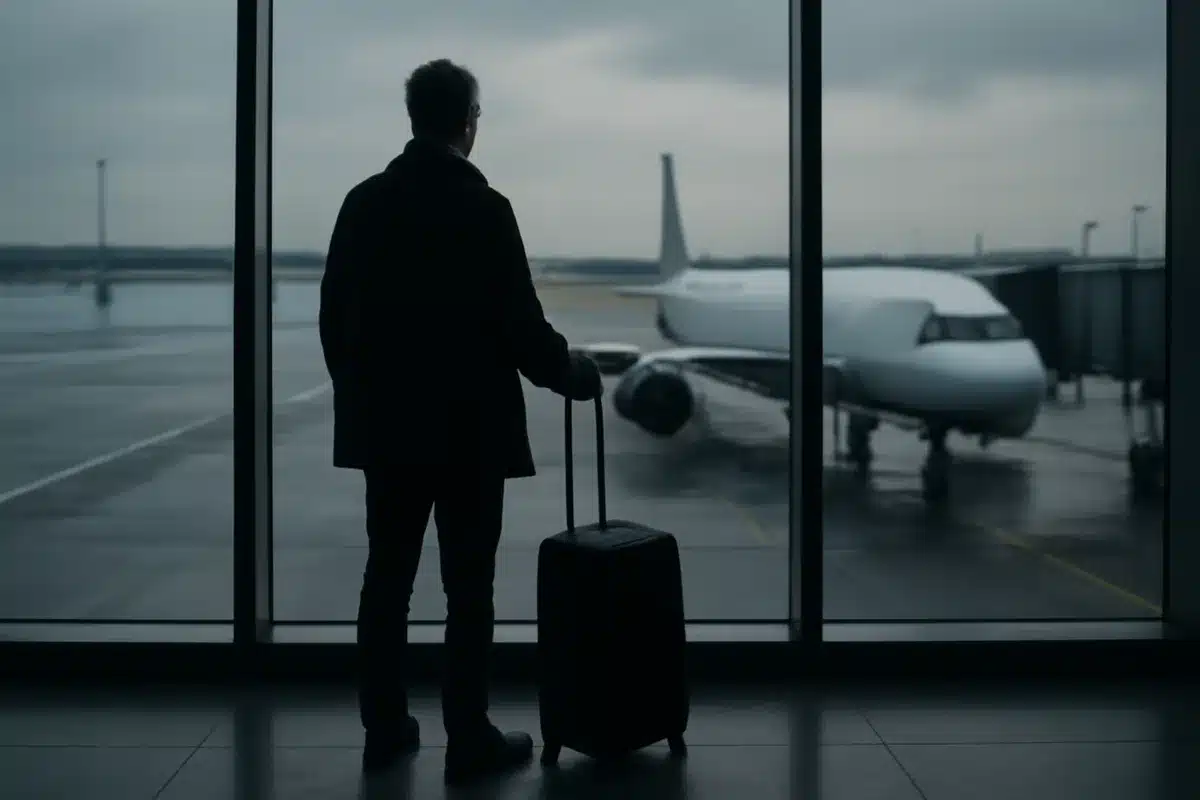
The sky turned from blue to bruised in a matter of minutes, and I realized I was witnessing something almost every Earthbound viewer missed. I paid a trivial fee and found myself seated above the clouds, watching the Moon carve a perfect shadow across the planet. The view was sharp, dramatic, and unlike any eclipse shot from the ground.
Why a plane can offer a superior solar eclipse view
Taylor Swift and Travis Kelce: sneak peek inside their private newlywed life
Emmy Rossum, Oscar Isaac and Shailene Woodley steal the show at Televerse Festival 2026 red carpet
At altitude, the atmosphere is thinner and steadier. That means less shimmer and clearer contrast between Sun and shadow. Airplanes also allow you to chase the path of totality. Pilots can keep the best view for longer than a fixed spot on the ground.
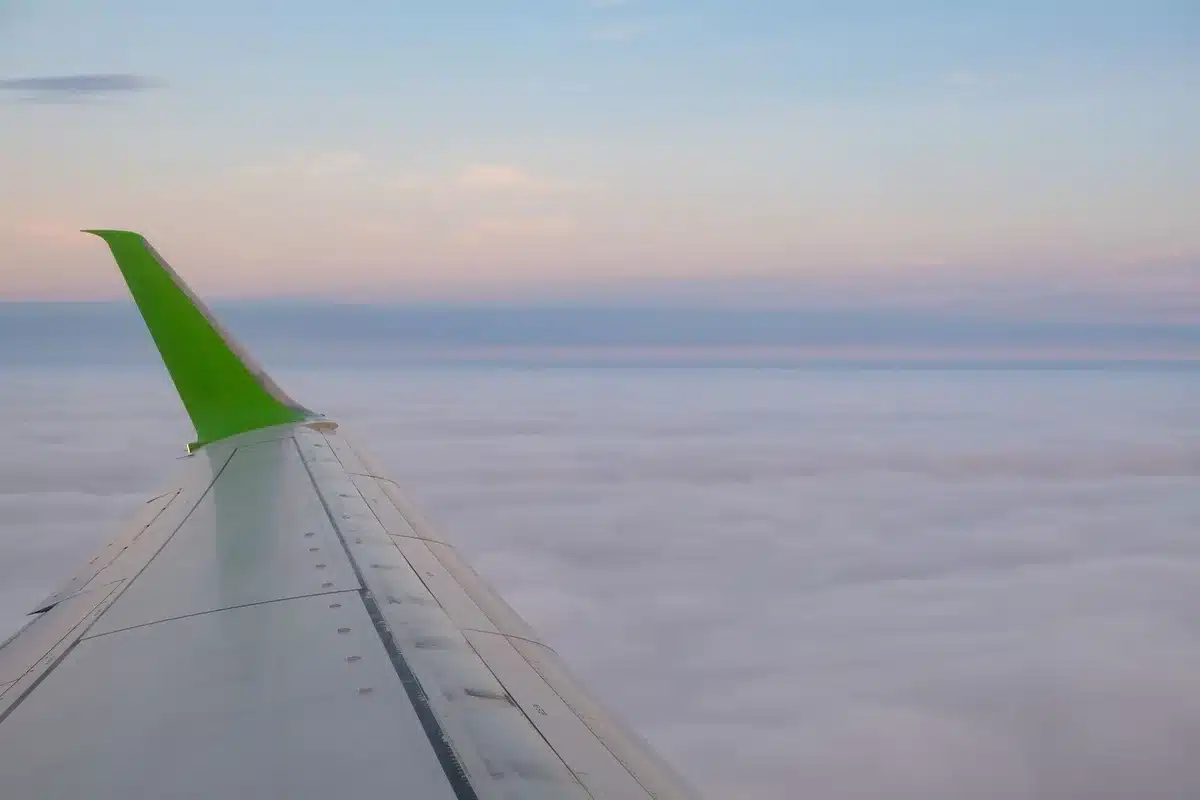
- Smoother horizon: Less atmospheric distortion above the lower troposphere.
- Mobility: Ability to position along the Moon’s shadow track.
- Extended visibility: Flight paths let you follow totality for extra minutes.
How a small ticket tweak gained me front-row sky seats
I bought a cheap fare and then spent a few dollars to choose my window. That small add-on made all the difference. Securing the right seat early ensures an unobstructed view and more control over where you look.
- Reserve a window seat as soon as bookings open.
- Avoid seats near wings that can block the view.
- Consider emergency-exit rows for larger windows and more legroom.
What to expect visually from 30,000 feet
The sequence of events feels cinematic. First, a bite appears at the Sun’s edge. Shadows on deck sharpen. Atmospheric hues deepen. Then, totality arrives and the sky collapses into a ring of corona and stars for a precious interval.
- Partial phases: The Moon takes gradual bites out of the Sun.
- Totality: A corona blooms as daylight drops dramatically.
- Afterglow: The world brightens again as the Moon moves on.
Practical tips for viewing an eclipse safely on an aircraft
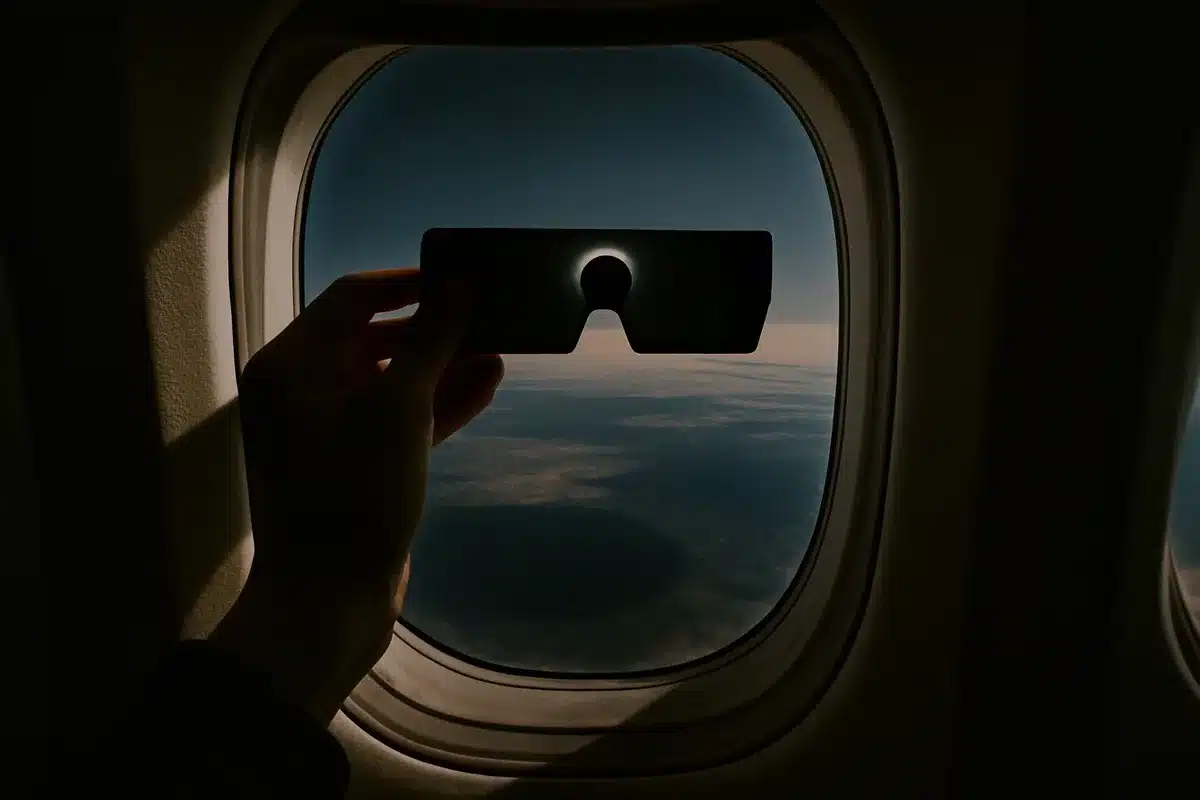
Watching the Sun demands care. Sunglasses won’t cut it during partial phases. Use certified eclipse glasses and follow cabin crew rules. For photos, prepare in advance to avoid fumbling when the moment arrives.
- Bring ISO-certified eclipse glasses and use them during partial phases.
- Practice camera settings before the event to handle rapid light changes.
- Ask the crew for permission before leaning into the aisle for photos.
- Keep window shades clean and free of smudges that scatter light.
Gear recommendations for clear aerial eclipse photos
Photographing an eclipse from a moving cabin means balancing stabilization with exposure control. Pack compact, effective gear that you can operate within a cramped space.
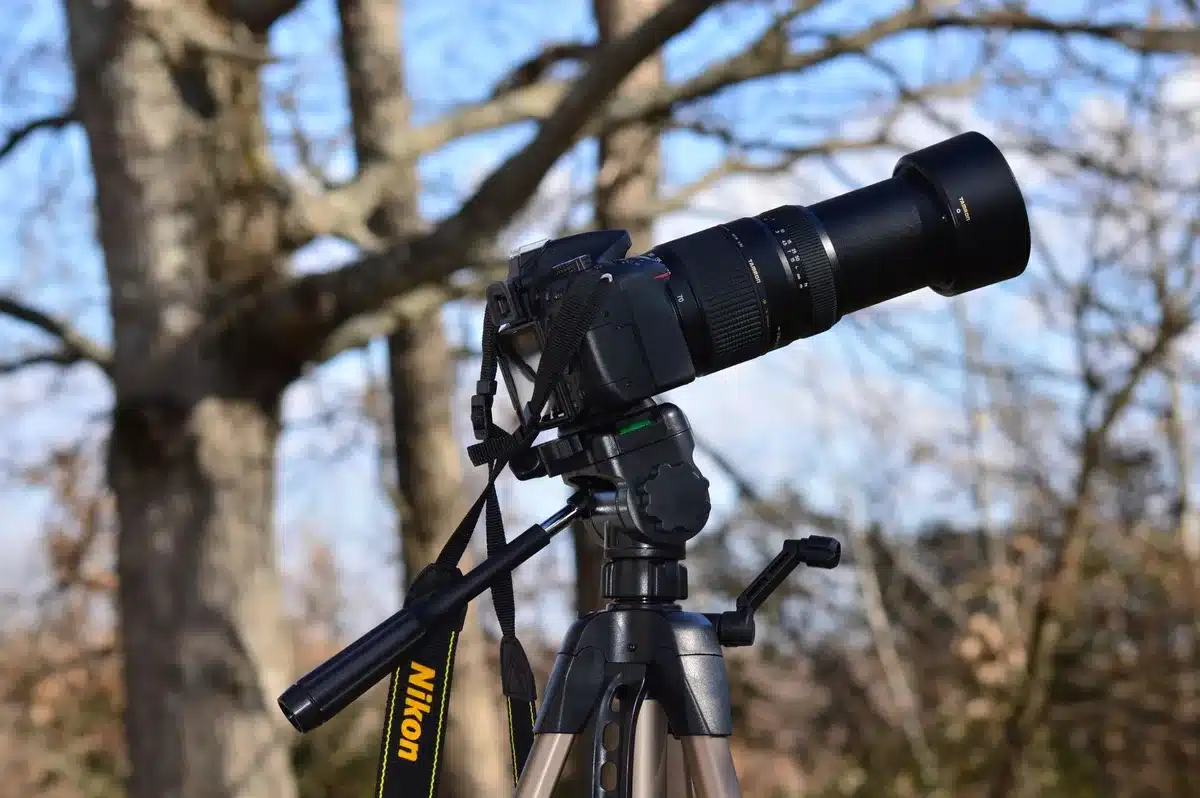
- Camera with manual exposure and a telephoto lens (200–400mm preferred).
- Small bean bag or travel tripod to steady the camera against the window.
- Neutral-density filters to protect sensors during bright phases.
- Extra memory cards and spare batteries — cold, high-altitude conditions drain power faster.
Planning your own airborne eclipse experience
Successful aerial viewing is about timing and logistics. Flight schedules, seat assignments, and a clear weather forecast matter. If you intend to chase totality, explore charter or repositioning flights that align with the shadow’s path.
- Research the eclipse path and estimated times for specific coordinates.
- Book early — window seats along the shadow path sell fast.
- Check airline policies on seating changes and carry-on gear.
- Monitor weather forecasts for both departure and arrival regions.
The emotional difference between ground and air perspectives
On the ground, crowds, buildings, and horizon limits shape the experience. From the air, you get a hushed, planet-scale perspective. The Moon’s shadow looks like a moving bruise across Earth, and totality feels like an event shared with both the sky and the curvature below.
That sense of scale — seeing the shadow sweep like a hand across the world — is what makes the airborne view unforgettable.
Common pitfalls and how to avoid them
Even with perfect planning, surprises happen. Cabin reflections, seat obstructions, and unexpected turbulence can ruin a shot. Anticipate issues and have backup plans.
- Check the window position relative to the Sun before takeoff.
- Use a dark cloth behind your camera to cut reflections.
- Arrive at the gate early to confirm seat assignments if possible.
- Keep an eye on the flight tracker to align your viewing time.
What the experience taught me about cheap choices and big moments
Spending a few dollars to secure the right seat transformed a routine flight into a rare astronomical encounter. The lesson is practical: small investments can unlock extraordinary perspectives. The hours I spent preparing paid back in minutes of perfection.
From my seat above the clouds, the eclipse felt less like a local event and more like a global phenomenon moving beneath us.