Show summary Hide summary
- First sign: a lump that felt like nothing serious
- Why doctors moved straight to surgery instead of a biopsy
- Pathology results: a rare, aggressive tumor type
- Follow-up surgery and what was found in the lymph nodes
- Chemotherapy, side-effect management, and recovery milestones
- Symptoms he experienced and why he stayed silent
- Fertility planning and family context
Will Reeve has publicly shared how a small, tender lump nearly went unnoticed before it led to a testicular cancer diagnosis and a months-long fight for his health.
First sign: a lump that felt like nothing serious
Reeve said he first felt something unusual while showering in April. He brushed it off at first. Many young men do the same, he noted.
Taylor Swift: are we over her now that her love story is complete?
Jaime King and Austin Sosa divorced after secret whirlwind marriage: split leaves them blindsided
Weeks passed and the spot remained. It was his wife, Amanda Dublin Reeve, who pushed him to get checked. An ultrasound revealed more than either expected.
Why doctors moved straight to surgery instead of a biopsy
After imaging, physicians told him a biopsy was not safe. Needle sampling can risk spreading malignant cells in that region.
Instead, he learned he would need an orchiectomy — the surgical removal of the affected testicle. The operation came about ten days after the diagnosis.
Emotions and logistics around the procedure
Reeve said his anxiety centered on uncertainties about the surgery. He worried less about losing the organ itself and more about the unknowns afterward.
Pathology results: a rare, aggressive tumor type
The lab report showed that about 95 percent of the tumor was embryonal carcinoma. This form arises from abnormal germ cells, the precursors to sperm.
Because embryonal carcinomas can behave aggressively, doctors recommended further surgery to check for spread.
Follow-up surgery and what was found in the lymph nodes
On June 10, Reeve had an extensive abdominal operation. Surgeons removed numerous lymph nodes during a six-hour procedure.
- Dozens of nodes were taken for examination.
- Three nodes tested positive for cancer.
Those findings made it clear the treatment would be more involved than he first thought.
Chemotherapy, side-effect management, and recovery milestones
After surgery, Reeve underwent two rounds of chemotherapy. He kept most of this private until recently.
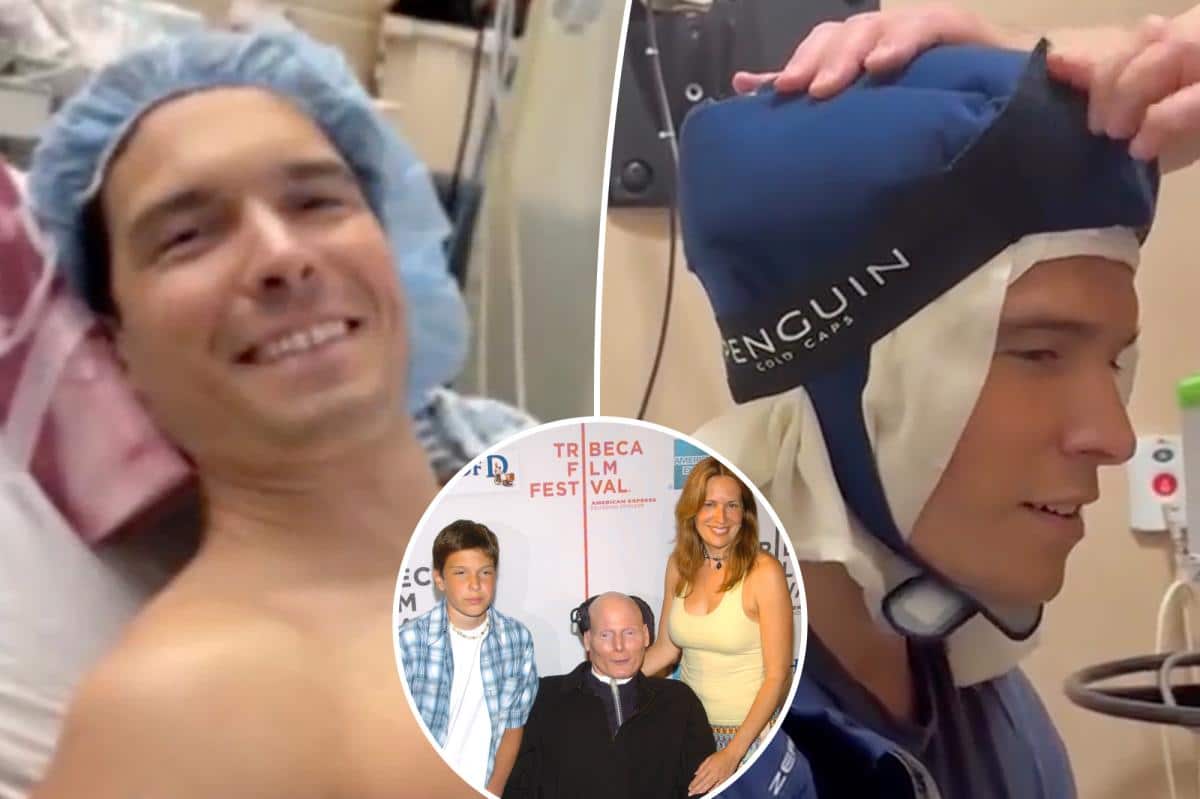
To protect his hair, he used a cold cap during treatment. He credited the technique with preventing hair loss.
Following treatment, he was declared cancer-free on Sept. 8.
Symptoms he experienced and why he stayed silent
He described symptoms that went beyond the lump. They included:
- bone pain
- ringing in the ears
- frequent headaches
- night sweats
- blood clots
Reeve chose not to make his struggle public until he felt ready to speak about it on television.
Fertility planning and family context
Anticipating future parenthood, he and his wife banked sperm. They plan to pursue in vitro fertilization when they are ready.
The couple married in January at Miami’s Rubell Museum, after getting engaged in November 2024.
Reeve also reflected on his family history. His mother, Dana Reeve, died of lung cancer in 2006. His father, Christopher Reeve, passed away two years earlier at age 52.