Show summary Hide summary
- Why experts say a superbloom is possible in California this season
- How climate signals and storms influence flower displays
- Where a superbloom is most likely to appear
- Which flowers typically dominate a superbloom
- Timing your visit: when blooms hit peak color
- Photography and travel tips for seeing a superbloom
- Conservation concerns and how to visit responsibly
- How fire history and land management affect blooms
- What to watch in forecasts and local reports
- Economic and cultural ripple effects of a superbloom
- How scientists monitor and predict wildflower abundance
California could see a dramatic burst of wildflowers this year if weather patterns cooperate. Gardeners, photographers, and nature lovers are watching forecasts and rainfall maps. The promise of a superbloom stirs local economies and conservation concerns alike.
Why experts say a superbloom is possible in California this season
Scientists point to two main ingredients for a robust bloom: enough rain and a healthy seed bank in the soil. A string of winter storms or several heavy downpours can trigger mass germination. Weather models now show increased odds of such events in some regions of the state.
- Rainfall timing matters: Steady, well-spaced storms tend to produce better blooms than one-off deluges.
- Temperature patterns: Mild spring days with cool nights help seedlings survive and flourish.
- Seed availability: Years after drought still hold millions of seeds just below the surface.
United Polaris Studio suites: tickets now on sale for April inaugural flights
Auston Matthews-Radko Gudas controversy: Pierre LeBrun predicts fallout
How climate signals and storms influence flower displays
Large-scale climate patterns can nudge California toward wetter or drier winters. The El Niño–Southern Oscillation, or ENSO, and atmospheric river events play big roles. An El Niño winter often raises the chance of heavier rain for southern California. Atmospheric rivers can deliver concentrated moisture in short spans.
Atmospheric rivers versus steady rain
Atmospheric rivers deliver massive moisture quickly. They can fill reservoirs and boost runoff. But they can also sweep seeds away or cause erosion. Contrast that with a chain of moderate storms. Those allow seedlings to establish and reduce loss.
Where a superbloom is most likely to appear
Not every valley or hillside will turn orange and purple. Topography and soil type matter. Grasslands and coastal hills that hold water yet drain well are prime candidates. Some hotspots to watch:
- Antelope Valley and Carrizo Plain — known for historical blooms.
- Southern California coastal slopes — favored by poppies and lupines.
- Central Valley edges and foothills — where goldfields can carpet the ground.
Local reserves and state parks often report early signs as patches of color appear. Those areas should be monitored for updates and visitor guidance.
Which flowers typically dominate a superbloom
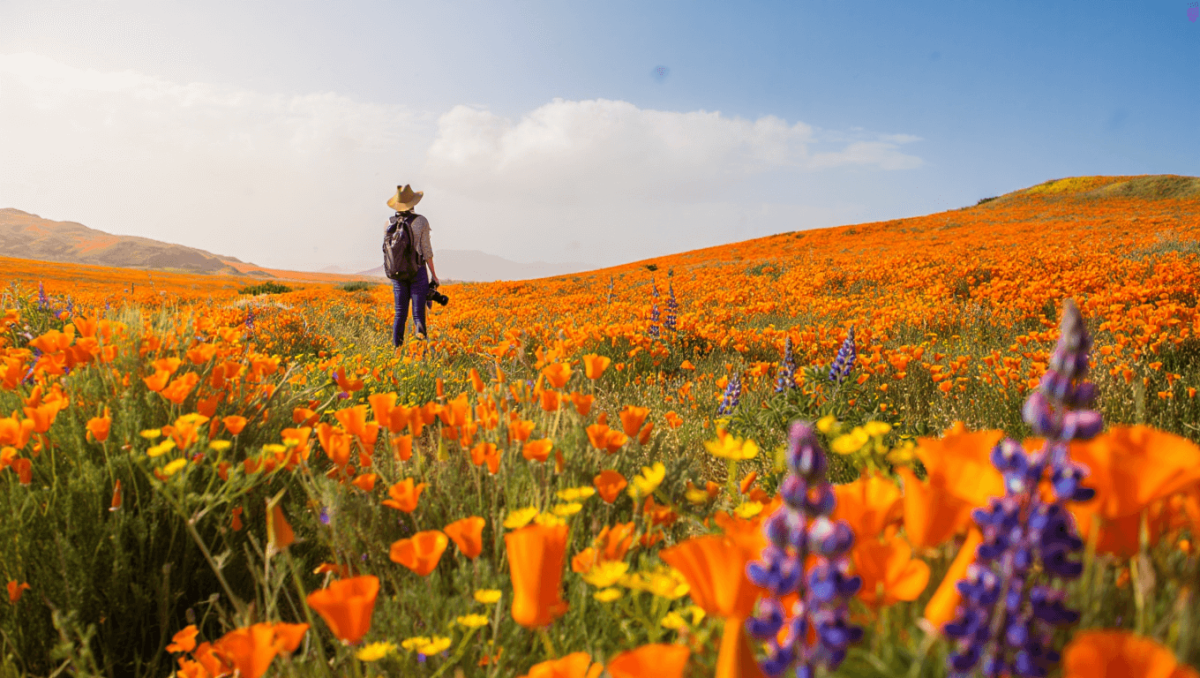
Several native species can create dramatic scenes. California poppies are the poster child for superblooms. Lupines add deep blues and purples. Other common players include tidy tips, goldfields, and sand verbena. Each species has a window of peak color.
- California poppies — bright orange, often the first to catch attention.
- Lupines — rich purples that contrast with poppies.
- Goldfields and tidy tips — smaller flowers that add texture.
- Wild mustard and other annuals — can dominate in wetter years.
Timing your visit: when blooms hit peak color
Bloom timing changes from year to year. It depends on rainfall and temperature after germination. Typical patterns:
- Germination starts within days to weeks after sufficient rain.
- Seedlings grow through late winter and early spring.
- Peak color often happens mid- to late spring, but can vary.
Park services and local wildflower trackers publish weekly updates during bloom season. Follow those for best results.
Photography and travel tips for seeing a superbloom
If you plan to chase flowers, go prepared. Crowds can spike quickly at known viewing sites. Respect land closures. Stay on paths to protect plants and fragile soils.
- Arrive early for soft light and fewer people.
- Use a low angle to emphasize foreground blooms.
- Bring water, sunscreen, and durable footwear.
- Check road conditions; storms can wash out access routes.
Conservation concerns and how to visit responsibly
Superblooms bring tourism and revenue, but also stress fragile ecosystems. Trampling, illegal off-roading, and picking flowers can harm recovery. Park managers sometimes limit access to protect rare species.
Follow posted rules and avoid collecting plants. Volunteer programs and local nonprofits often host cleanups and guided walks. Those help minimize visitor impact.
How fire history and land management affect blooms
Burned areas can produce exceptional displays. Fire clears shrubs and returns nutrients to the soil. But the relationship is complex. Too-frequent fires or invasive grasses can reduce native wildflower diversity.
- Recent burns may reveal flushes of native wildflowers.
- Invasive species can outcompete natives after disturbance.
- Active land management helps maintain balanced habitats.
What to watch in forecasts and local reports
Look for sustained precipitation and cooler spring temps in weather updates. County park websites and social media channels often post bloom photos and trail status. Citizen science apps let visitors log sightings and help build real-time maps.
- Weather advisories for rainfall totals and freeze warnings.
- Park alerts about closures or safety hazards.
- Community reports that show early color pockets.
Economic and cultural ripple effects of a superbloom
A large bloom draws visitors, boosting hotels, restaurants, and guides. Small towns near bloom sites often see surges in business. At the same time, managers must balance visitor services with habitat protection.
Local economies can benefit while conservation groups work to channel that interest sustainably.
How scientists monitor and predict wildflower abundance
Botanists use long-term rainfall records, seed-bank studies, and satellite imagery. Field surveys measure plant density and species mix. These data feed models that estimate bloom intensity and timing.
- Soil seed-bank tests reveal how many years of seeds remain.
- Remote sensing tracks green-up and color changes across landscapes.
- On-the-ground surveys confirm species composition.