Show summary Hide summary
- What happened: the one-cent residual
- Streaming vs. syndication: the payment change
- How actors used to profit and what’s different today
- Sweetin’s real-life picture — candid financial details
- How this compares to other sitcom stars
- Full House’s cast, reboot and future possibilities
- Why this moment matters for creatives
Jodie Sweetin has put a spotlight on a little-known fallout of the streaming era. The actress revealed she recently received a startlingly small residual check for her years on Full House — a moment that underlines how TV money has shifted in the post-syndication landscape.
What happened: the one-cent residual
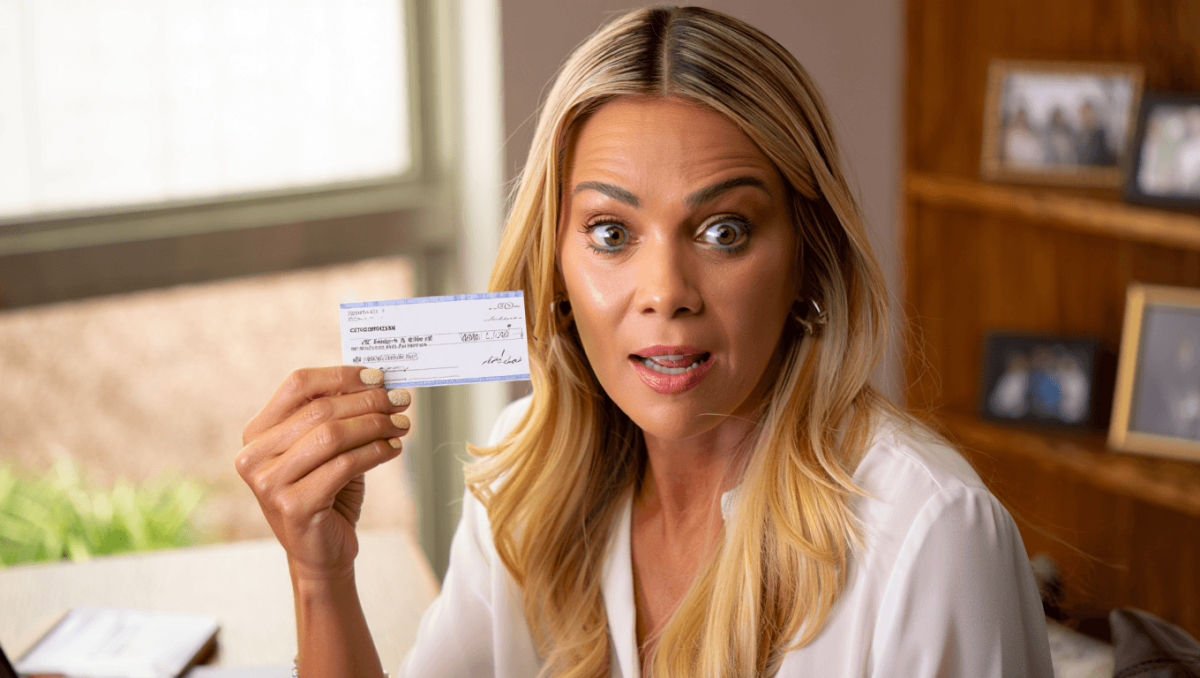
Sweetin said she was sent a check for just $0.01 for her work on the original Full House. The payment came up during a podcast conversation where she explained how earnings from the show have dwindled.
Sophia Laforteza of Katseye announces hiatus: comes months after Manon Bannerman’s exit
Delta to return to Tokyo Narita hub in 2027: 7-year comeback
She noted that the income used to be more meaningful in her twenties. But without regular TV runs, those payouts have largely evaporated.
Streaming vs. syndication: the payment change
Sweetin blamed the shift from broadcast syndication to streaming for reduced residuals. Where reruns on cable or local stations once generated steady checks, streaming deals operate differently.
- Traditional syndication distributed shows widely, creating repeated royalty events.
- Streaming platforms negotiate lump-sum or license deals that don’t always trigger the same residuals.
- Transparent tracing of plays and payouts can be inconsistent across services.
“There’s no syndication anymore,” she said, explaining that streaming has changed who gets paid and how much.
How actors used to profit and what’s different today
Many performers relied on periodic residuals for supplemental income. Those checks could be modest or surprisingly large, depending on rerun frequency.
Today, factors that affect payments include:
- The type of distribution deal: syndication versus streaming license.
- Contract language negotiated decades ago.
- Reporting and auditing processes at platforms.
Sweetin suggested that, when Full House aired more frequently on TV, the money arrived more often. Now, streaming placement does not guarantee equivalent recurring royalties.
Sweetin’s real-life picture — candid financial details
The actor pushed back on assumptions that early sitcom success buys a lavish lifestyle forever. She shared concrete details about her current situation.
- She drives a used 2023 Hyundai Sonata she enjoys.
- She rents rather than owns her home.
- Credit cards are sometimes maxed out.
She said she can’t depend on residuals and sometimes must seek other work to bridge gaps in income.
How this compares to other sitcom stars
Residual payouts vary wildly across shows and cast deals. As a contrast, the main cast of Friends still receives large, steady sums each year thanks to lucrative licensing and syndication arrangements.
The disparity highlights how negotiation terms and timing can lead to very different long-term outcomes for stars of similarly popular series.
Full House’s cast, reboot and future possibilities
Full House originally ran from 1987 to 1995, featuring a tight ensemble.
- Bob Saget played Danny Tanner.
- John Stamos and Dave Coulier were Jesse and Joey.
- Candace Cameron Bure and Andrea Barber rounded out the household cast.
- Mary-Kate and Ashley Olsen shared the role of Michelle.
Most of the main cast reunited for Netflix’s Fuller House, which premiered in 2016 and ran for five seasons. Mary-Kate and Ashley did not return for the reboot.
Would she return for another revival?
Sweetin said she’s open to returning if a new version ever materializes. She joked about future installments that would show the actors much older and still together.
“I will never say never,” she told listeners, noting the bond she has with colleagues she’s known since childhood.
Why this moment matters for creatives
Sweetin’s experience illuminates a broader industry issue: payment models are evolving faster than many contracts. Actors, writers and other creatives are grappling with how to secure fair compensation as distribution changes.
- Negotiating for streaming-specific language is now crucial.
- Residual models may need industry-wide updates to reflect current viewership patterns.
- Transparency from platforms could help creators track earnings more reliably.
The one-cent check is a small, vivid example of how the modern media economy can feel unpredictable, even for familiar faces from beloved shows.