Show summary Hide summary
- City hearing revives debate over the Dome’s future
- Community voices demand a reopening timeline
- Owner representatives say the permit helps long-term plans
- Why “in perpetuity” raised alarm
- How the licensing process works and limits on conditions
- Activists and filmmakers keep pressure on the owners
- Ownership, offers, and the long silence
- Questions left open after the hearing
- Next steps local stakeholders are watching
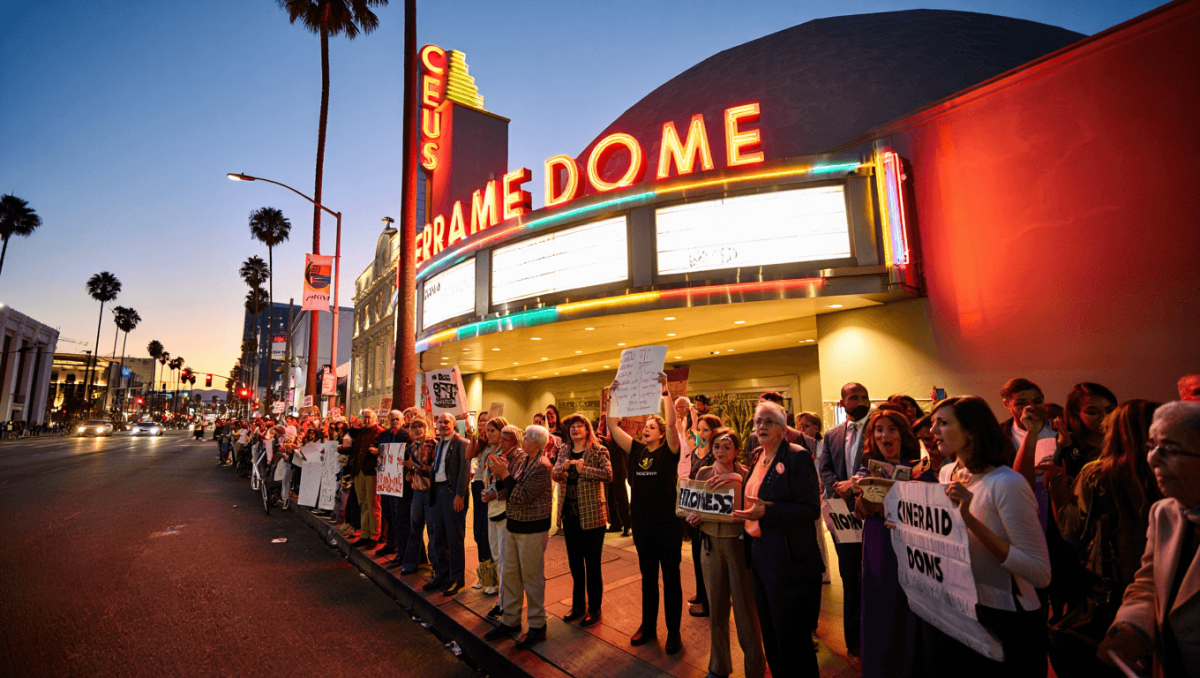
The Cinerama Dome remained the central question at Tuesday’s Los Angeles zoning hearing, with neighbors, filmmakers and activists using the public forum to press for answers about the long-closed Hollywood landmark. The exchange exposed deep frustration over silence from the owners and uncertainty about when, or if, the storied dome will screen films again.
City hearing revives debate over the Dome’s future
On May 12, Los Angeles officials convened a virtual public hearing focused on a narrow but consequential request: a conditional use permit to allow alcohol sales at the Cinerama Dome complex. The session was led by the city’s Associate Zoning Administrator and drew dozens of speakers.
Sophia Laforteza of Katseye announces hiatus: comes months after Manon Bannerman’s exit
Delta to return to Tokyo Narita hub in 2027: 7-year comeback
The permit sought would authorize beverage service across the theater property. The Zoning Administrator ultimately approved the paperwork, subject to potential appeal.
- Date: May 12
- Issue: Conditional use permit to sell alcohol
- Decision: Approval granted by zoning administrator, pending appeal
Community voices demand a reopening timeline
Residents and local filmmakers filled the meeting’s public-comment period with pointed questions. Many criticized the property owners for offering no concrete schedule for reopening.
Speakers described the Dome as an anchor for Hollywood’s cultural life. Several said the neighborhood feels diminished while the venue sits unused.
- Concerns about lost jobs and shrinking local commerce
- Requests for a public action plan or restoration timeline
- Fears that inaction could lead to deterioration or redevelopment
Owner representatives say the permit helps long-term plans
Elizabeth Gower, speaking for the Dome’s ownership, framed the liquor permit as a practical tool to support future operations. She argued the authorization would help preserve the complex and facilitate a reopening when conditions allow.
Gower highlighted one recent success in the same complex: the Blue Note Jazz Club’s planned opening in 2025. She also emphasized commitments to historic restoration, including preserving Dome signage and repairing exterior tile.
What Gower would not provide
- No firm schedule for the Dome’s reopening.
- No detailed business plan tied to the requested license.
- No decision on past offers to buy the property.
Why “in perpetuity” raised alarm
The owners asked that the liquor authorization be granted without an expiration. That request stirred opposition from many commenters.
Critics argued a permanent permit could remove leverage to compel a timely reopening. Some asked that any license include concrete reopening milestones.
Community demands included mandatory timelines, additional public meetings, and binding commitments to restore the Dome’s historic fabric.
How the licensing process works and limits on conditions
City staff explained that issuing licenses “in perpetuity” has become typical practice. However, the permit includes a safeguard: if it’s not used within three years, the holder must return to the public process.
Officials also noted the state Alcoholic Beverage Control agency handles the final approval of liquor licenses. That agency’s rules limit what conditions a zoning hearing can attach to a permit.
Activists and filmmakers keep pressure on the owners
Local organizers have mounted a sustained campaign to push for reopening. Ben Steinberg, a neighborhood activist, helped coordinate public participation at the hearing and has run petitions and social-media campaigns demanding action.
- A petition gathered roughly 30,000 signatures.
- Steinberg staged a projected-protest calling for the Dome to reopen.
- Notable voices, including descendants of filmmakers tied to the Dome’s history, joined the commentary.
Public tactics and flashpoints
Recent demonstrations included projected messages on the theater exterior. The protest drew police attention after the property’s owners characterized the action as harassment.
Speakers at the hearing also raised specific maintenance issues, such as graffiti on exterior tiles, and asked whether those would be fixed.
Ownership, offers, and the long silence
The Dome’s property is connected to Decurion and Robertson Properties Group. Decurion’s CEO is a descendant of the family that built the Dome in 1963.
Multiple reports say Decurion has received purchase offers for the complex. Community members asked why the company has not engaged with buyers or systematically shared plans for the site.
Residents and cultural advocates see the prolonged closure as a civic problem. Some described the situation as neglect that threatens an architectural and cinematic landmark.
Questions left open after the hearing
- Will Decurion set a public timeline for restoration and reopening?
- Will the Alcoholic Beverage Control agency impose conditions or reject the license?
- Will the ownership accept acquisition offers or pursue a full redevelopment?
- Will the community receive a follow-up public meeting with clearer answers?
Next steps local stakeholders are watching
Activists plan continued pressure through petitions, social posts and requests for face-to-face meetings with the owners. Some callers urged the Forman family to convene a public forum.
The zoning approval now moves into the period where appeals and the state licensing review can shape the outcome. Meanwhile, community members say they will monitor physical upkeep of the Dome and demand transparency on any sale offers.