Show summary Hide summary
- Why stores want staff who create content
- Hiring for camera skills: a new retail job description
- Companies turning employees into official creators
- Third-party platforms that streamline staff content
- Measuring success: conversions, reach, and revenue
- Training, governance, and content oversight
- Compensation models that reward creators on the payroll
- Tools and tactics brands use to scale employee content
- Successes, risks, and what experts are watching
- How companies train and support creators on staff
- Market signals and changing consumer habits
- Other retail experiments worth noting
Retail companies are rewriting the job description for store staff. Now, managers and sales associates are expected not only to sell, but to film, post, and build audiences. What began as informal posts by enthusiastic employees has become a deliberate strategy for brands seeking authentic reach and measurable sales lift.
Why stores want staff who create content
Retailers say customers respond to people, not polished ads. Employees who share their workdays and product picks bring credibility that many paid campaigns lack.
Porsha Williams reveals emergency hysterectomy saved her life
Bronwyn Newport’s mystery man revealed: he’s a married NYC restaurateur
- Authenticity beats ads: Audiences often trust frontline staff more than generic brand messaging.
- Creators on staff know products and store rhythms, so their content can educate and convert faster.
- Employee posts can unlock new traffic and deeper local engagement in key markets.
Hiring for camera skills: a new retail job description
Some brands now list content creation as a core skill when recruiting. Candidates must be comfortable on camera, understand social platforms, and bring ideas that make the store feel relevant.
Real-world example: a NYC store manager role
One footwear brand advertised for a New York manager who would both sell shoes and produce content daily. The role blended a steady salary with affiliate-style incentives.
- Expectations: film daily, drive foot traffic, and pitch creative storytelling concepts.
- Compensation: base pay plus performance-based affiliate income.
- Desired traits: fashion knowledge, local connections, and on-camera confidence.
Brands are treating the position like a hybrid between salesperson and social creator.
Companies turning employees into official creators
Some retailers have formalized programs to support employee-generated content. These initiatives offer briefs, revenue shares, and sometimes creative guidance.
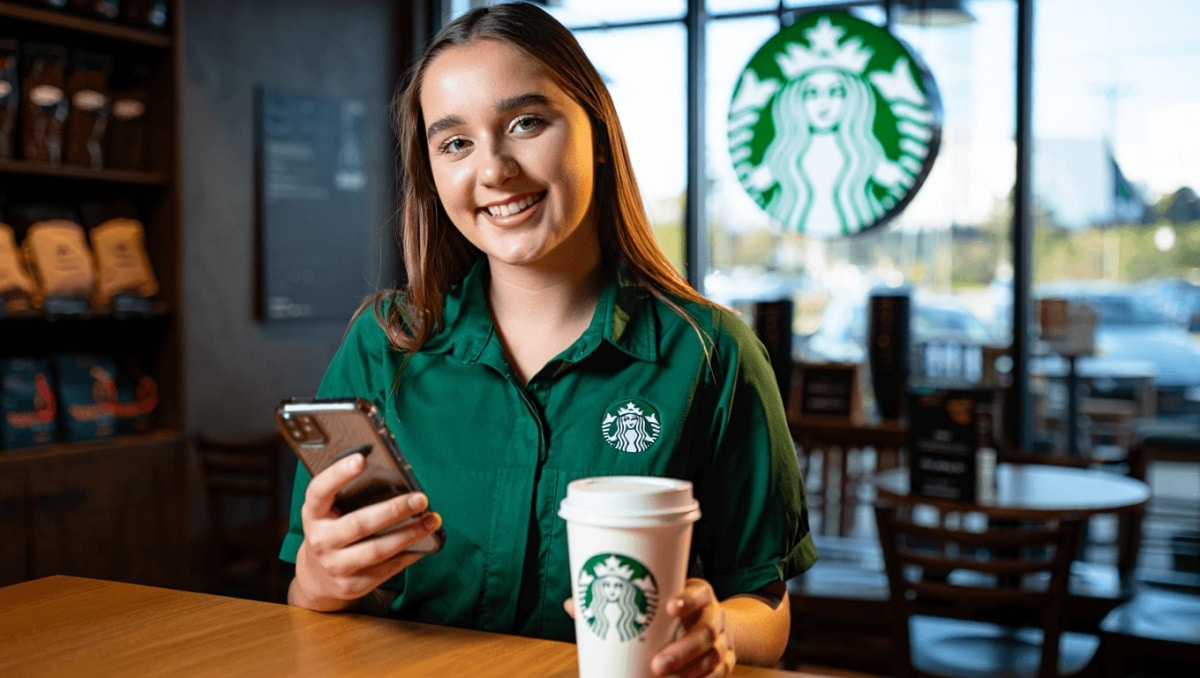
Starbucks: a large-scale pilot with TikTok
Starbucks expanded its internal creator efforts with a TikTok pilot. The company provides content prompts and shares ad revenue with selected partners.
Executives say the partnership helps amplify genuine partner stories and tests what formats work at scale.
Third-party platforms that streamline staff content
Brands that lack in-house tools often use specialized platforms to collect and publish staff-made media.
- How platforms work: Employees upload photos or short videos using an app.
- Brands then display these assets on product pages or social feeds.
- Companies can set commission rates tied to sales from that content.
Case study: a Japan-based provider
A platform used by heritage apparel and footwear labels lets staff uploads appear next to product listings. In one market, the tool boosted conversion rates and even drew long in-person lines for popular staffers.
Measuring success: conversions, reach, and revenue
Brands track several KPIs to justify employee creator programs. Those indicators include engagement, conversion lift, and direct sales attributed to staff posts.
- Engagement metrics: views, comments, and shares.
- Conversion lift: how often viewers become buyers after watching EGC.
- Revenue per post: the dollar value generated by individual employee content.
Some companies report multiplicative gains in conversion when staff content is displayed on product pages.
Training, governance, and content oversight
As programs scale, brands wrestle with quality control and compliance. Training and role-based oversight are emerging as standard practice.
- Mentorship: appointed team leads or “captains” coach staff creators.
- Guidelines: simple playbooks tell employees what to film and how to disclose affiliations.
- Review flows: some companies vet posts to manage brand consistency and legal risk.
Organizations are balancing creative freedom with guardrails to avoid off-brand content.
Compensation models that reward creators on the payroll
Pay structures vary. Some brands pay a salary plus affiliate commissions. Others share ad revenue or offer bonuses for top-performing posts.
- Base pay + affiliate payouts incentivize both in-store performance and digital influence.
- Ad revenue sharing is used in platform partnerships to reward high-performing creators.
- One-off bonuses reward viral moments or record sales tied to a single post.
Compensation is critical to keep employee creators motivated and fairly rewarded.
Tools and tactics brands use to scale employee content
Retailers deploy a mix of tactics to make EGC systematic rather than sporadic.
- Content briefs that align creator efforts with product launches.
- In-app upload systems that tag media to specific SKUs.
- Editorial calendars to keep content consistent across stores and regions.
Successes, risks, and what experts are watching
Early wins have convinced many brands to invest more in staff creators. Yet scaling brings risks like saturation and brand inconsistency.
- Successes: increased trust, improved conversions, and organic reach.
- Risks: content fatigue, excessive oversight, and potential PR missteps.
- Opportunity: a middle path where companies empower staff while setting clear boundaries.
Industry observers note that employee creators work best when they remain authentic and not overly scripted.
How companies train and support creators on staff
Training programs help employees feel confident on camera and learn basic storytelling techniques.
- Workshops on short-form video and platform trends.
- One-on-one coaching from marketing teams.
- Templates and quick creative prompts for busy shifts.
Market signals and changing consumer habits
Surveys show a shift toward trusting real people over traditional ads. Younger consumers, especially, often discover products via staff-made clips and day-in-the-life videos.
This trend reflects a broader move toward peer-led discovery and away from polished, top-down campaigns.
Other retail experiments worth noting
- Direct-to-consumer collaborations: Brands lending retail space to partners for events.
- Product innovation: Some labels experiment with automated production and robotics.
- Nostalgia-driven revivals: Traditional toys and formats are getting refreshed through retail partnerships.