Show summary Hide summary
- Why companies are shifting ad budgets to retail media video
- Case study: a taco stand series made for shoppers
- How shopper insights shaped the storyline
- In-store viewing habits and interactive elements
- Blurring lines between shopper marketing and retail media
- Performance signals and creative impact
- Retailers expanding screens and video networks
- Industry moves: platforms and competitors adapting
- What marketers should consider when creating retail media content
- Early signals point to a lasting shift
Retail brands are increasingly funding short, serialized video to reach customers where they shop. The new wave of retail media moves beyond banners and price tags, turning store screens and app feeds into storytelling platforms that aim to influence shoppers before they reach the shelf.
Why companies are shifting ad budgets to retail media video
Marketers are treating retail media like a full-funnel channel. Instead of only promoting price or availability, brands are investing in content that builds interest and category demand.
Sophia Laforteza of Katseye announces hiatus: comes months after Manon Bannerman’s exit
Delta to return to Tokyo Narita hub in 2027: 7-year comeback
- Broader reach: Retail platforms combine in-store screens, e-commerce sites and social feeds.
- Better targeting: Shopper data lets retailers deliver content to specific audiences.
- Measurement: Brands can link content exposure to purchase outcomes.
Case study: a taco stand series made for shoppers
A recent campaign built around a short-form drama illustrates the new approach. The series follows a family opening a taco stand outside a supermarket.
The episodes run under three minutes. They were produced for viewers on store screens, mobile apps and social channels. The creative leaned into local culture and Hispanic audiences.
Production and partnership model
The retailer provided the platform and shopper insights. The brand led the creative and hired a studio specializing in short-form work. This split of responsibilities is becoming common.
- Retailer: distribution, data, measurement
- Brand: storytelling goals and production partner
- Studio: execution tailored to audience and format
How shopper insights shaped the storyline
Teams used real shopping behavior to inform scenes. Story beats mirrored typical supermarket trips, like remembering a missing ingredient at the last minute.
That realism helps content connect in-context. When creative matches the shopping environment, shoppers notice it more often.
In-store viewing habits and interactive elements
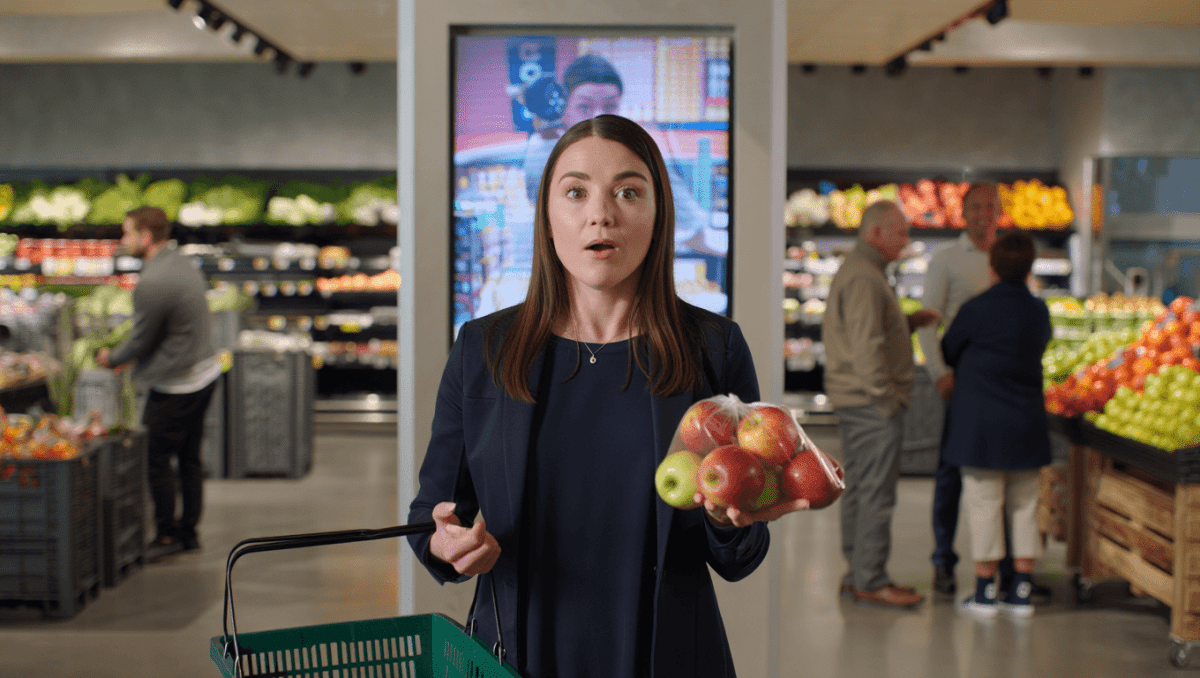
Retailers are testing ways to make in-store content interactive. QR codes, for example, link screen spots to web portals and product pages.
- Shoppers scanned codes even while pushing carts.
- Short episodes work better for busy, mobile audiences.
- Placement near relevant aisles boosts consideration.
Early tests show shoppers will engage with video in a store environment. That finding challenges assumptions that in-store viewers ignore screens.
Blurring lines between shopper marketing and retail media
Historically, shopper marketing meant point-of-sale displays and seasonal promos. Now, that creative energy is migrating into paid retail media placements.
Retailers are reorganizing to handle both functions. The result is content that is simultaneously promotional and entertaining.
Performance signals and creative impact
Brands that create bespoke creative for in-store contexts report stronger results than those repurposing general ads.
- Custom creative increases recall and consideration.
- Contextual relevance improves conversion near the shelf.
- Short, vertical formats play well on app feeds and store screens.
Investing in purpose-built content tends to deliver better ROI. That’s why some major advertisers are committing to bespoke retail media campaigns.
Retailers expanding screens and video networks
Supermarkets are wiring stores with digital displays at scale. Installation plans often target hundreds to thousands of locations.
- Deploy screens across high-traffic aisles and entrances.
- Integrate with e-commerce video feeds and mobile apps.
- Offer measurement tools for brands to track impact.
Rollouts happen weekly in many chains, with plans to reach large portions of national footprints by year-end.
Industry moves: platforms and competitors adapting
Other retail and e-commerce platforms are also launching short-form video features. Some are adding connected-TV tools or acquiring ad-tech firms to support advertisers.
- Grocery and delivery apps are testing recipe and meal videos.
- Large retailers are buying ad platforms to broaden offerings.
- Third-party media platforms help brands target specific shopper segments.
What marketers should consider when creating retail media content
Brands need to think about context first. Content that fits the shopping moment performs better than one-size-fits-all spots.
- Match creative to the aisle or category.
- Keep videos short and mobile-friendly.
- Use retailer data to target trip types and demographics.
Smart placement and tailored storytelling are key to turning exposure into purchase.
Early signals point to a lasting shift
Retail media is evolving from transactional ads to narrative-driven experiences. As networks of in-store screens and digital feeds grow, brands will likely increase spend on custom, short-form content.
That change creates new opportunities for advertisers to influence shoppers earlier in their decision process and measure the results more precisely.