Show summary Hide summary
- Why the coffee industry is pivoting to plastic-free machines
- Products leading the plastic-free coffee trend
- How pressed coffee tabs work and why brands favor them
- Material choices: alginate coatings and compostable solutions
- Early sales and market reception
- Price positioning and the premium angle
- Consumer testing shaped the final features
- What brands say about the next steps in brewing
- How consumers can evaluate plastic-free coffee options
- Retail and product distribution strategies
- Industry implications for legacy pod ecosystems
Coffee makers are getting a makeover. Big brands and newcomers are racing to replace plastic pods and hidden plastic brew paths with cleaner, more sustainable designs. The shift is driven by shoppers who want barista-level drinks at home without the environmental trade-offs.
Why the coffee industry is pivoting to plastic-free machines
Manufacturers say consumer tastes have evolved. Home brewing has become more experimental since the pandemic. Many people now expect a variety of café-style drinks. At the same time, plastic waste concerns are pushing buyers away from traditional pod systems.
Heated rivalry future revealed: gay hockey romance teases second season
Tony Shalhoub avoided Hollywood spotlight: daughter reveals surprising reason
- Flavor and variety: People want richer coffee and milk-based drinks at home.
- Sustainability: Less single-use plastic is a top priority for many buyers.
- Design and home presence: Buyers prefer appliances that look premium in the kitchen.
Products leading the plastic-free coffee trend
Several recent launches show how companies are answering that demand. Each takes a different route to reduce or remove plastic from the brewing process.
Lavazza Tabli: pressed coffee tabs for single-serve brewing
Lavazza introduced a compact system that brews from compressed coffee rounds. The device targets single-serve fans who want a pod-free experience.
- Uses compressed coffee tabs across roast styles.
- Positions itself against legacy pod systems.
- Promoted in high-visibility events to reach premium coffee buyers.
Caraway’s drip brewer: all-glass water path and stainless steel contacts
Home goods brand Caraway took five years to design a drip machine that avoids plastic in the brew path. The reservoir and carafe are glass. Internal parts that touch water or grounds are stainless steel.
- Brew capacity up to 10 cups.
- Reusable metal filter and stainless showerhead.
- Available in curated colors to match modern kitchens.
Keurig Alta: pressed rounds instead of plastic or aluminum pods
Keurig’s newer system brews with tightly compressed coffee rounds called AltaRounds. The company previewed the idea after seeing shifts in what home drinkers want.
- Designed to brew a variety of coffee styles, including milk-based drinks.
- Uses a protective, compostable coating around the coffee puck.
- Early-access pre-orders sold quickly.
How pressed coffee tabs work and why brands favor them
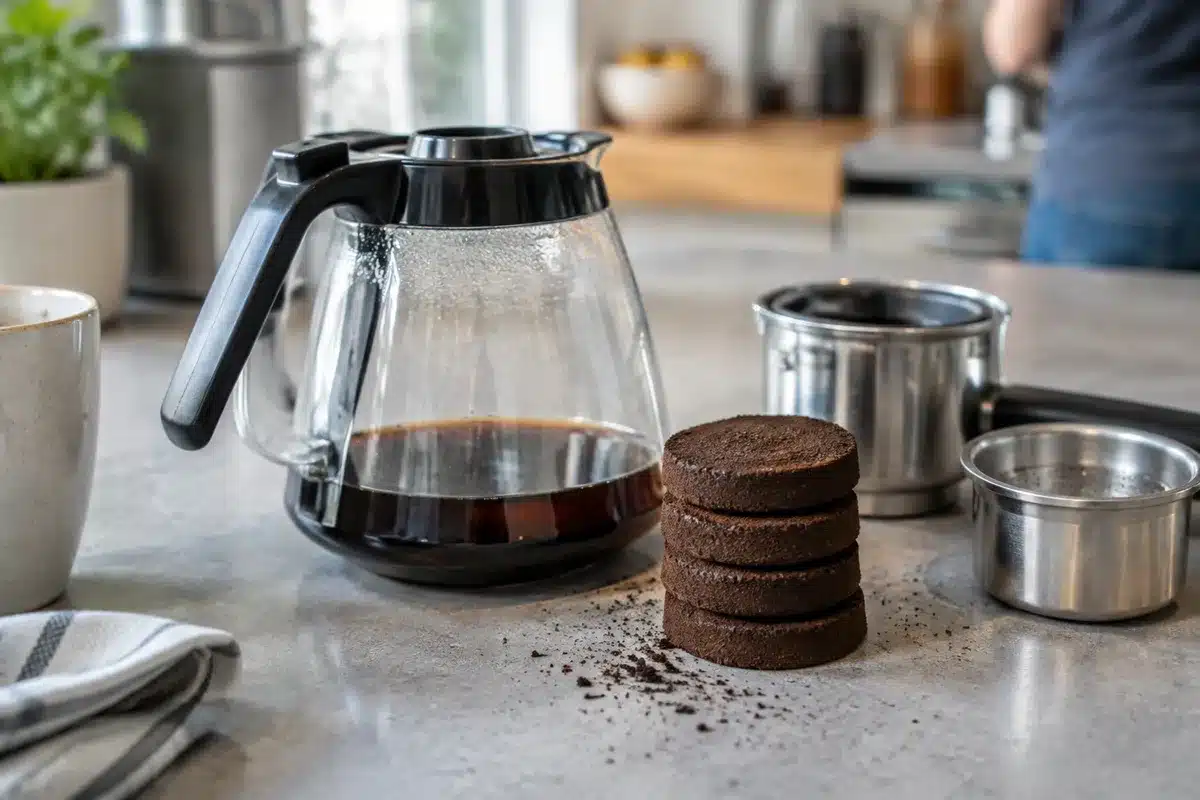
Pressed coffee pucks replicate some aspects of espresso puck preparation. Compressing grounds reduces channeling during extraction. That helps water pull more oils and flavor from the grounds.
Brands also aim to reach espresso-level pressure and a richer cup without pods. Achieving the right compression was a technical hurdle. Companies experimented with different coatings and wrappers to protect the compacted discs.
- Compression: Reduces uneven water flow and improves flavor extraction.
- Pressure: Higher chamber pressure can yield a bolder, espresso-like result.
- Protective wrappers: Biobased coatings keep pucks intact during shipping and storage.
Material choices: alginate coatings and compostable solutions
To keep pressed rounds fresh and intact, some makers tested natural coatings. One effective option is alginate, a wrapper derived from seaweed. It protects the puck and can help make disposal easier for consumers.
When the wrapper stays intact after brewing, users can add the spent puck to compost. That step addresses a major complaint about conventional pods: landfill-bound plastic and aluminum waste.
Early sales and market reception
Initial demand appears strong. New models from both incumbents and startups have moved quickly through their early runs. Some sold out in days.
- Caraway reported high first-week sales after launch.
- Keurig’s limited-access pre-orders for its Alta machine also filled rapidly.
- Pricing skews premium compared with legacy pod machines.
Price positioning and the premium angle
These plastic-light machines trend toward higher price points. The premium tag reflects both materials and a lifestyle play.
- Caraway’s brewer starts near the mid-hundreds.
- Keurig’s early-access bundles sit in a similar premium range.
- Lavazza’s Tabli is less expensive but positioned as an upgrade from basic pod machines.
Manufacturers are selling more than function. They are selling an appliance that doubles as a design object. Color, finish, and build quality are part of the value proposition.
Consumer testing shaped the final features
Teams ran user trials and applied feedback to the designs. Testers asked for versatility. They wanted to recreate café drinks at home and expected easy milk steaming or frothing.
Resulting adjustments ranged from more capable frothers to refined industrial design. Firms also tweaked extraction profiles to match the sensory expectations of home baristas.
What brands say about the next steps in brewing
Executives view these new machines as the start of a longer process. They plan ongoing tweaks to design, colorways, and brewing performance. The focus remains on marrying sustainability with premium home coffee experiences.
Long-term goals include expanding pods or rounds options, improving compostability, and adding features that mimic café workflows.
How consumers can evaluate plastic-free coffee options
People considering a plastic-free brewer should weigh several factors. A few practical tips:
- Check which parts contact water and grounds.
- Confirm whether capsules or rounds are compostable.
- Compare pricing and ongoing consumable costs.
- Test or read reviews for milk-texturing and extraction quality.
Design and color may matter as much as performance for buyers who display appliances in their kitchens.
Retail and product distribution strategies
Brands are using limited releases and event marketing to build momentum. Sampling at high-profile venues helps reach targeted buyers quickly. Pre-orders and beta programs create urgency and help refine products.
Startups leverage direct-to-consumer launches to control messaging. Larger companies combine retail partnerships with brand activations to scale faster.
Industry implications for legacy pod ecosystems
If the plastic-free trend continues, legacy pod makers may face pressure to adapt. Some will pivot to alternative materials. Others will focus on improved recycling programs or premium product tiers.
The next phase will test whether consumers keep paying a premium for design and sustainability.