Show summary Hide summary
- Why holiday return habits put retailers on the defensive
- Where returns disappear into retail blind spots
- Embedded tags: giving each item a permanent voice
- Turning return scans into real inventory and clearer analytics
- Practical steps for retailers to adopt embedded tagging
- How the seam tag shifts the balance between convenience and risk
The holidays bring crowded stores, stretched staff and a tidal wave of returns that can eat into profits. For shoppers, flexible policies feel like a perk. For retailers, those same policies can open a floodgate of fraud, inventory errors and lost revenue. This season, many retailers are turning to new tagging and data practices to keep shelves stocked and balance sheets intact.
Why holiday return habits put retailers on the defensive
Gift buying spikes uncertainty. Shoppers buy for others more often and expect easy exchanges or refunds.
Retailers respond by easing returns. That improves customer experience. It also raises exposure to abuse.
American Horror Story failed: it all comes down to Ryan Murphy’s typecasting
Inde Navarrette hosts SNL tonight: how to watch for free
- Customer tolerance: Shoppers reward retailers with generous policies.
- Policy exploitation: Easier returns make some shoppers more willing to misrepresent purchases.
- Organized fraud: Criminals hunt for lax policies and exploit them at scale.
Industry data underscores the stakes. Surveys show a large share of customers feel fudging return details is acceptable. Retail reports also find a significant portion of holiday returns were fraudulent. In dollar terms, the rollback from returns reached into the hundreds of billions in recent years.
Holiday periods amplify the damage. Returns as a share of online sales and store sales rise together. When returns spike, so do labor demands, shipping volumes and the chances for mistakes or deliberate theft.
Where returns disappear into retail blind spots
Modern retail systems track goods at category or SKU level. But they often lose the item’s unique identity once it is bought. That gap creates a blind spot.

Common return scams rely on that blind spot. Examples include empty-box returns, false quantities and product swaps. All of these are easier when staff can’t prove the returned item is the exact unit sold.
Another problem is systems that treat returns as separate from inventory flow. When an item comes back, it may re-enter stock based on manual notes instead of a verified digital record. That creates inaccuracies that ripple through forecasting, replenishment and online availability.
Embedded tags: giving each item a permanent voice
One practical fix is to embed persistent identifiers in product labels or seams at manufacture. These micro-tags carry a unique ID tied to a specific unit. They survive the journey from factory to fitting room and back.

How embedded identifiers help:
- They prove an item’s origin and movement.
- They defeat simple swap and box-return schemes.
- They allow instant verification at the point of return.
When combined with point-of-sale and exit sensors, embedded IDs turn returns from guesswork into data. The item’s history becomes visible. That visibility cuts ambiguity at the counter and in the back room.
Turning return scans into real inventory and clearer analytics
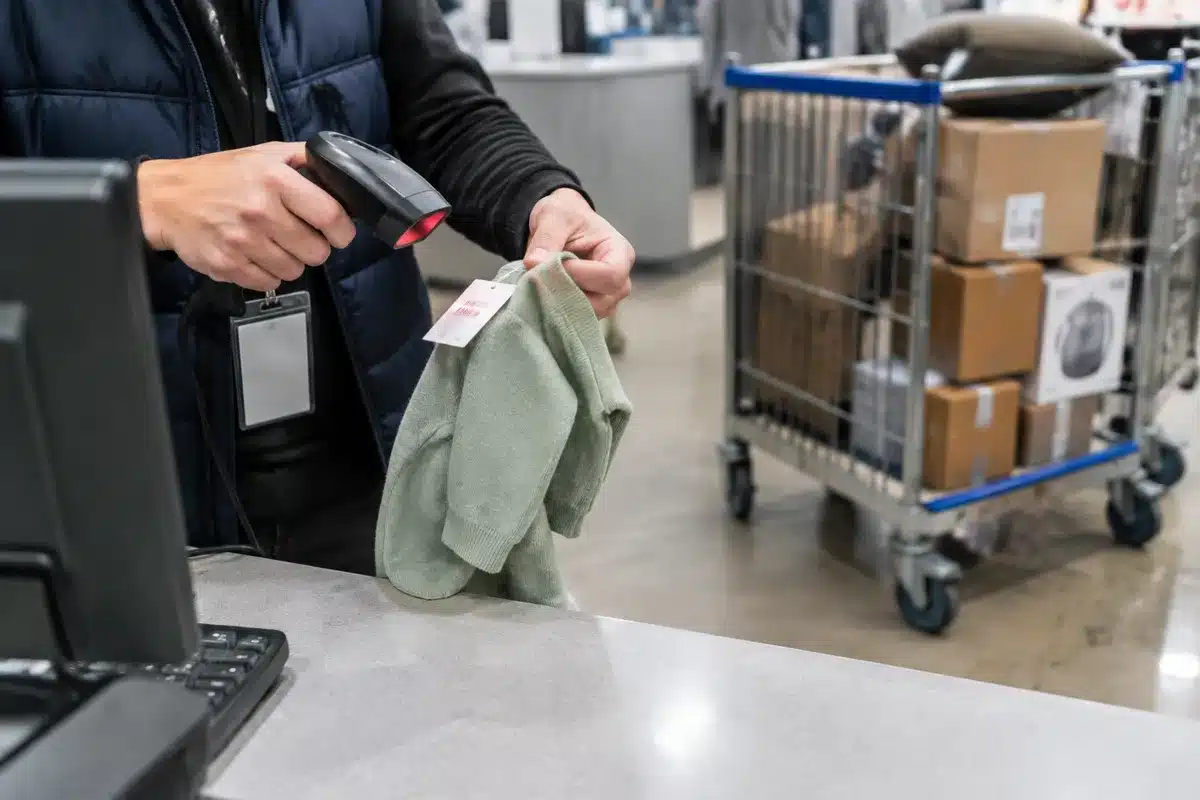
Tag-enabled returns change operational workflows. When associates scan a returned tag, systems can instantly update inventory. That eliminates manual tallying and delays.
Key operational gains include:
- Real-time inventory accuracy: Items re-enter stock with verified status.
- Faster decision-making: Managers spot patterns and intervene earlier.
- Reduced friction for customers: Legitimate returns proceed quickly.
- Lower labor waste: Staff spend less time researching returns.
Advanced analytics layer on top of tag data. Retailers can segment returns by reason, location and shopper behavior. Those insights point to where to tighten controls and where to keep policies lenient to drive loyalty.
Examples of analytics-driven actions
- Flagging repeat return addresses linked to fraud.
- Identifying stores with higher-than-average empty-box claims.
- Pinpointing SKUs that cause the most exchanges.
Practical steps for retailers to adopt embedded tagging
Adding permanent IDs requires coordination across the supply chain. It is more than a technology choice. It is a change to how products are made, tracked and returned.
Recommended next steps:
- Run a pilot: Start with a category or a single brand.
- Integrate systems: Link tag reads to POS, inventory and loss-prevention platforms.
- Train staff: Teach associates to scan tags and follow verified workflows.
- Communicate with customers: Explain faster, safer returns to build trust.
- Monitor privacy and compliance: Ensure identifiers don’t capture personal data.
Manufacturers and brands also play a role. Embedding tags at the point of production is simpler and cheaper than retrofitting finished goods. Collaboration reduces friction and speeds rollout.
How the seam tag shifts the balance between convenience and risk
Seam or label-integrated tags are small, unobtrusive and durable. They fit into existing care labels or seams and survive washing and wear. That persistence is valuable in holiday retail, where returns often follow months after purchase.
With durable tags, a returned item carries its full lifecycle record. Retailers can trace it back to the store, shipment or batch. That context improves loss-prevention strategies and helps merchants decide when to accept returns without extra checks.
More visibility means smarter policies. Retailers can keep customer-friendly return rules while protecting margins. Data lets them design targeted safeguards without alienating honest shoppers.