Show summary Hide summary
- Maruchan’s MaruMart: a meme made into a desert landmark
- Why brands are opting for off-site festival activations
- Examples of creative off-site marketing around Coachella
- Food and beverage tie-ins: menu collabs and collectible moments
- Turning pop-ups into social content and measurable buzz
- Operational trade-offs: focus, scale and logistics
- Building reusable assets for future events
- Measuring success beyond immediate sales
Brands are treating the stretch of highway into Coachella like prime real estate. What began as a clever social post from a ramen maker evolved into a full roadside pop-up that greets festival-goers long before they reach the gates. These off-site activations blend cheap thrills, snackable content and smart marketing to capture attention without the sticker shock of on-site sponsorships.
Maruchan’s MaruMart: a meme made into a desert landmark
Maruchan turned a viral joke about festival payment plans into a tangible stop for travelers. The brand built a convenience-style pop-up near Cabazon Outlets, visible from Interstate 10, to connect with people headed to the Empire Polo Club.
Sophia Laforteza of Katseye announces hiatus: comes months after Manon Bannerman’s exit
Delta to return to Tokyo Narita hub in 2027: 7-year comeback
- Location: outlet mall just off the highway, roughly 45 minutes from the festival.
- On-site features: DIY ramen bowls, limited-edition merch, packaged snacks for campsites and Airbnbs.
- Physical assets: a converted shipping container and an Airstream trailer used for cooking.
- Promotion: targeted billboards that riff on the festival payment plan meme.
The goal was simple: be visible, useful and shareable for fans who want budget-friendly festival fuel. The team plans to reuse the modular build for future events.
Why brands are opting for off-site festival activations
Paying to be inside a major festival can be costly and restrictive. Off-site activations let brands capture buzz without buying into the festival ecosystem.
- Lower entry costs than official sponsorships.
- More freedom to design physical, photo-worthy moments.
- Flexible timing to meet incoming road traffic.
- Options to convert passersby into social media content creators.
Marketers treat these activations as both real-world touchpoints and content factories. They lean into travel routes, hotel corridors and party houses to intercept audiences where they already are.
Examples of creative off-site marketing around Coachella
Several brands created distinct experiences aimed at festival crowds without being inside the venue.
- Windsor hosted an influencer-focused takeover at a luxury Palm Springs hotel with gifting suites and pool events.
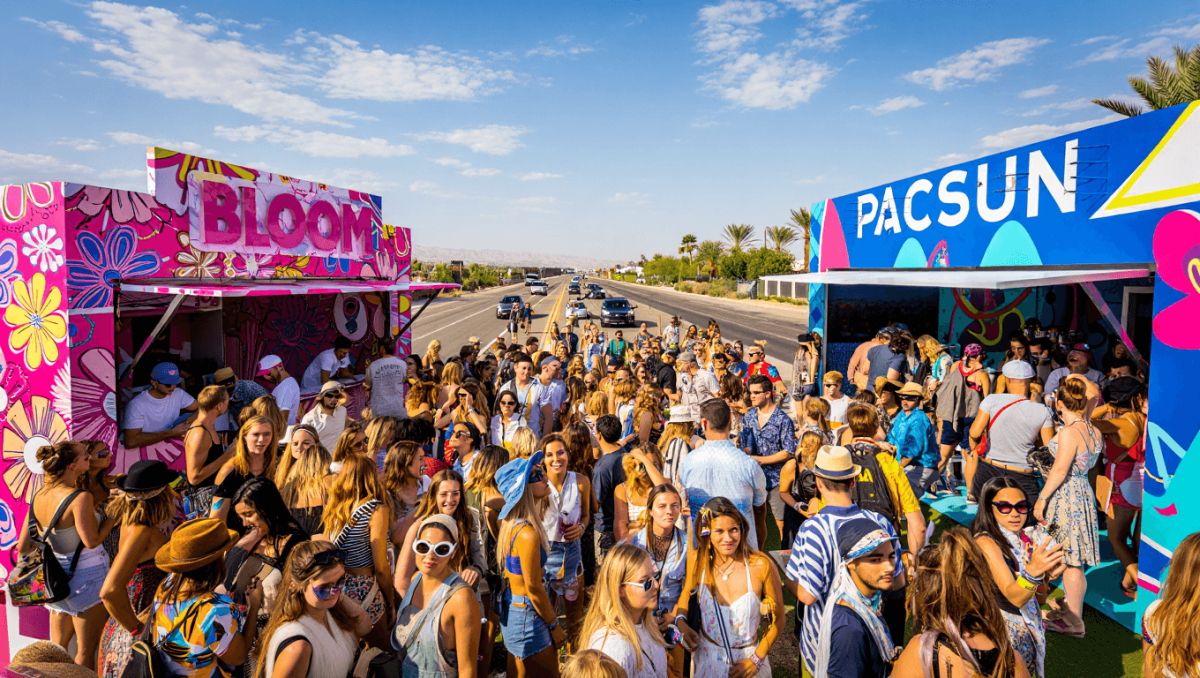
- Pacsun ran a large freeway billboard and operated a roadside stand selling exclusive merch and offering flash tattoos.
- Revolve staged an invite-only event for the ninth consecutive year, centering loyalty and exclusivity.
- Other lifestyle brands rented houses or hosted pop-up shops to reach curated communities.
Food and beverage tie-ins: menu collabs and collectible moments
Edible activations cut through noise because they pair a sensory experience with shareable moments. Local chains and national brands both lean into collaborations to amplify reach.
Irv’s Burgers and a celebrity co-created menu item
One fast-casual chain collaborated with a performer to create a signature combo that nods to her roots. The special burger mixes bold toppings and regional seasoning and is promoted with collectible merch.
- Result: high demand for limited cups and merchandise tied to the collab.
- Lesson: authentic partnerships work best when the talent genuinely loves the product.
Edible exclusives and merch often drive immediate sales and social posts, which extend the activation’s reach beyond festival visitors.
Turning pop-ups into social content and measurable buzz
Brands are increasingly treating activations as content engines. The in-person moment is designed to create social assets for weeks of online promotion.
- On-site DJs and color-themed wraps create strong visuals.
- Sampling stations and airbrush merch attract shareable photos.
- Timing activations for travel days increases exposure.
Many teams prioritize awareness and viral potential over strict foot-traffic ROI. Metrics include social engagement, earned media and brand lift rather than only immediate sales.
Operational trade-offs: focus, scale and logistics
Executing a roadside pop-up requires tight operational focus. Teams pick a few big priorities to avoid spreading resources too thin.
- Decide early where the budget will have the most impact.
- Concentrate on visibility: billboards, signage and a clear landmark.
- Make the experience easy to find for road travelers and Airbnb guests.
Timing and location are key. Scheduling events on arrival days and placing activations in common stop zones helps ensure exposure.
Building reusable assets for future events
Investing in modular infrastructure lets brands show up repeatedly. Mobile kitchens, shipping-container builds and branded trailers can be redeployed across markets.
- Benefits: lower cost per event over time and consistent brand presentation.
- Challenges: upfront capital and storage between activations.
Several brands said they will scale or repeat activations when early sentiment is positive. Activations that drive strong social conversation are prioritized for future rollouts.
Measuring success beyond immediate sales
For many companies, the main objective is to own cultural moments rather than chase short-term transactions. Awareness, shareability and alignment with larger brand goals often outweigh direct-dollar returns.
- Key indicators: social mentions, influencer content, earned press and foot traffic near the site.
- Secondary measures: merchandise sell-through and sampling feedback.
Brands treat festival weeks as tentpole marketing opportunities to build long-term recognition rather than solely to increase short-term sales.