Show summary Hide summary
- Why Trieste is climbing the travel charts in 2026
- What makes Trieste feel Central European — and why that matters
- Key sights and memorable walks
- Cross-border day trips: Slovenia in a heartbeat
- Food, coffee and local flavors
- Budget, transport and where to stay
- Safety, entry rules and travel alerts
- Insider tips to make the most of your visit
- Where to find the best photo ops and quiet moments
- Planning resources and next steps
Trieste is shedding its image as Italy’s quiet corner. Once overlooked, this Adriatic city is drawing more visitors each year. Its mix of imperial architecture, sea views and coffeehouse culture makes it an irresistible detour for travelers who want something different from Rome or Venice.
Why Trieste is climbing the travel charts in 2026
Tourist numbers have surged recently, transforming a small regional capital into a genuine travel demand spot. For a city of under 200,000 people, the spike in visitors is striking.
Sophia Laforteza of Katseye announces hiatus: comes months after Manon Bannerman’s exit
Delta to return to Tokyo Narita hub in 2027: 7-year comeback
- Year-round interest: Demand is no longer only seasonal or event-driven.
- Regional appeal: Located in Friuli-Venezia Giulia, Trieste sits at Italy’s northeastern edge, a crossroads with Slovenia and Central Europe.
- Architectural draw: Austro-Hungarian boulevards give the city a distinct look, unusual for Italy.
Local tourism bodies now treat visits as a core industry, not a niche curiosity. That shift is reshaping hotels, restaurants, and transport options.
What makes Trieste feel Central European — and why that matters
Step into Trieste and you may feel you’ve landed in Vienna or Budapest. Grand facades, broad squares, and formal promenades replace sun-drenched Mediterranean clichés.
Piazza Unità d’Italia: Italy’s most imperial waterfront
Piazza Unità d’Italia is the city’s heart. It opens onto the sea rather than a cathedral. The square’s scale and ornate façades recall an imperial port more than a medieval town.
Trieste’s maritime past shaped its identity. Buildings and public spaces often celebrate a past tied to Habsburg rule, not Rome.
Key sights and memorable walks
Trieste packs history into a compact, walkable layout. You can cover the main highlights in a few days.
- Caffè San Marco: A long-standing café where writers and locals meet. Coffee and pastry culture here feels essential.
- Arco di Riccardo: A Roman gateway surviving between modern buildings. It’s a rare, tangible link to the city’s ancient past.
- Roman Theater of Tergeste: Rediscovered in the 20th century, this modest ruin hints at Trieste’s long history.
- Molo Audace: A pier that’s perfect for sunset strolls and seafront views.
- Canal Grande: A small waterway with stone bridges and trattorie lining its banks.
- Castello di San Giusto: A hilltop fortress with panoramic views of the gulf.
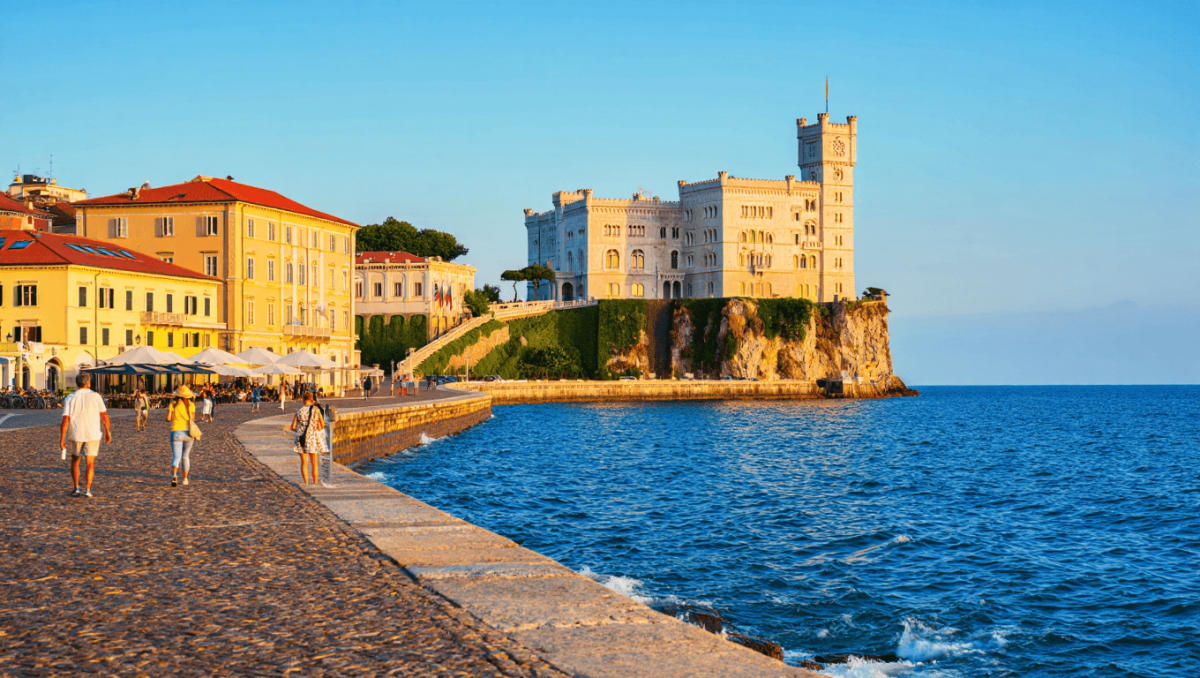
For a longer excursion, take a short bus ride to Castello di Miramare. The 19th-century palace sits above manicured gardens and dramatic sea cliffs.
Cross-border day trips: Slovenia in a heartbeat
Trieste’s location makes quick international hops easy. Slovenia’s Koper is under an hour away by shuttle.
- Koper: A photogenic seaside town with Venetian echoes and a compact old port.
- Logistics: Regular shuttle and bus services link Trieste with nearby Slovenian and Croatian towns.
Food, coffee and local flavors
Expect hearty, Central European-influenced dishes rather than sun-soaked southern Italian fare. Cabbage, stews and boiled meats are commonplace.
- Local classics: Goulash, cabbage soups and substantial meat sandwiches.
- Where to eat: Traditional spots, family-run trattorie, and historic cafés offer authentic regional dishes.
- Breakfast ritual: A cappuccino and brioche before 10 a.m. is a small but essential experience.
Dining in Trieste can be good value. You’ll find affordable everyday meals and a handful of splurge options.
Budget, transport and where to stay
Trieste is compact, and most neighborhoods are walkable. If you prefer not to climb, public transit is cheap and efficient.
- Bus fares: Short one-way tickets are inexpensive, making uphill trips easy.
- Accommodation: Hostels and budget rooms start very low; 3-star hotels sit in the mid-range; luxury options cost more but remain competitive with Italy’s pricier hotspots.
- Walking: The Old Town and waterfront are best explored on foot.
Safety, entry rules and travel alerts
Before booking, check official entry guidance. European rules for travelers have evolved in recent years.
- Entry checks: New biometric screenings and digital travel authorizations are increasingly common. Verify requirements for your passport.
- Travel advisories: Consult government advisories for up-to-date safety and entry information.
- Local conditions: Italy is generally safe, but standard precautions against petty theft apply.
For U.S. travelers, Italy is typically a low-to-moderate advisory level. Still, keep an eye on official consular updates before you go.
Insider tips to make the most of your visit
- Go early to cafés to enjoy real local mornings and quieter streets.
- Take the bus to Miramare rather than renting a car.
- Pack layers—the Adriatic breeze can be cool, even in summer.
- Try a neighborhood trattoria for Central European dishes unique to this region.
- Buy transport tickets in advance or at kiosks to avoid fines.
Where to find the best photo ops and quiet moments
Sunset from Molo Audace is cinematic. Quiet lanes around the Old Town reveal unexpected Roman fragments.
- Sea-facing squares: Offer dramatic architectural backdrops and open vistas.
- Hills above the city: Give sweeping panoramic shots of the gulf and rooftops.
- Smaller canals and bridges: Provide intimate scenes away from main tourist flows.
Planning resources and next steps
Before you book, cross-check transport schedules, hotel availability, and entry criteria. Local tourism offices publish seasonal events and cultural listings that can add depth to your itinerary.
Trieste blends seafaring grandeur with Central European charm. If you want an Italian visit that feels fresh, consider adding it to your 2026 travel map.