Show summary Hide summary
- Why Malta is suddenly trending for travelers
- How small Malta is — and why that matters to visitors
- Beach life and the must-see Blue Lagoon
- Historic towns and cultural highlights worth exploring
- Gozo: Malta’s quieter and greener sibling
- Getting there: U.S. nonstop flights and other options
- Border rules and entry requirements to check before booking
- Tips for planning a Maltese trip that feels authentic
- Where Malta fits in a wider Mediterranean trip
Malta has quietly shifted from a long-loved European retreat to one of the continent’s most talked-about travel hotspots. New transatlantic routes, rising visitor numbers and a mix of turquoise coves and centuries-old towns have pushed the tiny archipelago onto more American itineraries. If you haven’t thought seriously about Malta, this year might be the moment.
Why Malta is suddenly trending for travelers
Tourism stats and new flight routes are turning heads. Last year arrivals climbed noticeably, and forecasts point toward roughly 4 million visitors in 2026. Industry watchers say that is a big leap for a nation of only 122 square miles.
Sophia Laforteza of Katseye announces hiatus: comes months after Manon Bannerman’s exit
Delta to return to Tokyo Narita hub in 2027: 7-year comeback
Several facts are accelerating interest:
- New nonstop flights from the U.S. this summer.
- Stunning coastal scenery that rivals better-known Mediterranean beaches.
- Compact history-dense towns that are easy to explore in a few days.
How small Malta is — and why that matters to visitors
Malta’s footprint is tiny. The entire country is smaller than many single cities. Visitors quickly notice how close everything is. That compact size turns travel days into efficient sightseeing loops.
Numbers to keep in mind:
- Area: around 122 square miles in total.
- Tourist density: several annual tourists per resident, far higher than many larger European countries.
That means your itinerary can mix beaches, café culture and heritage sites without long drives.
Beach life and the must-see Blue Lagoon
Malta’s water color is repeatedly praised. Expect clear, blue-green seas and varied shorelines.
Top beach experiences
- Blue Lagoon (Comino) — the iconic shallow-lagoon color. Boat access brings crowds in summer.
- Golden Bay — sandy stretch with good sunset views and family-friendly taverns.
- Mellieħa Bay — the island’s longest sandy beach, ideal for relaxed swims.
- St Peter’s Pool — rocky, scenic, popular with cliff jumpers and snorkelers.
If you prefer fewer people, skip peak hours and head to quieter coves on weekdays. Safety is generally solid, and petty theft is not a widespread issue like in some larger resort cities.
Historic towns and cultural highlights worth exploring
Malta packs an outsized amount of history into a small space. Baroque architecture, fortified harbors and megalithic temples sit within easy reach.
Must-see heritage spots
- Valletta — the capital is a compact, fortified city with Baroque churches and hidden courtyards.
- The Three Cities — Birgu (Vittoriosa), Senglea and Cospicua offer ramparts and harbor views.
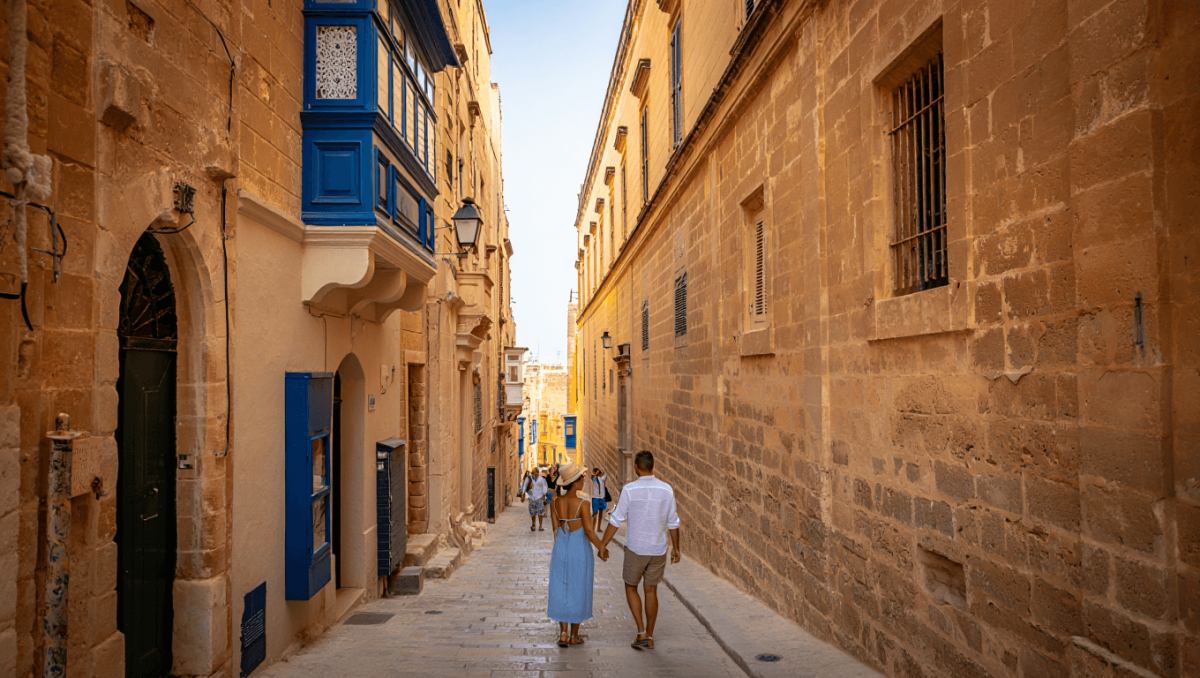
- Mdina — a walled medieval town that feels cinematic, with narrow lanes and atmospheric squares.
- Ġgantija Temples (on Gozo) — Neolithic megaliths older than the pyramids and a UNESCO highlight.
Art lovers should hunt for Caravaggio works and richly decorated churches. Walkable streets make it easy to linger and discover local bakeries, small museums and artisan shops.
Gozo: Malta’s quieter and greener sibling
Take a short ferry and you reach Gozo, an island with a gentler pace and distinct character. Many travelers describe it as the soul of the Maltese islands.
- Victoria Citadel gives panoramic views and a sense of old-town life.
- Ramla Bay is known for its warm, reddish sand framed by a green valley.
- Dwejra and the Inland Sea offer dramatic cliffs and peaceful swimming spots.
Gozo is ideal for slow travel, short hikes and village taverns serving local stews and seafood. The island’s size makes it perfect for 24–72 hour escapes from Malta’s busier hubs.
Getting there: U.S. nonstop flights and other options
This summer brings a notable change. For the first time in decades, a U.S. carrier will operate a seasonal nonstop route to Malta.
- Route: New York (JFK) to Luqa International Airport (MLA).
- Frequency: three times per week during the summer season.
- Flight time: roughly nine hours nonstop.
Seats for seasonal routes can sell quickly, so book early if your dates are flexible. If you miss the nonstop option, connections via major European hubs remain plentiful.
Border rules and entry requirements to check before booking
Travelers to the EU must be aware of new digital and biometric checks. The Entry/Exit System now includes mandatory biometric data for many non-EU visitors.
- Expect fingerprinting and facial scans on arrival for eligible travelers.
- Check current visa and entry rules long before you buy tickets.
- Carry printed or digital proof of travel insurance and return plans when asked.
Regulations change, so consult official government sites or trusted travel advisories before you leave.
Tips for planning a Maltese trip that feels authentic
- Travel in shoulder season for cooler weather and fewer crowds.
- Rent a car for Gozo or rural exploration, but expect narrow roads.
- Try local dishes: rabbit stew, ftira, and seafood from family-run restaurants.
- Reserve boat trips to Comino in advance during summer weekends.
- Book heritage site tickets early to avoid lines at peak times.
Pack reef shoes if you plan to swim in rocky bays. Bring a refillable water bottle and sunscreen; summers are hot and dry.
Where Malta fits in a wider Mediterranean trip
Because it’s small and well connected, Malta makes a convenient add-on to itineraries that include Italy or Spain. Short flights from hubs like London, Barcelona or Rome are frequent and often affordable.
For travelers seeking an island escape that blends beaches with deep history, Malta now ranks high on many lists. Its mix of clear waters, compact towns and fresh flight options gives visitors a lot to plan around.