Show summary Hide summary
- Mail-order sampling as the growth engine
- What’s in the sachet: Strength Water explained
- Why mail, not paid ads: a strategic pivot
- Operational realities: postage, tracking and scale
- Community building beyond mail: analog meets digital
- Early signal: demand, conversion and engagement
- Questions about scaling and product roadmap
Plainspeak, a new direct-to-consumer women’s wellness brand, is testing an old-school marketing idea: mail free single-serve samples to build subscription customers. Their launch leans on physical touchpoints and conversations, not a flood of paid social ads.
Mail-order sampling as the growth engine
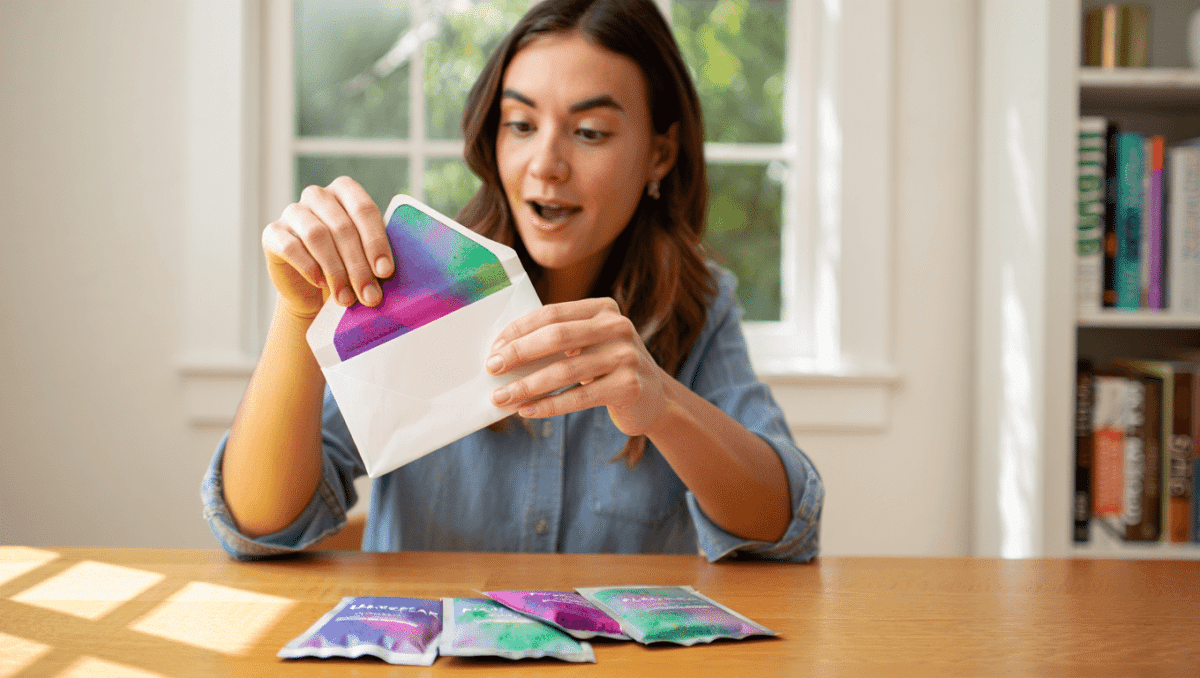
The company arrived on the scene this month with one flagship product and a bold customer-acquisition plan. Instead of relying on influencer deals or Meta spend, Plainspeak encourages people to message the brand on Instagram with their mailing details. In return, they send a free sachet that lets potential customers try the product before buying.
Matthew Perry’s Friends co-stars missing from Netflix doc: why they stayed away
Taylor Swift: are we over her now that her love story is complete?
The simple premise: get the product into women’s hands and let word-of-mouth drive sign-ups.
- People DM the brand on Instagram with their address.
- Plainspeak mails a single-serve packet via standard USPS postage.
- Recipients sample the product and, if they like it, convert to a subscription for the full-size pack.
What’s in the sachet: Strength Water explained
The product, called Strength Water, is designed as an all-in-one drink mix for women who want macro nutrients without many bottles and pills. It combines protein, creatine, collagen and bone-supporting vitamins in a drinkable format.
- Protein: 15 grams from grass-fed sources.
- Creatine: 5 grams to support strength and recovery.
- Collagen for skin and joint support.
- Calcium and vitamin D to support bone health.
The flavor is pitched as a lemonade-style mix that delivers a full macro profile. Founders framed the name and formula to counter complex wellness claims and offer a clear, simple benefit.
Why mail, not paid ads: a strategic pivot
Plainspeak’s co-founder said years of CPG strategy work convinced the team that a noisy paid ads environment wouldn’t be the fastest route to trusted adoption. She argued that sampling would create organic ambassadors rather than relying on paid reach.
In the current social landscape, wellness feeds are crowded with trending treatments and highly targeted ad campaigns. Plainspeak wanted to avoid jumping into that cycle too early. Instead, the founders prioritized a tactile first impression to spark genuine recommendations.
Founding team and medical input
The brand was co-founded by Sara Brooks, Rachel Moore and Heather Macneil. An endocrinologist, Dr. Gillian Goddard, helped develop the formulation. The team built the product from clinical research and aimed for one clear hero item at launch.
Operational realities: postage, tracking and scale
Testing the mail approach revealed practical constraints. The company first distributed samples to friends and wellness peers to validate the tactic and measure cost per acquired lead.
Mailing a single sachet via standard USPS costs about one dollar in postage. That low unit cost made the test affordable and measurable against digital customer-acquisition costs.
- Standard postage keeps costs down but limits tracking.
- USPS ground or commercial upgrades incur higher fees per shipment.
- Bulk drops into public mailboxes have worked, but not every envelope arrives.
About 80% of the initial mailed samples reached recipients, based on social posts and direct feedback. The team has since adjusted packaging and handling to improve deliverability and tracking.
Early logistical lessons
- Sending hundreds of envelopes at once triggers USPS rules that can raise freight costs.
- Traditional postage is inexpensive, but it can be untrackable for recipients.
- Small operational fixes—better labeling and pack formats—help fix lost-sample rates.
Community building beyond mail: analog meets digital
Alongside packets in the mail, Plainspeak has leaned into lower-tech community tactics. The founders launched a private Facebook group to host niche conversations about women’s health and wellness.
The group is invite-only. Admins approve members and the space functions as a place to crowdsource advice and share experiences. The move is intentionally retro in a world dominated by shiny new platforms.
Why the community matters: it gives the brand a way to talk directly with early users, answer questions and gather qualitative feedback that paid ads rarely provide.
Early signal: demand, conversion and engagement
Plainspeak says it is currently mailing more than 100 samples daily to people who reach out. Early demand has surprised the team, and conversion rates have outpaced initial expectations.
While long-term metrics are still being established, anecdotal indicators are strong. Many recipients return to report positive experiences, refer friends, and sign up for subscriptions.
- High qualitative engagement from sample recipients.
- Substantial word-of-mouth referrals in social comments and DMs.
- Positive conversion from sample to subscription in early cohorts.
The one-by-one mailing approach also allows the founders to follow up personally with each person. That direct contact helps collect feedback and to refine messaging in real time.
Questions about scaling and product roadmap
The team is testing whether a largely analog acquisition model can support a large-scale business. Founders say they are open-minded about the approach’s long-term viability.
For now, Plainspeak’s focus remains on the single hero product to counter supplement fatigue among women. The plan includes expanding the lineup over time, once the core product and subscription base stabilize.
Inventory note: the company reported it had already moved through more than a third of its sample stock early in the launch window.