Show summary Hide summary
- How the on-air confrontation unfolded
- What the podcaster actually said about a “civil war”
- Immediate reactions from viewers and participants
- Why this moment matters for public discourse
- How hosts and producers handled the aftermath
- Fact-checkers and commentators weigh in
- Patterns in media: spectacle versus substance
- Political fallout and follow-up statements
- Lessons for moderators and audiences
- Where the story goes next
A live TV debate took an unexpected turn when a prominent right-wing podcaster abruptly left the stage after another participant publicly challenged his prediction of an upcoming “civil war.” The exchange, captured on air, quickly spread across social platforms and fueled fresh arguments about media responsibility, inflammatory rhetoric, and how far politicians and pundits can push apocalyptic language before facing pushback.
How the on-air confrontation unfolded
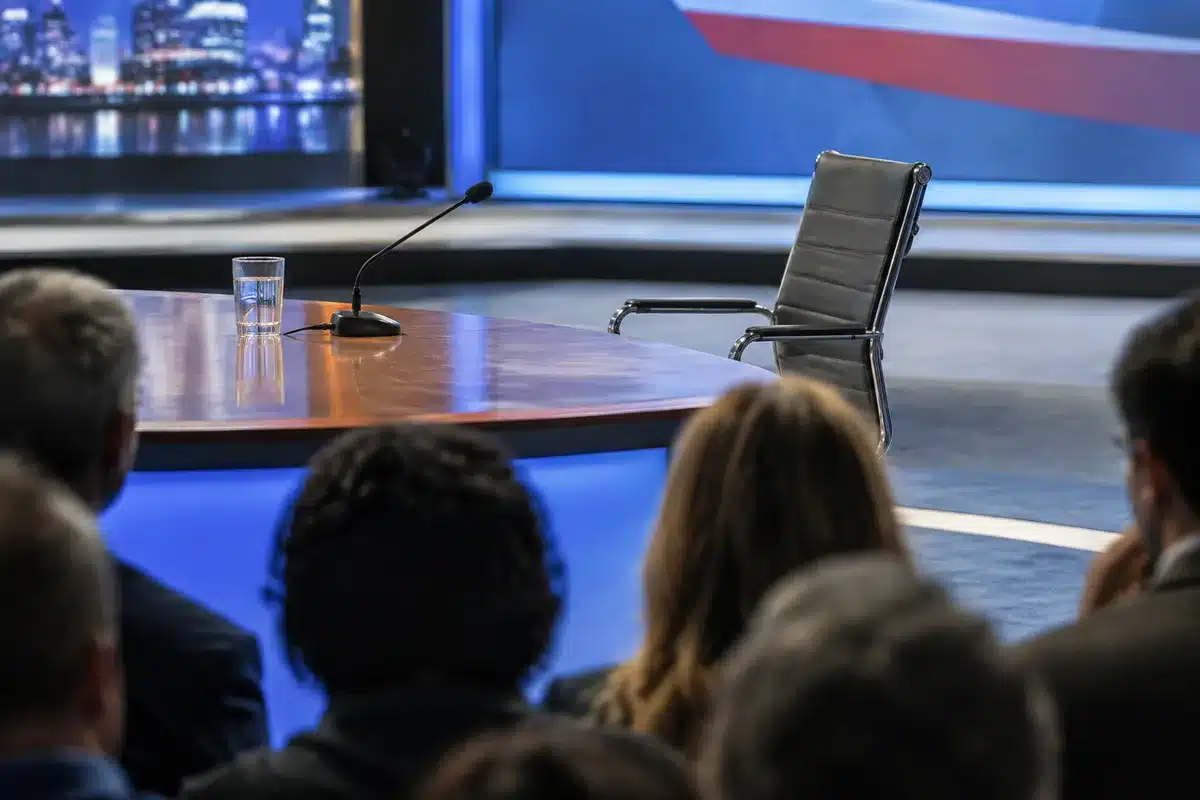
The segment began as a standard panel discussion. Tensions rose when one debater pressed the podcaster on his repeated claims about an impending civil conflict. The podcaster responded defensively and, after a short back-and-forth, stood up and exited the set.
Savannah Guthrie begs for answers about missing mom: we cannot move forward
Netflix to give Joel Coen’s gothic mystery Jack of Spades a theatrical release in 2027

- The host attempted to steer the conversation back to the topic.
- Cameras followed the empty chair for several seconds.
- Audience members and staff showed visible surprise.
What the podcaster actually said about a “civil war”
The podcaster has long used stark language to describe political futures. During prior episodes and appearances, he framed current divisions as precursors to violence. On this broadcast, his comments were met with pointed questions about evidence and intent.
His assertion of a “civil war” prompted direct challenges about whether he was predicting actual conflict or using hyperbole to mobilize a base. The exchange made studio tension unavoidable.
Immediate reactions from viewers and participants
Social media amplified clips of the moment within minutes. Reactions ranged from ridicule to alarm, and hashtags tied to the show trended briefly.

- Some viewers praised the challenger for refusing to let extreme rhetoric go unchecked.
- Others accused the panelist of provoking the walkout to generate headlines.
- Media critics debated whether the host could have de-escalated the situation.
Why this moment matters for public discourse
Language matters in political debates. When leaders or influencers use dramatic predictions, the risk is twofold: normalizing violent imagery and eroding trust in factual argument.
Experts say that unchecked apocalyptic talk can lower the bar for acceptable political speech and encourage imitation across platforms.
How hosts and producers handled the aftermath
The program resumed after a brief commercial break. The host acknowledged the interruption and invited remaining guests to continue discussing policy rather than speculation.
- Producers edited replay segments to include the walkout clip.
- Network promos later emphasized follow-up interviews about responsible rhetoric.
- Producers also faced questions about guest selection and moderation style.
Fact-checkers and commentators weigh in
Several independent fact-checking outlets reviewed the podcaster’s past statements. Their reports found a mix of rhetorical flourish and selective sourcing.
- Some claims were labeled as exaggerated forecasts without empirical support.
- Other remarks relied on fringe scenarios rather than mainstream analysis.
Analysts warned that repeating dramatic predictions without evidence can mislead audiences and heighten polarization.
Patterns in media: spectacle versus substance
The incident fits a larger pattern where emotional moments drive engagement. Television segments that spark controversy often see higher viewership, but at a cost to nuance.
Producers face a dilemma: controversial guests can attract clicks, yet they may derail serious discussion. The walkout illustrated that trade-off in real time.
Political fallout and follow-up statements
Within hours, the podcaster issued a social post framing his departure as a principled stand. The challenger released a statement defending the decision to confront inflammatory claims.
- Allies of the podcaster accused the show of ambush tactics.
- Critics argued the confrontation was overdue in the face of alarmist rhetoric.
Lessons for moderators and audiences
Moderators can prepare by setting clear rules for evidence and tone. Audiences can demand clarity when pundits use extreme language.
- Ask for specifics when predictions involve violence.
- Hold guests accountable for sources and logic.
- Recognize when spectacle is crowding out policy discussion.
Key takeaways for newsrooms
Newsrooms must balance staying relevant with upholding standards. This incident highlights the need for frameworks that prevent escalation while preserving robust debate.
Where the story goes next
The clip continues to circulate and will likely prompt follow-up interviews and editorial pieces. Networks and political commentators will monitor whether such confrontations become more common as polarization intensifies.