Show summary Hide summary
- Why Montenegro is suddenly on every traveler’s radar
- Kotor: the medieval jewel set inside a fjord-like bay
- Perast: tiny palaces and a floating church
- Cetinje: the mountain capital of Montenegro’s culture
- Budva: sun, stone streets and local life on the peninsula
- Durmitor National Park: alpine wilderness and outdoor adventure
- Practical travel tips for visiting Montenegro
A country no bigger than a small U.S. state, Montenegro has quietly become one of Europe’s most talked-about travel destinations. With a dramatic Adriatic coastline, dramatic mountain backdrops, and a string of medieval towns and alpine parks, it delivers an outsized travel experience that’s easy to fall for.
Why Montenegro is suddenly on every traveler’s radar
Montenegro pairs compact geography with big contrasts. The coastline stretches about 183 miles of turquoise sea, while inland forests and peaks carve a rugged interior.
Sophia Laforteza of Katseye announces hiatus: comes months after Manon Bannerman’s exit
Delta to return to Tokyo Narita hub in 2027: 7-year comeback
Population sits near 620,000 residents, yet the country now attracts millions of visitors each year. That surge has turned sleepy coastal villages into lively travel hubs.
- Small footprint, big impact: Montenegro is one of Europe’s smallest nations but offers seaside and alpine scenery in a single trip.
- Seasonal travel flow: Two main airports keep things moving in summer, and the crowd peaks during cruise months.
- Rapid investment: New hotels, restored old towns, and improved roads make it easier to explore fast.
Kotor: the medieval jewel set inside a fjord-like bay
Walled and winding, Kotor sits in the deepest curve of a dramatic bay. Its alleyways and stone squares reward slow walking and unexpected views.
A UNESCO-listed old town offers layered history, Venetian facades, and one of the best vantage points in Montenegro: St. John’s Fortress.
Must-do experiences in Kotor
- Climb the fortress ramparts for sweeping bay panoramas.
- Wander cobbled lanes and find tucked-away cafes and galleries.
- Visit the Maritime Museum to understand the town’s seafaring past.
- Time a walk along the waterfront for sunset photos of the bay.
Perast: tiny palaces and a floating church
Just a short drive from Kotor, Perast feels like a postcard come to life. It’s a quiet waterside village with elegant stone houses and a calm, low-key rhythm.
With only a few hundred permanent residents, Perast preserves a close-to-untouched charm and a strong Venetian influence.
Highlights you can’t miss
- Our Lady of the Rocks: A man-made islet with a richly decorated Baroque church. Boat rides take minutes.
- Admire the coastline from the main quay and sample fresh seafood at relaxed waterside restaurants.
- Look for Baroque palaces—Perast counts more than a dozen fine-styled mansions.
Cetinje: the mountain capital of Montenegro’s culture
Move inland and Cetinje greets you with mellow streets, stately houses, and the feel of a town untouched by big-city speed. It was once the royal seat and keeps a strong cultural identity.
Highland air frames the city, and many landmarks sit within easy walking distance of one another.
Top cultural stops in Cetinje
- The Cetinje Monastery, home to historic icons and relics.
- Blue Palace and royal residences that evoke the country’s past.
- Small museums and galleries that showcase local crafts and history.
- Hiking routes radiating from town for day-trippers who like short mountain treks.
Budva: sun, stone streets and local life on the peninsula
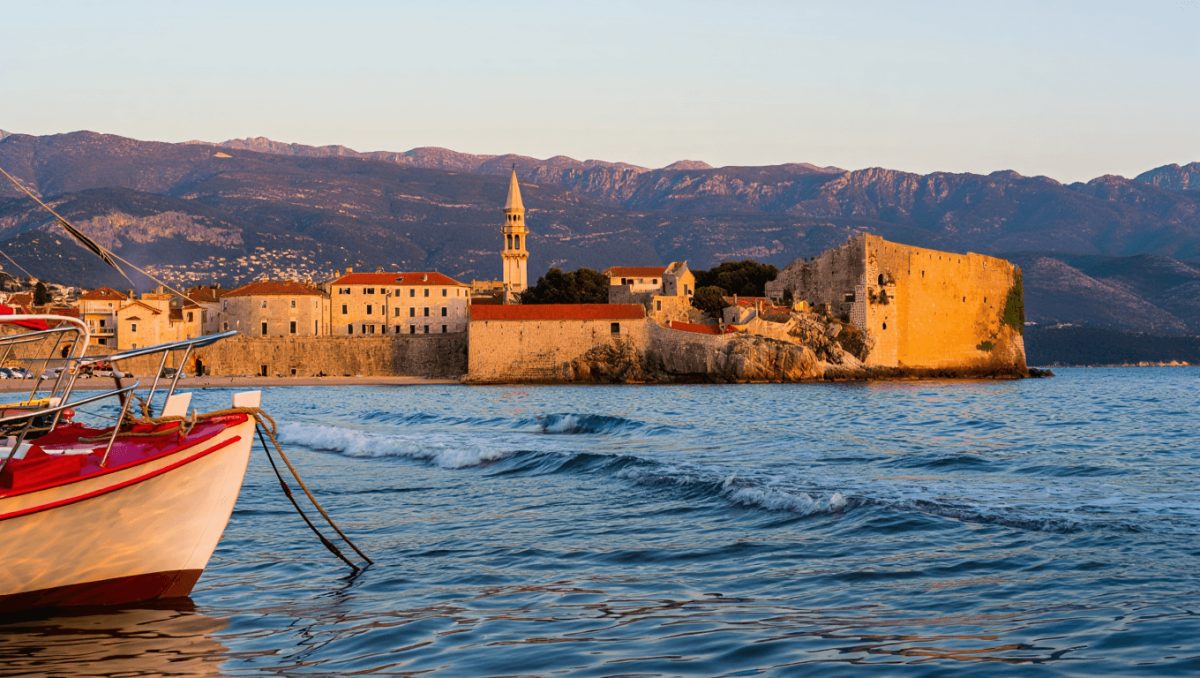
Budva blends lively summer energy with an authentic coastal heart. A historic peninsula, ringed by beaches, still hosts locals in its old stone homes.
The town mixes Romanesque church towers, narrow lanes, and a modest citadel. It’s an easy contrast to more polished tourist centers.
What to do in Budva
- Stroll the seaside promenades and explore the citadel.
- Spend time on Mogren Beach, a pebbled stretch with clear water.
- Eat where the locals eat—small seaside restaurants offer honest Adriatic seafood.
- Catch an evening on the old port for sunset drinks with a view.
Durmitor National Park: alpine wilderness and outdoor adventure
When you swap the coast for high country, Durmitor delivers vast pine forests, jagged peaks, and bright glacial lakes.
This park is the place for rugged scenery, slower days in lodge settings, and outdoor sports that range from hiking to white-water rafting.
Durmitor at a glance
- Crno Lake: A jewel-like lake ringed by walking trails and viewpoints.
- Tara River Canyon offers world-class rafting and dramatic gorge scenery.
- Bobotov Kuk is the highest summit and rewards early-morning hikers.
- Stay in alpine chalets for evenings that feel refreshingly remote.
Practical travel tips for visiting Montenegro
Planning smart helps you enjoy Montenegro without the stress. The country is compact, but traffic and seasonal crowds can shape your trip.
- Best seasons: Late spring and early autumn balance warm weather with fewer tourists.
- Getting there: Summer flights increase; ferries and coastal roads connect towns along the Adriatic.
- Money & services: Cards are widely accepted in tourist areas; carry cash in smaller villages.
- Transport tips: Rent a car for best flexibility. Public buses link main towns but run on limited schedules.
- Local etiquette: Respect church rules and historic sites; small towns appreciate quiet behavior at night.