Show summary Hide summary
Tiger Woods was involved in a dramatic single-vehicle crash in Jupiter, Florida, that left his SUV on its side and prompted an arrest that has reignited questions about his driving and medication use. New details from law enforcement, witnesses and a former employee paint a complicated picture of what happened before and after the rollover.
What happened at the crash scene in Jupiter
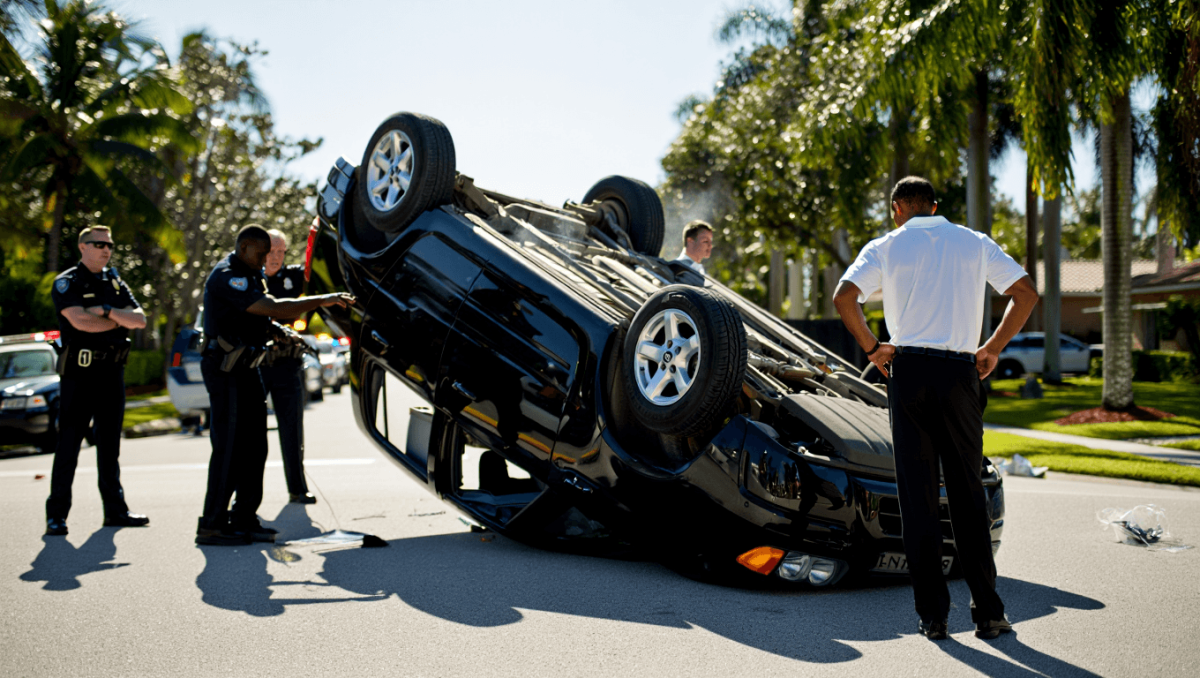
Authorities say the incident occurred in a residential neighborhood around mid-afternoon. Woods was driving a Land Rover when he tried to pass a utility truck and struck the rear of its trailer.
Porsha Williams reveals emergency hysterectomy saved her life
Bronwyn Newport’s mystery man revealed: he’s a married NYC restaurateur
- Impact sent the SUV toward the curb and it rolled onto its side.
- Skid marks were visible on the roadway where control was lost.
- Photos from the scene show Woods exiting the vehicle and appearing to use a phone.
- He was alone in the car; his partner was not with him.
The vehicle overturned but Woods was not seriously injured. Bystanders and first responders aided at the scene before law enforcement took over.
Arrest, testing and charges filed by police
After the crash, officers arrested Woods and transported him to the county jail. He faced several formal charges.
- DUI
- Property damage
- Refusal to submit to a lawful test
On scene, agents conducted standard sobriety evaluations. According to officials, the breath test produced no indication of alcohol. Still, Woods declined a urine test.
He was held for the statutorily required period and then released. A sheriff’s statement noted drug recognition specialists concluded alcohol was not the cause of impairment.
Why refusal of a urine test drew attention
Authorities and observers have speculated about the motive for declining the urinalysis. Sources close to Woods offered a different view from assumptions about illicit drug use.
- Close associates say Woods has used prescription pain medication for years.
- Those same sources argue his refusal likely relates to privacy around prescriptions.
- Officials have not disclosed the exact reason for the refusal.
The prevailing theory among insiders is that long-term pain medicines, not illegal substances, may explain his reluctance to give a urine sample.
Context from past incidents and medical history
Woods has a long public record of serious injuries and prior car incidents. That history is central to how observers view the current case.
Notable past details
- In a prior crash, Woods told police he had taken prescription medication.
- Toxicology from earlier incidents showed multiple prescription drugs and THC.
- He has undergone many surgeries and ongoing treatment for injuries.
Those facts feed into discussion about how therapeutic drugs might affect driving ability and how such situations are policed.
Voices from inside: a former employee’s critique
An ex-member of Woods’s team spoke to media outlets and harshly criticized his road behavior. The source depicted a pattern of aggressive driving on local streets.
That insider said Woods often drives quickly through areas with parked work vehicles and heavy equipment. They recalled instances of high-speed driving that raised concerns.
Former staff described him as a risky driver who frequently exceeds safe speeds. The comment adds a personal angle to official reports about the crash.
Official statements and public reactions so far
Law enforcement released basic facts but withheld full investigative findings pending further work. Spokespeople for Woods did not immediately respond to requests for comment.
- Drug recognition experts were deployed at the scene.
- Sheriff’s office said they suspected medication or another drug, not alcohol.
- Woods was arrested, held for the mandatory period, and later released.
The episode has prompted renewed scrutiny of driving behavior, prescription medication and legal processes in DUI investigations.