Show summary Hide summary
- FAA directive: what was ordered and why
- Airlines’ turf battle: how competition raised the stakes
- Operational ripple effects for carriers and crews
- What passengers should expect and how to prepare
- Local economy and airport operations: short-term pain, long-term aims
- Possible scenarios and what comes next
- How airports and regulators will measure success
- Tips for travelers booking through O’Hare during the transition
The Federal Aviation Administration has ordered a new cutback in flight schedules at Chicago O’Hare, setting off a scramble among carriers and travelers. The directive aims to ease growing runway congestion and reduce conflicts between airlines that have intensified during peak travel times. The move will reshape daily operations at one of the nation’s busiest hubs and ripple across booking calendars and business plans.
FAA directive: what was ordered and why
The FAA announced a temporary reduction in scheduled operations at Chicago O’Hare International Airport. The measure targets periods of peak congestion. Regulators say the step is needed to protect safety and improve on-time performance.
Sophia Laforteza of Katseye announces hiatus: comes months after Manon Bannerman’s exit
Delta to return to Tokyo Narita hub in 2027: 7-year comeback
- Scope: Reductions affect flights during busiest hours.
- Objective: Cut wait times, reduce delays, and limit operational conflicts.
- Duration: The notice is interim and may be adjusted as traffic evolves.
Airlines’ turf battle: how competition raised the stakes
Competition for gates, takeoff slots, and market share at O’Hare has intensified. That competition has translated into denser schedules and tighter turnaround windows. Regulators flagged that crowded timetables were creating risk points for safety and efficiency.
Major and regional carriers both contributed to the pressure. Each tried to secure prime slots to capture connecting traffic. The result: more flights stacked into the same windows and fragile buffers between departures.
Operational ripple effects for carriers and crews
Airlines now must revise timetables and redistribute resources. That means reassigning aircraft, rerouting crews, and reshuffling maintenance windows. Some smaller operators may see their frequencies reduced more than larger network carriers.
- Schedule adjustments will likely be phased in over days to weeks.
- Crew pairings and rest regulations will affect how quickly changes can be implemented.
- Carriers with flexible fleets may adapt faster than those tied to fixed hub operations.
What passengers should expect and how to prepare
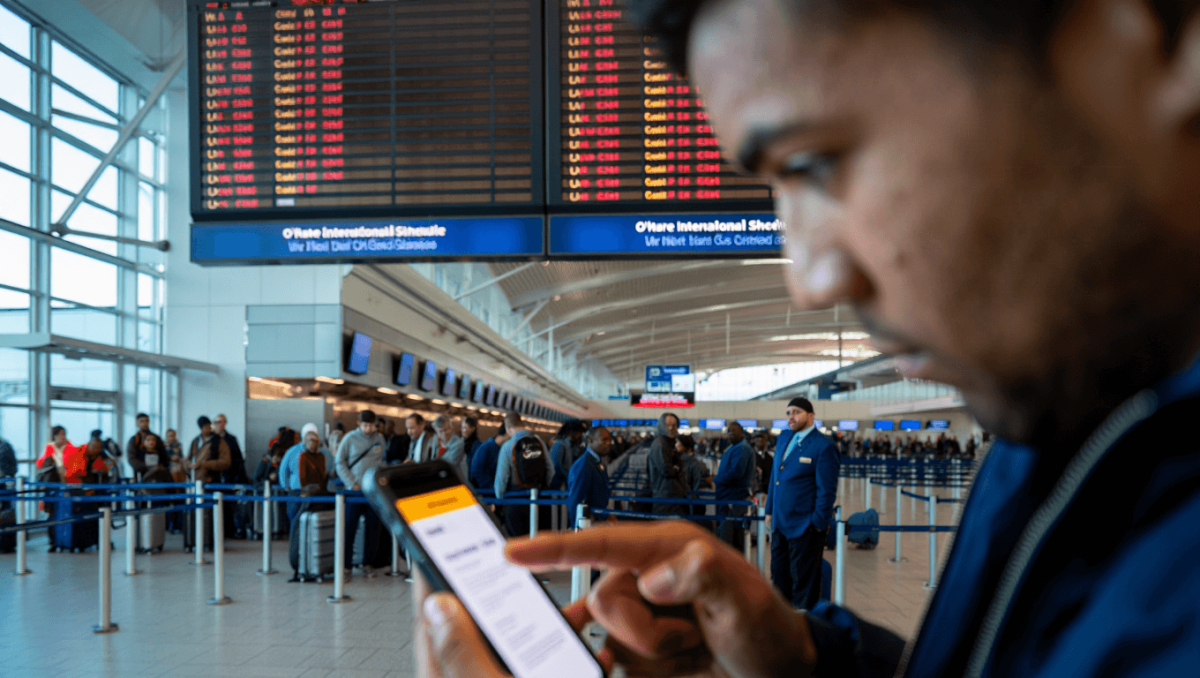
Travelers may face altered departure times, fewer nonstop options, and potential rebookings. Flight status changes could appear on short notice during the rollout.
- Check your flight status directly with the airline before leaving for the airport.
- Allow extra time for connections through O’Hare, especially during peak windows.
- Consider alternative airports or travel days if your schedule is tight.
- Use airline apps and text alerts for instant updates on gate and time changes.
Local economy and airport operations: short-term pain, long-term aims
Airport officials warn of short-term disruption to passenger flow and cargo movement. Yet the FAA frames the cuts as a targeted fix to restore reliability. For businesses and logistics operators, predictability may ultimately improve.
Chicago’s ground services, concessionaires, and rental car companies could see shifts in demand patterns. City planners and local leaders will monitor the economic impact closely as the directive takes effect.
Possible scenarios and what comes next
Experts outline several paths forward. Regulators could relax restrictions if delays fall and congestion eases. Alternatively, tighter controls could stay in place longer if problems persist.
- Scenario A: On-time performance improves and cuts are rolled back.
- Scenario B: Persistent congestion leads to extended schedule limits.
- Scenario C: Structural changes at O’Hare, including slot reallocation, reshape carrier strategies.
How airports and regulators will measure success
The FAA will track metrics such as delay minutes, runway throughput, and safety incident rates. Airport management will add passenger flow and gate utilization to that list. Progress reports will guide the next regulatory steps.
Key measures to watch: average delay per flight, percentage of on-time departures, and the number of missed connections.
Tips for travelers booking through O’Hare during the transition
- Book refundable or changeable fares when possible.
- Aim for early-morning flights, which often face fewer delays.
- Keep buffer time between connections—two hours is safer at major hubs.
- Sign up for airline notifications and monitor airport advisories.