Show summary Hide summary
- Why steer clear of the usual hotspots — and where to go instead
- Lugo: a compact city wrapped in Roman history
- Walk the ancient ramparts — and pay nothing
- Cathedral, cloisters and forgotten Roman rooms
- Riverside greenways and a 1st-century bridge
- Top things to do in Lugo
- How to reach Lugo: airports, trains and travel advice
If Spain’s viral crowd footage has you rethinking a spring trip, consider a different map. Skip the overrun beaches and packed terraces and head north. In Galicia, tucked away from the Mediterranean bustle, the city of Lugo offers ancient walls, quiet streets, and a sense of discovery few travelers still enjoy.
Why steer clear of the usual hotspots — and where to go instead
Before booking a flight, note that some destinations now feel like theme parks. If you want fewer queues and more authenticity, avoid the busiest tourist magnets.
Uncle in Monster the Lizzie Borden story revealed: who he was and what Netflix invented
Carter’s overhauls branding to woo Gen Z and millennial parents
- Madrid — lively but often crowded and expensive.
- Barcelona — iconic, yet frequently overwhelmed by visitors.
- Mallorca — popular for sun and nightlife, heavy in high season.
- Gran Canaria — year-round beach crowds attract package travelers.
- Costa del Sol (Málaga) — a hotspot for UK tourists.
Instead, explore Spain’s northern regions, where culture and history remain more intimate.
Lugo: a compact city wrapped in Roman history
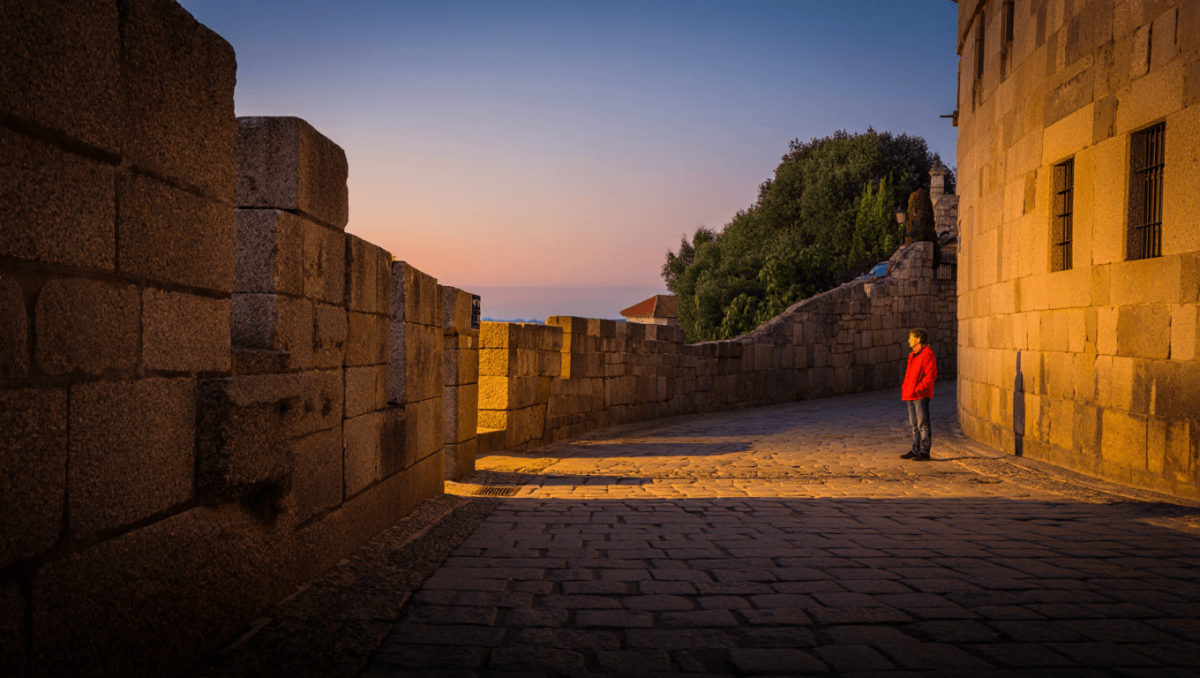
Hidden inland in Galicia, Lugo has about 100,000 residents. Its Old Town sits completely enclosed by a continuous Roman wall.
The wall dates to late antiquity and is remarkably intact. In 2000, UNESCO recognized the site for its extraordinary preservation. That designation helps protect the area, but it hasn’t turned Lugo into a mass-tourist destination.
A unique UNESCO gem in northwest Spain
- La Muralla Romana encircles the historic center without breaks.
- The wall is accessible on foot and offers city views from above.
- Proximity to A Coruña and Santiago de Compostela makes Lugo an easy day trip.
Walk the ancient ramparts — and pay nothing
Unlike some European walled cities with paid circuits, Lugo’s ramparts are free to roam. There are multiple entry points around the loop.
- Ten access gates let you step onto the wall at different points.
- A relaxed lap of the full circuit takes roughly 40–90 minutes.
- Expect mostly locals and the occasional runner, not crowds of tourists.
The experience blends urban life with a tangible layer of Roman engineering. Bring a camera; the glassed balconies and church spires make for striking compositions.
Cathedral, cloisters and forgotten Roman rooms
Lugo’s cathedral holds high ceilings, Baroque facades, and richly decorated chapels. Its nave and carved altarpieces are often quieter than the better-known Spanish cathedrals.
- Entry to some upper levels is ticketed. The fee is modest.
- The adjoining medieval cloister creates an intimate, contemplative space.
- Domus Mitreo — a short walk away — reveals Roman domestic remains and mosaics.
Domus Mitreo is free to visit. The partially excavated mosaics and columns give a glimpse into Roman urban life beneath modern streets.
Riverside greenways and a 1st-century bridge
The Miño River runs near the old town and opens into parks, cycling paths, and riverside cafés. It’s a calm counterpoint to stone streets.
Spanning the river is an early Roman stone bridge. It predates much of the city’s surviving walls and remains a popular spot for walkers and pilgrims.
- The bridge is part of the Camino routes that pass through Lugo.
- Near the bridge, simple tapas bars provide a low-key stop for pilgrims and locals.
- Riverside paths are ideal for cycling or a lazy afternoon stroll.
Top things to do in Lugo
- Walk the full circuit of La Muralla Romana.
- Visit the cathedral and climb to upper galleries.
- Explore Domus Mitreo and nearby archaeological sites.
- Stroll or bike along the Miño River greenways.
- Watch pilgrims crossing the Roman bridge and enjoy a tapas break.
How to reach Lugo: airports, trains and travel advice
New air routes and regional connections have made northern Spain more accessible this year. Travelers from the U.S. now have new nonstop options to the North Atlantic coast.
- Nonstop flights from Newark (EWR) now land in Bilbao and Santiago de Compostela seasonally.
- Santiago de Compostela (SCQ) is the most convenient airport for reaching Lugo.
- From Santiago, trains to Lugo typically take between 2.5 and 4 hours, often via Ourense or A Coruña.
- Regional trains and buses connect Lugo with A Coruña and other Galician cities.
Before you travel, check official travel advisories and entry requirements for Spain. Rules can change quickly, so verify visa, health, and processing updates.