Show summary Hide summary
The 2026 World Cup has become a playground for beauty brands chasing culture, not just customers. From official sponsorship deals to pop-up makeovers near stadiums, cosmetics and skincare are weaving into the fan experience. This shift is reshaping how companies reach women who love the game.
Big-name deals and a fresh category in play
Major consumer groups have staked claims around the tournament. Paula’s Choice is the official skin-care sponsor for the 2026 World Cup. Unilever’s personal care labels, including Dove and Rexona, are listed among the event’s prominent backers.
Elliot Page’s jaw-dropping before-and-after photos show huge muscle gains
Funny political posts: 21 hilarious picks to get you through the week
At the same time, other beauty brands are creating their own moments without formal FIFA ties. Companies like Not Your Mother’s, NYX and Fazit are staging watch parties, suites and product tie-ins across U.S. host cities. For many, the World Cup is a cultural wave that’s impossible to ignore.
Putting fan-facing activations into action
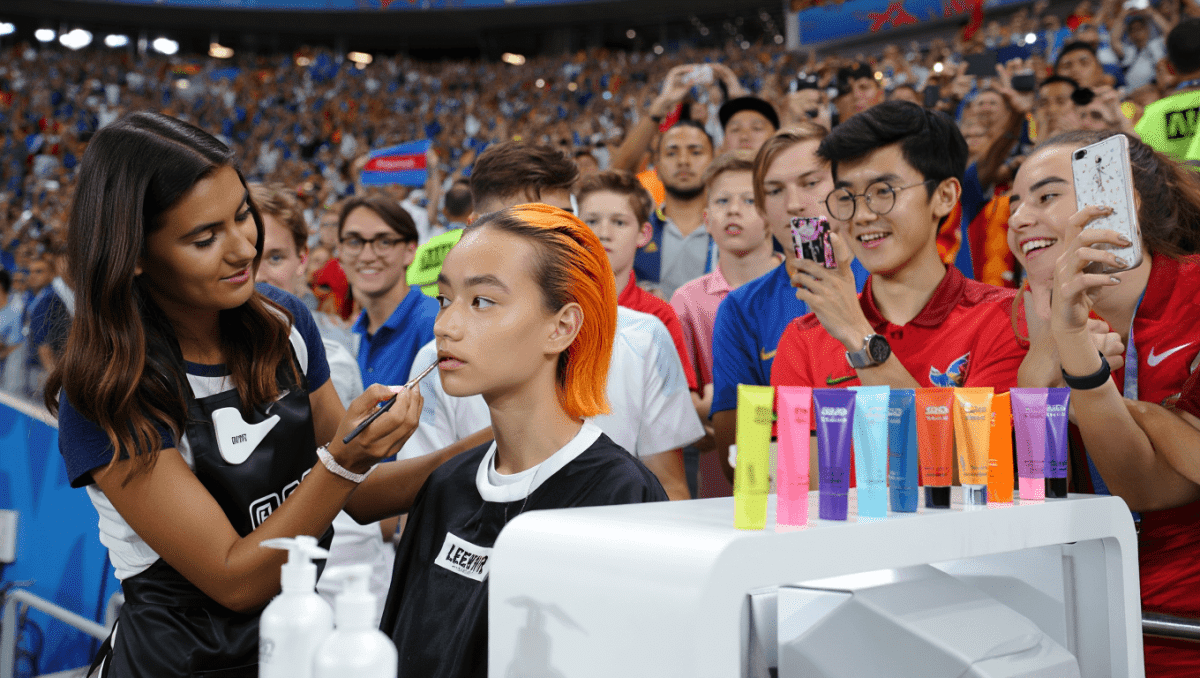
Brands are moving beyond ads to craft real-world encounters. These activations aim to turn match-day energy into social content and sales.
Not Your Mother’s: an experiential field day in Miami
Not Your Mother’s staged a Miami event tied to Colombia vs. Portugal. The brand invited a mix of influencers and everyday customers to a pre-game party.
- About 40 attendees enjoyed hairstyling stations and custom jerseys.
- The group then moved to a branded suite to watch the match and create content live.
- Selection included local creators across cultural backgrounds and winners chosen by video submission.
Charlene Patten, the brand’s CMO, framed the move as cultural positioning. She said sport-related moments are now a place where fans express style and identity. The event also let the brand show product performance in humid Florida conditions. It was a test of efficacy and a content play.
Fazit’s glitter decals and in-store makeovers
Fazit, known for acne and scar patches, expanded into playful game-day makeup. The brand gained traction after a celebrity sighting at a Chiefs game, then leaned into fan-facing collections for soccer.
For the World Cup, Fazit launched an exclusive in-store collaboration with beauty lounge Blushington. Customers can buy the soccer patch collection or pay for a professional application. Locations in New York, Houston and Boca Raton sit close to match venues and fan zones.
Fazit sees this as an opportunity to convert online interest into in-person experiences. The goal is simple: let fans walk into a game with fresh decals and a photo-ready look.
NYX and a campaign built on a historic moment
NYX Professional Makeup rolled out its Pasión Proof campaign with Katia Itzel García. García made history as the first Latin American woman to be the head referee in a men’s World Cup match.
NYX is activating with watch parties, samples and outdoor ads in host cities like Los Angeles and Miami. The campaign highlights Lip IV Hydrating Gloss Stain as a long-wear, sweat-resistant product for intense moments on and off the field. NYX positions the product as durable enough for referees and fans alike.
Sports partnerships spreading across the beauty world
Support for women’s sports and mainstream teams has increased. Urban Decay and Ipsy have signed on as beauty partners for WNBA franchises. Saie became the official beauty sponsor of the New York Knicks and saw a spike in attention when the team won the NBA title.
Sephora’s involvement with sports partnerships has also helped normalize beauty’s presence in athletic spaces. Brands view these alliances as validation that beauty and sports can co-exist productively.
Why beauty brands see sports as fertile ground
Executives point to several drivers behind the migration into sport-focused marketing.
- Audience growth: Women and female fans are an expanding, engaged cohort.
- Cultural resonance: The World Cup creates moments that spark social conversation.
- Experiential reach: Live events let brands show product performance.
- Cross-cultural relevance: Matches draw diverse crowds and creators.
These factors make stadiums, fan zones and watch parties attractive platforms for beauty messaging.
How activations are built to convert
Successful campaigns mix product trials, content generation and local sensibilities.
- Influencer and customer mixes create authenticity, not just sponsored posts.
- On-site services—blowouts, face decals, quick touch-ups—encourage bookings.
- Retail tie-ins keep the product within reach after the event.
- Localized creative aligns with host-city cultures and participating nations.
Blushington’s partnership with Fazit, for instance, drove bookings by bundling the decal add-on with hair and makeup services. The salon model gave customers a ritual to follow before heading to a match or party.
Measuring momentum and planning for speed
Brands say agility matters. Some do not plan activations a year in advance. Instead, they move fast to meet the pace of culture.
Metrics include engagement on social channels, store sales near activation sites, and increases in salon bookings. For many teams, the aim is to sustain interest after a single match-day spike.
Executives stress that beauty’s role in sports is not limited to athletes. The industry wants to serve fans who use makeup and skincare as part of their game-day ritual. Beauty is now part of fandom—and brands are building products and moments to match.