Show summary Hide summary
- How the event was built and why it mattered
- Redefining mastery when tools are everywhere
- More creators, but no guarantee of visibility
- Economic worries outpace aesthetic ones
- Public postures differ from private practices
- Speed, not just capability, unsettles the industry
- Policy remains behind the curve
- Creativity survives, but its shape may change
- Who gets a seat at the table matters
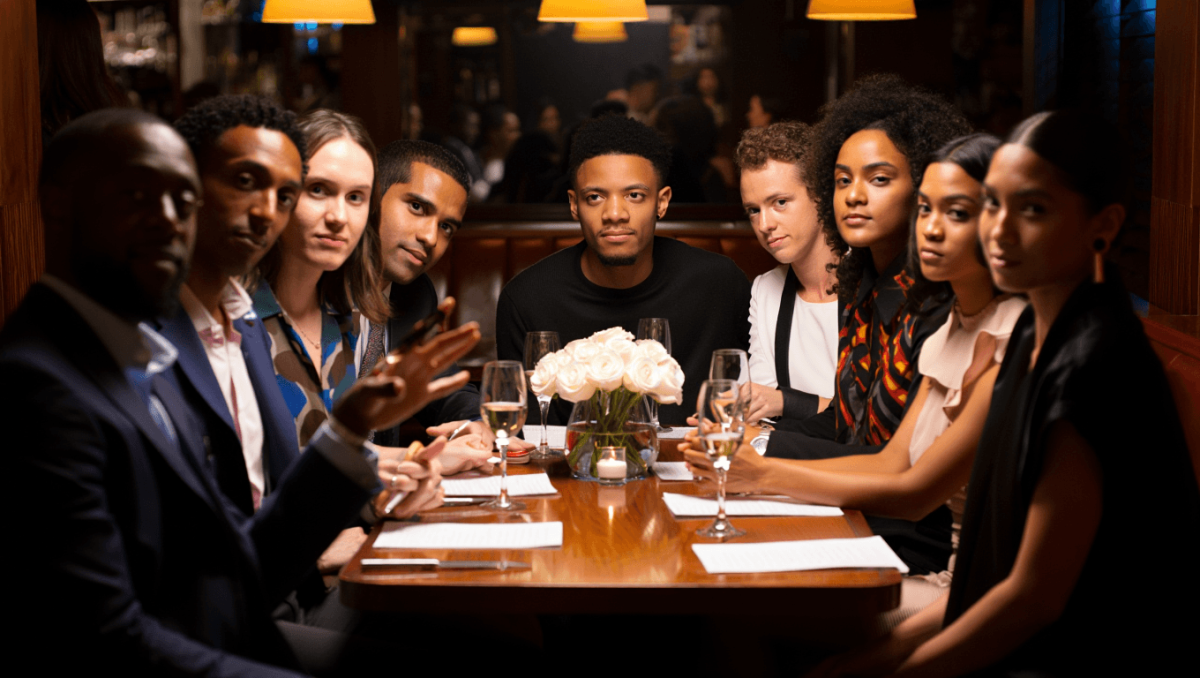
At a small, closed-door dinner in West Hollywood, music producer Roahn Hylton gathered creatives, executives, technologists, and investors to trade unfiltered views on how artificial intelligence is reshaping art, work, and power. The conversation was less showy debate and more practical inventory of anxieties, opportunities, and the gray areas most public panels avoid.
How the event was built and why it mattered
Hylton created the series because the public debate left out the people making the work.
Sophia Laforteza of Katseye announces hiatus: comes months after Manon Bannerman’s exit
Delta to return to Tokyo Narita hub in 2027: 7-year comeback
- Guests included studio leaders, songwriters, filmmakers, AI builders, and backers.
- The setting was a private room with family-style food, where people felt able to speak frankly.
- The goal: move past slogans and hear how AI affects daily creative practice.
He saw a disconnect between policy discussions and the studios and studios’ creators. That gap shaped the night’s central question: who gets to define the future of creative work?
Redefining mastery when tools are everywhere
One opening question guided the evening: if AI makes advanced skills widely accessible, what counts as expertise?
People pushed back against the idea that mastery simply vanishes. Instead, they argued it migrates.
- Technical barriers drop as tools automate routine craft.
- Value shifts toward judgment: the choices, taste, and editorial decisions creators make.
- Learning cycles compress; iteration often replaces decade-long apprenticeships.
Key insight: Mastery remains, but its form and markers are changing.
More creators, but no guarantee of visibility
AI expands who can produce music, scripts, and visuals. That doesn’t mean more creators will reach audiences.
Attendees compared the effect to platforms where publishing is easy but standing out remains hard.
- Democratization brings new voices and experimentation.
- Volume increases noise and competition.
- Breaking through will depend on taste, community, and distribution savvy.
Key insight: AI widens participation; it does not necessarily improve odds of success.
Economic worries outpace aesthetic ones
The room returned again and again to budgets, jobs, and income instability.
Conversations centered on real-world choices: accept AI-assisted gigs to stay competitive, or refuse and risk missing work.
- Short-term cost savings can translate to longer-term labor erosion.
- Middle-class roles and gig pipelines look especially vulnerable.
- Adaptation can accelerate displacement, creating painful trade-offs.
Key insight: Fear about AI is often economic, not purely artistic.
Public postures differ from private practices
Many participants described a split between rhetoric and behavior.
Artists and executives who criticize AI publicly may still experiment with it privately.
- Reputation and community standards shape public statements.
- Competitive pressures drive behind-the-scenes adoption.
- That discrepancy complicates policy and trust.
Key insight: What people say about AI is not always what they do with it.
Speed, not just capability, unsettles the industry
Guests emphasized that the rate of change is the destabilizing factor.
Projects once measured in months now resolve in days or weeks because of AI tools.
- Tighter timelines strain contracts and workflows.
- Decision cycles compress, leaving less room for deliberation.
- Existing institutions struggle to adapt at that velocity.
Key insight: Rapid advances reshape expectations and planning across the business.
Policy remains behind the curve
Industry-wide definitions and rules are missing.
Participants described a policy landscape that moves too slowly to guide day-to-day choices.
- No agreed definitions of what counts as AI-generated work.
- Guilds, studios, and platforms operate under different assumptions.
- Absent clear guardrails, decisions are fragmented and inconsistent.
Key insight: The sector will operate for now without a coherent regulatory playbook.
Creativity survives, but its shape may change
Attendees were confident machines won’t replace taste, empathy, or collaborative instincts.
Yet they warned that careless use of AI can make creative work generic and scaled for mass production.
- AI can expand possibilities and speed experimentation.
- Improper reliance can strip nuance and cultural specificity.
- Maintaining craft requires intentional choices about when to use tools.
Key insight: AI augments creative capacity, but it may also flatten distinctive voices.
Who gets a seat at the table matters
The most recurrent concern was less technical than social: where conversations occur and who is invited matters.
Private forums let people be candid. Public debates are performative, and that skews outcomes.
- Inclusive, mixed forums help align technologists, creators, and policymakers.
- Without visible, collective discussion, decisions happen out of sight.
- Access to the discourse will shape creative and economic futures.
Key insight: Shaping AI’s role in culture depends on opening up honest, sustained conversations.