Show summary Hide summary
- Full Circle Media: a bigger platform for convenience-store advertising
- Where ads run: pumps, stores, apps and emails
- From in-store dominance to a true omnichannel ad product
- Building measurement: closed-loop and incrementality testing
- Inner Circle loyalty: the data backbone for targeting and measurement
- How advertisers can use Circle K’s network
- Industry context: fragmentation, consolidation and the road ahead
- Expert perspectives and next steps for the network
Circle K is stepping up its push into retail advertising with Full Circle Media, a retail media network that stitches together in-store screens, fuel-pump displays, mobile and email to reach convenience shoppers across the U.S., Canada and Europe.
Full Circle Media: a bigger platform for convenience-store advertising
Full Circle Media is the brand Circle K is now using to package its ad inventory to marketers. The network spans thousands of sites and is being promoted as a place for consumer-packaged-goods brands to reach on-the-go buyers.
Blue Bloods star Jennifer Esposito opens up about depression diagnosis: sent to psych ward
Hannah Dasher says famous married celebrity slid into her DMs
- Reach: more than 6,600 locations in the U.S.
- Scale: up to 200 million monthly impressions, per Circle K.
- Inventory: in-store screens, fuel-pump displays, app and email placements.
Joell Robinson, Circle K’s head of retail media, joined last year to build the network and grow its measurement and buying capabilities. The company started using the Full Circle Media name in February after operating more quietly before that.
Where ads run: pumps, stores, apps and emails
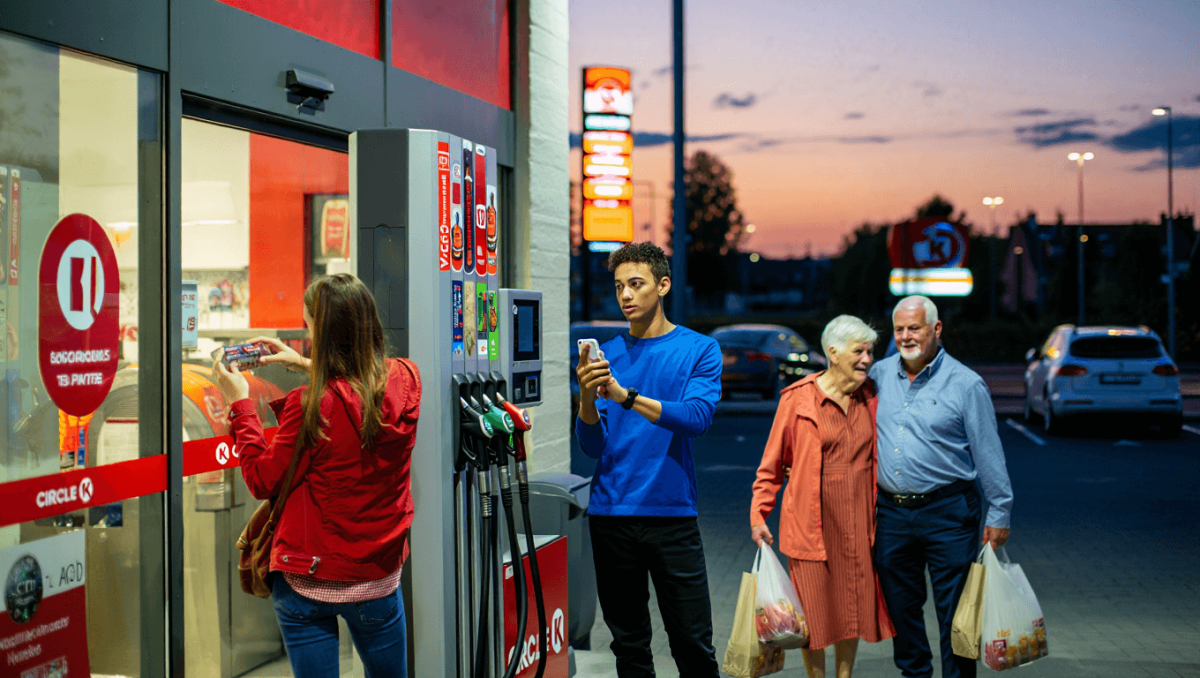
Circle K has invested heavily in on-site screens. A proprietary in-store system called Lift displays targeted promotions next to registers. The retailer also runs digital walls in stores and screens at pumps.
- Lift screens: about 13,200 screens across the network, in 6,600 locations.
- Fuel pump screens: inventory at more than 3,800 pumps.
- Digital channels: app, email and off-site social placements added this year.
Lift is designed to act like a sponsored-search moment inside a store. It can surface timely upsell offers tied to what a customer is buying.
From in-store dominance to a true omnichannel ad product
Circle K’s retail-media growth is notable because it started with a strong physical-media footprint. Many other retailers focused first on web and mobile ad products.
Robinson has prioritized adding digital layers and external placements to create a more complete ad journey. The network recently expanded to include social and off-site placements, aimed at driving customers to pumps and stores.
Partnering with merchandising to amplify promotions
The retail media team is working closer with merchandising to align advertising campaigns to operational promotions. The goal is to make paid media the loudspeaker for store-level deals.
- Coordinate campaign timing with in-store promotions.
- Use screens and digital touchpoints to increase visibility for supplier-led offers.
- Leverage store teams to support campaigns when traffic arrives.
Building measurement: closed-loop and incrementality testing
Measurement is a top priority. Circle K is experimenting with closed-loop attribution and incrementality tests, particularly in email and digital channels.
The retailer wants a transparent, defensible view of how ads drive visits and sales across channels. That means linking ad exposure to real purchases while controlling for external factors.
Converting pump impressions into store visits
Fuel pumps generate high footfall, and Circle K is testing ways to turn that attention into in-store traffic.
- Using pump screens to promote in-store deals.
- Piloting SMS and push notifications tied to pump engagement.
- Testing creative and timing to drive incremental store trips.
Even a small conversion rate at the pump could be highly impactful because of sheer volume.
Inner Circle loyalty: the data backbone for targeting and measurement
Circle K plans to leverage its Inner Circle loyalty program as a central element of retail media. The program offers fuel and beverage discounts and rewards members for visit frequency.
- Presence in 14.7 million members.
- Expanded to more than 5,000 stores across 34 states.
- Recently redesigned to reward frequency of visits and pump purchases.
Loyalty data enables clearer audience targeting and more reliable measurement because it ties ad exposure to known customers.
How advertisers can use Circle K’s network
Brands looking to reach convenience shoppers can access a mix of high-frequency physical touchpoints and digital placements. Useful approaches include:
- Promoting quick-consumption products via in-store upsell screens.
- Using pump ads for time-sensitive offers or cross-sell messages.
- Tying email and app promotions to loyalty incentives for better attribution.
Industry context: fragmentation, consolidation and the road ahead
Convenience-store retail media in the U.S. faces a fragmented market. Many chains operate independently, which complicates large-scale ad buys.
Analysts say c-store networks must either consolidate or form aggregated networks to compete with larger retail media players.
Opportunities and risks for Circle K and advertisers
- Opportunities: constant foot traffic, captive moments at pumps, loyalty data for targeting.
- Risks: market fragmentation, potential trade-offs between ad monetization and a seamless customer experience.
- Competitive landscape: networks like 7-Eleven’s reach raise the bar for scale.
Expert perspectives and next steps for the network
Industry commentators view Circle K’s investment as logical given the retailer’s traffic. But they caution that retail media will succeed only when it complements strong in-store offers.
Circle K’s next moves include scaling digital capabilities, improving measurement, and using the Inner Circle program to tighten attribution between ads and purchases.