Show summary Hide summary
- Why scent activations matter this holiday season
- Nest’s Fifth Avenue takeover: misting trees and digital hooks
- Sampling on the street: Scentbird and theater pop-ups
- How brands convert in-person buzz into online sales
- Playful pop-ups: Grüns turns a flavor drop into a city stunt
- On-demand health: Winx Health’s Cyber Week delivery strategy
- Headlines and snapshots: retail moves to watch this season
- Recent coverage highlights for quick catch-up
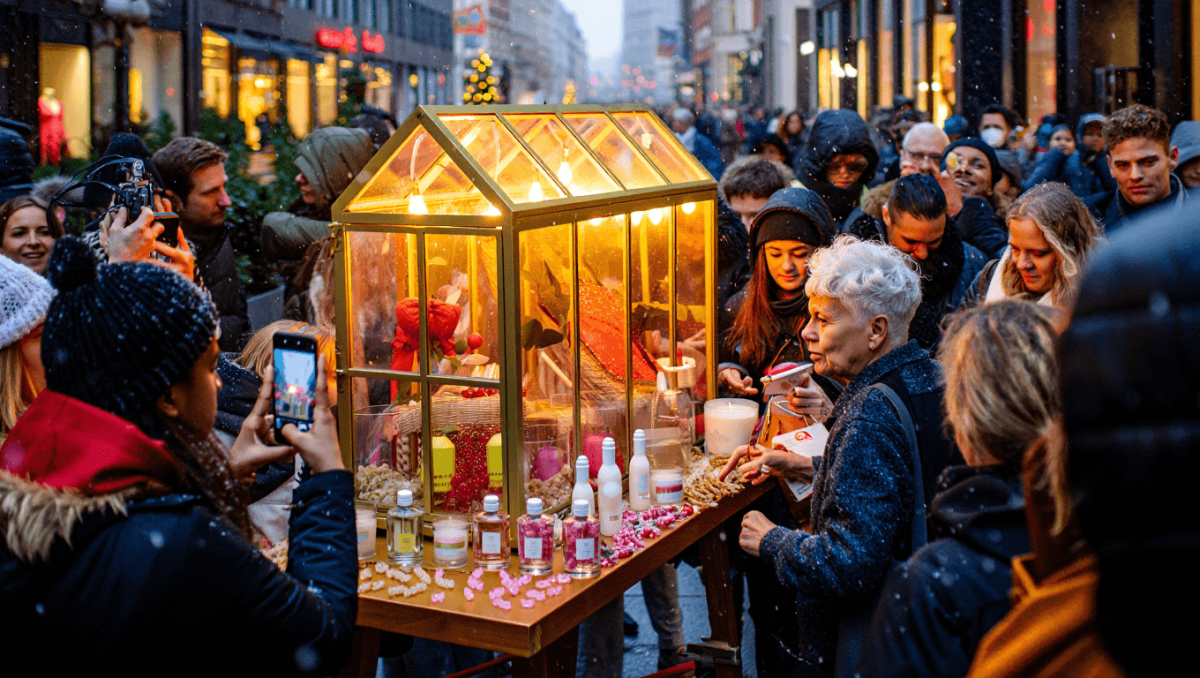
Brands are turning holiday scent into a citywide stage. This season, perfumes, candles and edible gummies are moving out of the webshop and into real-world pop-ups. The goal is simple: let shoppers smell, snap and then buy—often instantly online.
Why scent activations matter this holiday season
Fragrance sells strongly during year-end. For many fragrance labels, holiday revenue can be a third of annual sales. Yet selling scent online remains tough.
Porsha Williams reveals emergency hysterectomy saved her life
Bronwyn Newport’s mystery man revealed: he’s a married NYC restaurateur
Physical activations solve that problem. They create a memory tied to a place and an aroma. That emotional link helps products stand out in crowded holiday marketing.
Brands use smell to trigger nostalgia and social sharing. A memorable scent in a busy shopping corridor or transit hub can convert walk-by curiosity into web traffic and purchases.
Nest’s Fifth Avenue takeover: misting trees and digital hooks
Nest brought its seasonal fragrance to New York by scenting a prime shopping stretch. The company placed aromatic displays along Fifth Avenue between 47th and 59th Streets.
- 15 decorative trees diffuse the limited-edition holiday scent.
- Notes include pomegranate, pine, cloves and cinnamon.
- Installations run through the winter holidays to capture foot traffic.
The activation ties offline and online. QR codes on the displays send visitors to the brand’s store. The campaign also includes billboards and a partnership with Bergdorf Goodman to sell the collection in-store.
Artist collaborations add visual fuel to the activation. Nest features original artwork and life-size cutouts that invite photos. The aim is to create social content and a lasting association between the scent and the street.
High pedestrian volume makes these activations efficient. Organizers point out the Fifth Avenue corridor can draw tens of thousands of passersby—numbers comparable to major arenas.
Sampling on the street: Scentbird and theater pop-ups
Subscription and mass-market brands are leaning into sampling as a discovery tool. Scentbird, for instance, staged a launch in SoHo to spotlight a designer fragrance on its platform.
Ambassadors sprayed passersby and used wild-posting and QR codes to drive sign-ups. The activation also translated to measurable online visits.
Bath & Body Works took scenting into transit and entertainment spaces. Its Holiday Spirit campaign delivered Fresh Balsam aromas at Grand Central and in select movie theaters.
- Commuters smelled the scent as they passed through a busy station.
- Moviegoers experienced “scentigrations” alongside a 45-second holiday spot.
The strategy taps into moments when people are already out and receptive. It turns routine errands and entertainment trips into sampling opportunities.
How brands convert in-person buzz into online sales
These activations don’t stop at sampling. Brands are designing clear paths to purchase.
- QR codes on installations for immediate checkout.
- Influencer teams to amplify content on Instagram and TikTok.
- Retail partnerships to capture point-of-sale conversions.
Digital-first tracking and sponsored placements let teams measure campaign lift and retarget interested visitors after they leave the pop-up.
Playful pop-ups: Grüns turns a flavor drop into a city stunt
Gummy supplement brand Grüns staged a theatrical, holiday-themed activation to introduce a limited-edition flavor. The team distributed thousands of samples while rolling through Manhattan on a sleigh-like vehicle.
- 14,000 Grinch Punch samples handed out, including 2,000 kid-size packs.
- Activations included influencer events and photo moments.
- The pop-up tied to a cultural license, marking the brand’s first kids collaboration.
The stunt reflects a broader trend: lifestyle brands use seasonal flavors and playful moments to earn attention and social shares.
Grüns says these in-person activations support its fast revenue growth and make the product feel easy to add into daily routines.
On-demand health: Winx Health’s Cyber Week delivery strategy
Not all holiday promotions focus on fragrance. Winx Health leaned into delivery platforms to meet urgent consumer demand for reproductive health products.
The company noted a spike in morning-after pill purchases around the Wednesday before Thanksgiving. To improve access, Winx ran Cyber Week promotions across Gopuff, DoorDash, Instacart and Uber Eats.
- Special discounts on delivery platforms for immediacy.
- Product is also stocked in thousands of retail locations.
- Site-wide promotions remain in place, while partnerships allow sponsored placements and bundle offers.
Using delivery apps lets Winx reach customers who need products fast. The brand is also testing in-app promos for other holidays to build awareness.
Headlines and snapshots: retail moves to watch this season
- Williams-Sonoma filed suit against Quince over alleged counterfeit or copycat listings.
- Gap reported double-digit sales growth tied to a recent campaign collaboration.
- Industry coverage examines how Gen Z is reshaping holiday marketing approaches.
Recent coverage highlights for quick catch-up
- How a grocery cameo turned into an e-commerce push for Sprouts.
- OpenAI added a shopping tool to ChatGPT ahead of peak shopping days.
- Why some direct-to-consumer brands are rethinking steep Black Friday discounts.